Ammar Sabilarrohman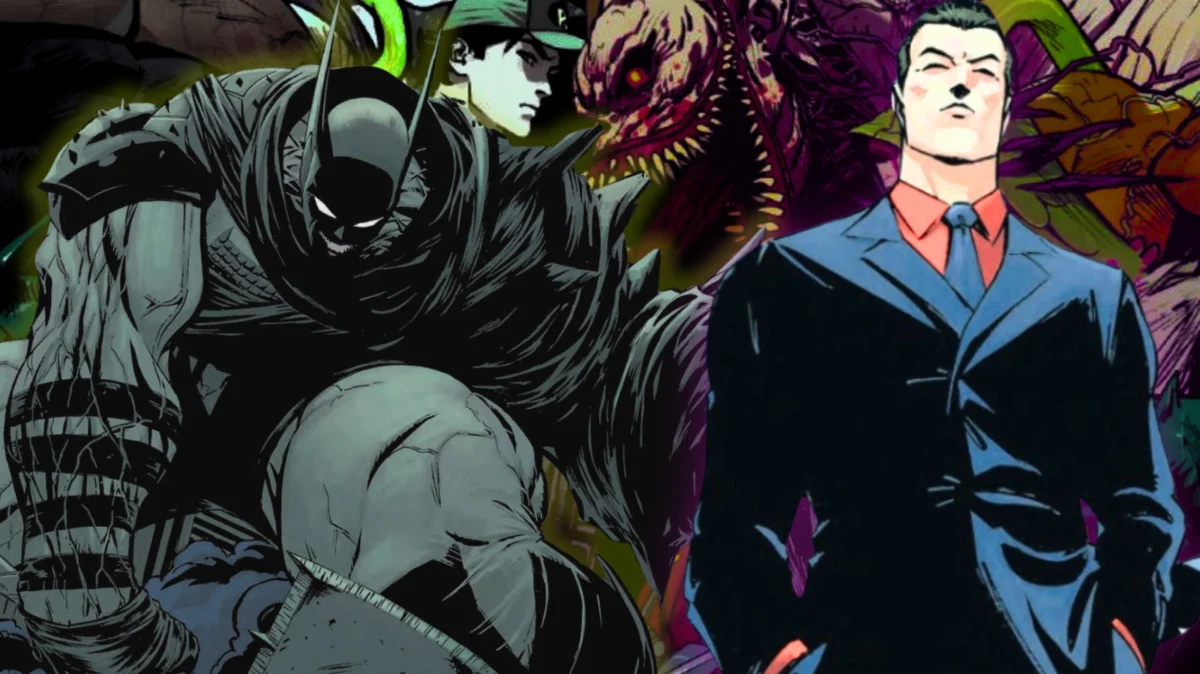
The long-awaited collision between Bruce Wayne and his ultimate nemesis has finally arrived, and it is far more than a simple brawl. In Absolute Batman #21, writer Scott Snyder and artist Nick Dragotta have delivered what is arguably the most significant Joker moment in the series’ history. After twenty issues of shadow games, proxy wars, and calculated psychological warfare, the two titans have finally stood face-to-face. This meeting does not merely satisfy a narrative requirement; it recalibrates the power dynamic of the "Absolute" DC Universe, cementing a relationship that is as parasitic as it is iconic.
The Foundation of a New Mythology
When Absolute Batman launched, Snyder and Dragotta made their intentions clear: they were stripping away the comfortable iconography of the Caped Crusader. This version of Bruce Wayne lacks the Wayne Manor legacy, the unlimited fortune, and the guiding hand of Alfred Pennyworth. He is a man forged in the crucible of a harsh, unforgiving urban environment.
Conversely, the "Absolute" Joker, known as Jack Grimm, is the antithesis of this stripped-back hero. An immortal entity who has masqueraded through history as a series of influential figures, Grimm is revealed to be one of the wealthiest and most powerful men in Gotham. While the traditional Joker is often depicted as an agent of chaotic, disorganized crime, Grimm is a master of structural, systemic corruption. His reach is invisible, his influence is pervasive, and his resources are seemingly infinite. For twenty issues, he has toyed with Bruce, utilizing minions like the "Party Animals," the brutal enforcer Bane, and a weaponized Scarecrow to dismantle the hero’s life—culminating in the tragic death of Jim Gordon and the framing of Batman for the murder.
Chronology of the Conflict: From Shadows to Skyscrapers
The tension between the two has been a slow-burn masterclass in narrative tension. The realization that Grimm was the architect behind his misery arrived for Bruce in Absolute Batman #15. However, Grimm remained detached, observing his creation from behind the curtain. The shift in Absolute Batman #21 represents a departure from this observational stance.
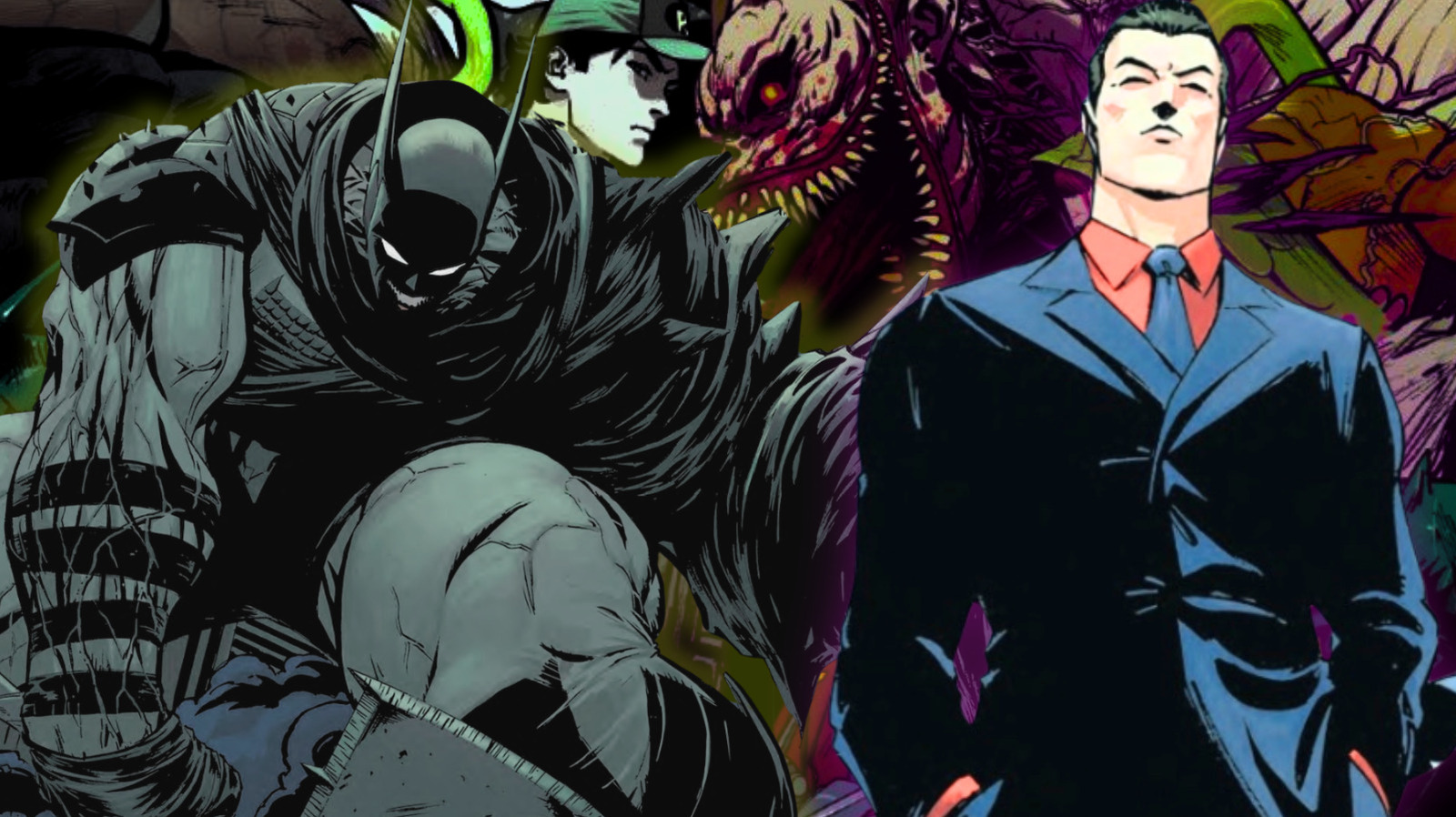
The confrontation takes place on the framework of an under-construction skyscraper—a setting that feels both industrial and precarious. Bruce, working his blue-collar engineering job, finds himself confronted by the man who has systematically sought to erase his agency. The exchange is brief, lasting only four pages, yet it serves as the definitive anchor for their future rivalry.
Grimm arrives not as a chaotic clown, but as a sophisticated investor, his appearance subtly "Jokerized" by colorist Frank Martin’s masterful use of pale, sickly tones and touches of toxic green and regal purple. The physical contrast is striking; Bruce, standing at an imposing 6’9”, towers over the shorter, seemingly human Grimm. Yet, the power dynamic remains skewed toward the villain. When Grimm drops his facade, flashing a monstrous visage and delivering a chilling "Boo!" that nearly sends Bruce plummeting to his death, the hierarchy is established: Grimm holds the life, and consequently, the narrative of the Batman in his hands.
Supporting Data: The Psychological Implications
The dialogue exchanged during this encounter suggests that the "Absolute" version of the Joker is less interested in the death of his opponent and more interested in the preservation of the narrative. Grimm views himself as the author of Bruce Wayne’s path to becoming Batman.
"I can’t imagine life without you anymore," Grimm tells him. "You and me… I want to do this dance forever."
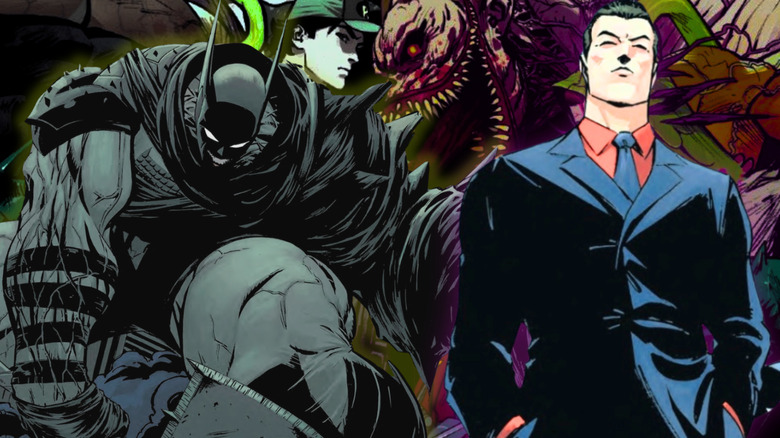
This sentiment underscores a terrifying truth: in this universe, the Joker is not merely a reactionary villain but a proactive progenitor. The implication that Bruce’s entire existence—his trauma, his training, his crusade—is a curated "joke" orchestrated by Grimm adds a layer of existential dread to the character’s mission. If the hero’s journey is the villain’s design, what does that mean for the hero’s morality?
Cinematic Homage and Structural Mirroring
Snyder has never been shy about his influences, and Absolute Batman continues to draw deeply from the well of Frank Miller’s The Dark Knight Returns. However, the series has increasingly leaned into the visual and thematic language of Christopher Nolan’s The Dark Knight.
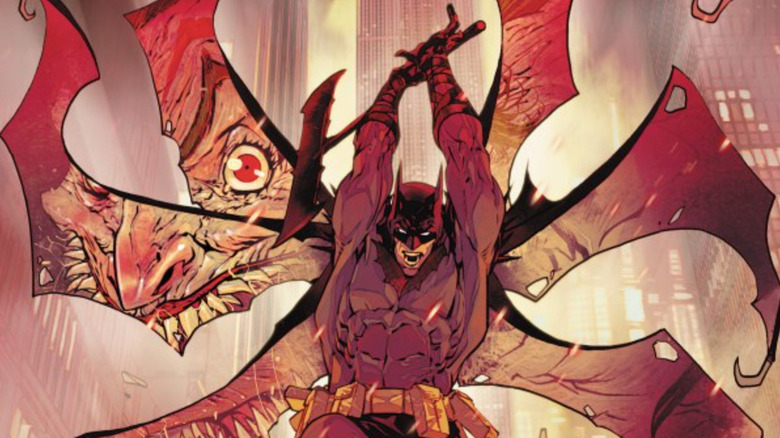
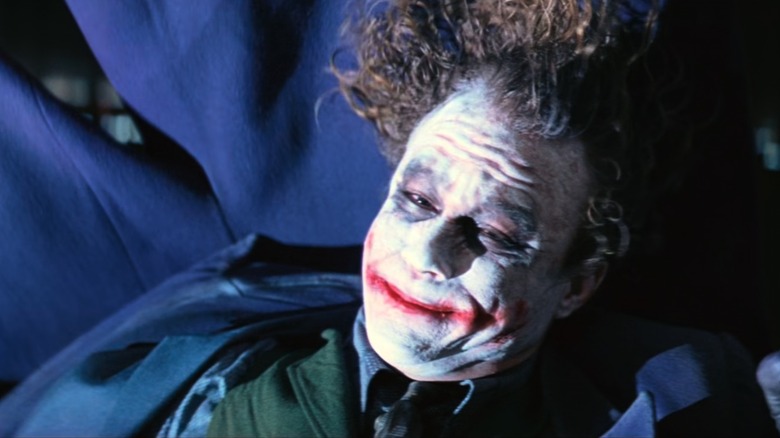
The skyscraper encounter in issue #21 is a direct, albeit subverted, reflection of the final moments between Heath Ledger’s Joker and Christian Bale’s Batman. In Nolan’s film, the Joker hangs from a building, laughing about their "destined" eternal struggle. In Absolute Batman, the roles are reversed. It is Bruce who hangs over the abyss, and it is the Joker who plays the savior. By catching the man he claims to have created, Grimm reinforces the idea that he is the one who controls the rules of engagement.
This mirrors the events of Absolute Batman #5, where the hero burned millions of dollars to light a signal, an inverse of the Joker burning the mob’s money in Nolan’s film. While the cinematic Joker burned money to prove that "it’s not about money, it’s about sending a message," the Absolute Joker represents the very power of that money. He is the corruption that Batman seeks to burn away.
Official Responses and Editorial Direction
The editorial team at DC Comics has positioned the Absolute line as an opportunity to challenge the core tenets of their most famous characters. By making the Joker a figure of systemic, concentrated wealth, the writers are exploring themes of class struggle and the morality of the one-percent.
In the 2025 one-shot Absolute Evil, Al Ewing and Giuseppe Camuncoli delved into the philosophy of Jack Grimm, portraying him as a man who believes in the "natural inequality" of the world. Bruce Wayne, by refusing to be bought, represents a fundamental failure in Grimm’s worldview. The Joker doesn’t just want to break Batman’s bones; he wants to break his spirit by forcing him to accept that in a world of absolute power, the only rational response is to watch it burn.
The Implications: A New Era for the Dark Knight
The "most important moment" in Absolute Batman #21 is the moment the mask slips—not the Batman mask, but the mask of the villain. By introducing himself directly to Bruce, Jack Grimm has invited the hero into his game on his own terms.
For the reader, this marks the end of the "prologue" phase of the series. We are no longer waiting for the Joker to reveal himself; he has done so, and he has made his intentions known. The "dance" has officially begun. The implications for future issues are significant: we can expect a more intimate, psychological battle where Bruce must find a way to dismantle a villain who believes he is the sole author of his fate.
The brilliance of this development lies in the inversion of expectations. Usually, Batman is the one who dictates the pace, utilizing his intellect and gadgets to outmaneuver his foes. Here, he is constantly being outplayed by a villain who has already mapped out the board. As the series moves forward, the primary question will be whether Bruce Wayne can reclaim his own agency, or if he is truly trapped in a performance directed by a monster who has all the time in the world.
Absolute Batman has proven that it is not content to simply retell the stories of the past. By re-imagining the Joker as a structural force of nature, Snyder and Dragotta have ensured that the stakes are higher than they have been in years. The dance is far from over, but for the first time, the music has finally started.
For those looking to catch up on the series, Absolute Batman #1-21 are currently available in print and digital formats.

 Asro
Asro