Nana Muazin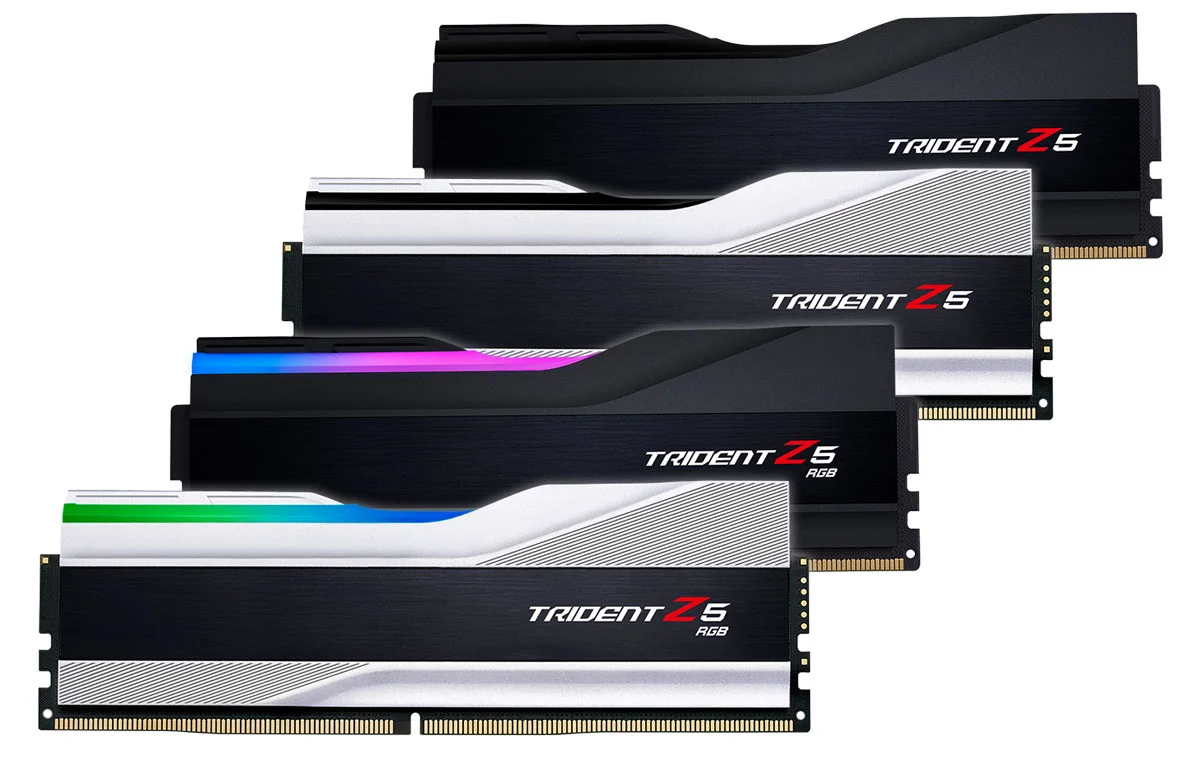
As the computing industry stands on the precipice of a major architectural transition, the race to define the standard for next-generation memory has shifted into high gear. With the impending launch of platforms supporting the DDR5 standard, hardware manufacturers are locked in a fierce competition to offer the fastest, most reliable, and most efficient memory modules. While industry stalwarts like Corsair have been signaling their readiness for months, G.Skill has officially raised the stakes, unveiling the Trident Z5 DDR5-6600 CL36 memory kits—a development that effectively pushes the boundaries of what is expected from the first wave of DDR5 consumer hardware.
The Core Facts: Pushing the Envelope of Speed and Latency
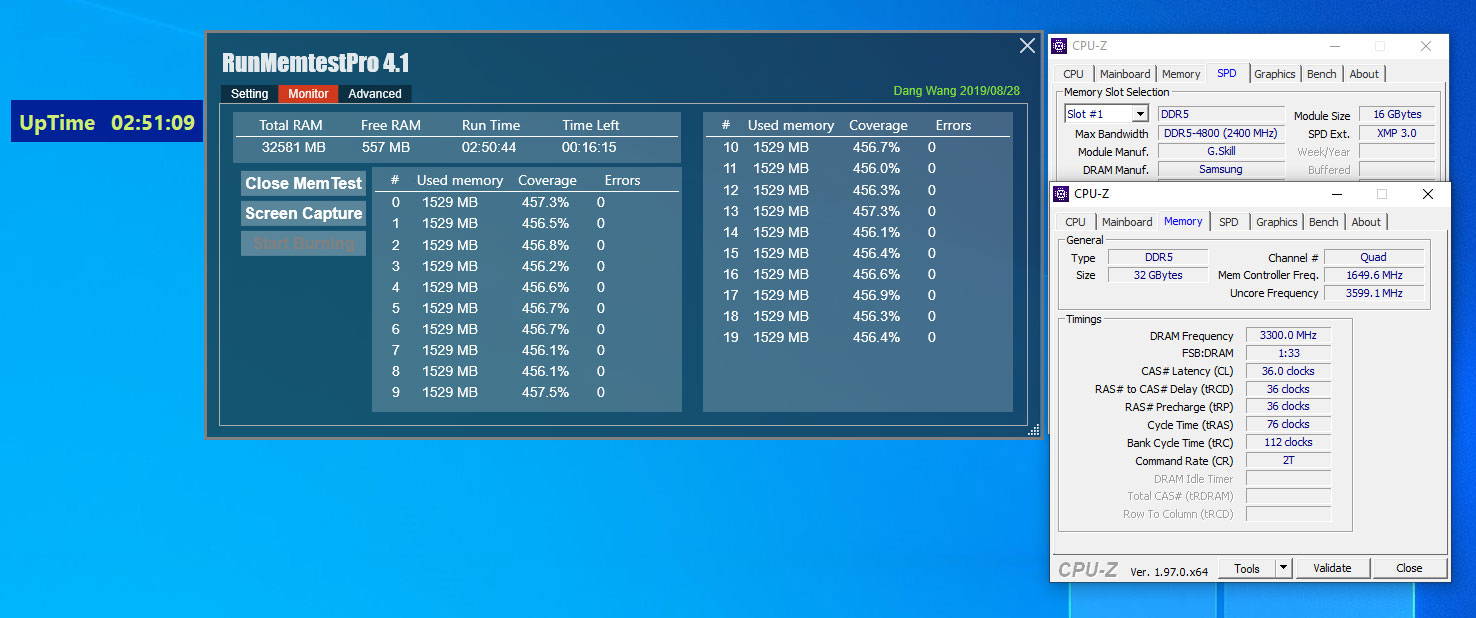
G.Skill’s latest announcement is not merely an incremental upgrade; it is a declaration of intent. The new Trident Z5 series, specifically the DDR5-6600 CL36-36-36-76 32GB (2x16GB) kit, represents a significant departure from the standard specifications typically associated with early-adoption DDR5 modules.
At the heart of these modules is an aggressive pursuit of both frequency and timing. While the JEDEC standard for DDR5 begins at 4800MT/s with relatively loose timings, G.Skill has managed to validate its kit at a staggering 6600MT/s. More impressive, however, is the latency. While many competitors are launching their initial DDR5 offerings with CL40-40-40 timings, G.Skill has achieved a tighter CL36-36-36-76 configuration at that higher speed.
This combination of higher bandwidth and lower latency is the "holy grail" for memory performance. By tightening the timings, G.Skill minimizes the cycles the CPU must wait for data to be retrieved from memory, providing a palpable advantage in compute-heavy tasks and high-refresh-rate gaming scenarios.
Chronology of a Memory Revolution
The journey toward DDR5 has been a multi-year effort involving cooperation between memory manufacturers, motherboard OEMs, and CPU giants like Intel and AMD.
- Early 2021: Industry analysts begin predicting the transition to DDR5 as the primary bottleneck for future high-performance computing.
- May 2021: Corsair breaks cover, teasing their upcoming 6400MT/s RAM sticks. This announcement set the baseline for what enthusiasts expected from the high-end tier of the new memory standard.
- Late Summer 2021: Mainboard manufacturers begin leaking BIOS updates and PCB layouts optimized for DDR5 signal integrity, signaling that the hardware ecosystem is finally ready to support the new DIMM architecture.
- October 2021: G.Skill makes its definitive move, announcing the Trident Z5 lineup. By bypassing the 6400MT/s ceiling established by competitors and hitting 6600MT/s, G.Skill effectively reclaimed the "world’s fastest" title, positioning itself as the leader in the enthusiast memory segment.
This timeline illustrates the rapid acceleration of development. What was considered "extreme" just months ago is now the baseline for top-tier manufacturers.
Supporting Data: Why 6600MT/s Matters
To understand the significance of G.Skill’s announcement, one must look at the technical architecture of DDR5. Unlike DDR4, which manages power through the motherboard, DDR5 moves the Power Management Integrated Circuit (PMIC) directly onto the memory module itself. This allows for better voltage regulation and cleaner signal integrity, which is essential for achieving high frequencies like 6600MT/s.
G.Skill’s strategy relies on a "binning" process that has become synonymous with the brand. By sourcing high-performance Samsung DDR5 Integrated Circuits (ICs), G.Skill engineers perform rigorous testing to select only the most capable silicon. This selective process is the reason the Trident Z5 kits can maintain such tight CL36 timings at 6600MT/s.
In terms of raw bandwidth, moving from DDR4-3200 (a standard enthusiast speed) to DDR5-6600 represents more than a doubling of theoretical throughput. For professional applications like 8K video editing, large-scale data compression, or complex 3D rendering, this bandwidth increase significantly reduces render times and improves workflow fluidity.
Design Philosophy: Aesthetics Meet Thermal Management
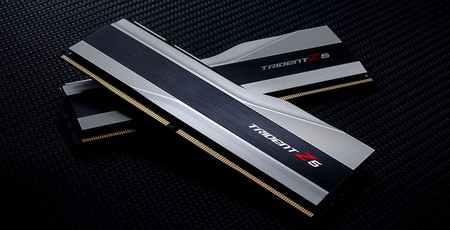
G.Skill has long recognized that for the enthusiast market, performance is only half the battle; the product must also look the part. The Trident Z5 series features a sleek, sophisticated design language that departs from the more aggressive, angular aesthetics of previous generations.
The modules are characterized by a piano-black top bar that provides a minimalist, premium look. For those who prioritize a vibrant build, G.Skill has confirmed a parallel launch of the Trident Z5 RGB series. These modules feature a translucent light bar optimized for smooth, diffused illumination, allowing users to synchronize their lighting profiles with other high-end components.
Beyond the visuals, the design serves a functional purpose. High-speed memory generates heat, and the Trident Z5 heat spreader is engineered to dissipate thermal energy efficiently, ensuring that the modules maintain stability even under the heavy load of an overclocked system.
Official Responses and Industry Outlook
The industry response to the Trident Z5 has been one of cautious excitement. While G.Skill’s engineering achievement is universally lauded, the overarching concern remains the price-to-performance ratio.
"We are entering a period of significant premium pricing," notes one hardware analyst. "Early adopters of DDR5 should expect to pay a premium of at least 50 percent over equivalent DDR4 capacities. When you factor in the additional cost of G.Skill’s top-tier binned kits, this is truly a ‘halo’ product for the absolute enthusiast."
G.Skill maintains that their target demographic is not the budget-conscious user, but rather the gamer, creator, and overclocker who demands the absolute peak of system performance. By positioning the Trident Z5 as the "ultimate performance choice," G.Skill is leaning into its reputation as the brand for those who refuse to compromise on hardware quality.
Implications for the Future of Desktop Computing
The release of the G.Skill Trident Z5 DDR5-6600 kits has several implications for the future of the PC landscape:
1. The Death of DDR4 Enthusiast Dominance
With high-speed DDR5 becoming a reality, the window of relevance for high-end DDR4 is rapidly closing. While DDR4 will remain the standard for mid-range and budget systems for years to come, the "prosumer" market is shifting permanently toward the new standard.
2. The Overclocking Renaissance
DDR5 provides new avenues for enthusiasts to tweak their systems. With the integration of on-module voltage control, users can adjust settings with more granularity than ever before. G.Skill’s 6600MT/s kit provides a perfect foundation for these enthusiasts to push their systems even further, potentially reaching speeds that were previously considered impossible on air or standard liquid cooling.
3. Software Optimization
As memory bandwidth increases, software developers will have more headroom to optimize their applications. We can expect to see future titles and creative suites take advantage of the increased bandwidth to reduce loading times and handle larger data sets, effectively utilizing the hardware that G.Skill and its peers are bringing to market.
Conclusion: The Price of Performance
The G.Skill Trident Z5 DDR5-6600 kits represent the pinnacle of the initial DDR5 rollout. By prioritizing both speed and tight timings, G.Skill has set a formidable benchmark that competitors will struggle to match in the coming months.
While the lack of definitive pricing and availability details remains a hurdle for potential buyers, the message from the hardware community is clear: the future of memory is here, it is incredibly fast, and it is ready to redefine what we expect from our desktop PCs. As we wait for these kits to hit the shelves, the market is poised for a significant upgrade cycle that will empower creators and gamers to push the boundaries of their digital experiences. Whether the investment in DDR5’s early-adoption premium is worth it will ultimately depend on the user’s specific needs, but for those who demand the best, G.Skill has provided the answer.


 Ammar Sabilarrohman
 Reynand Wu