Layla Zulfa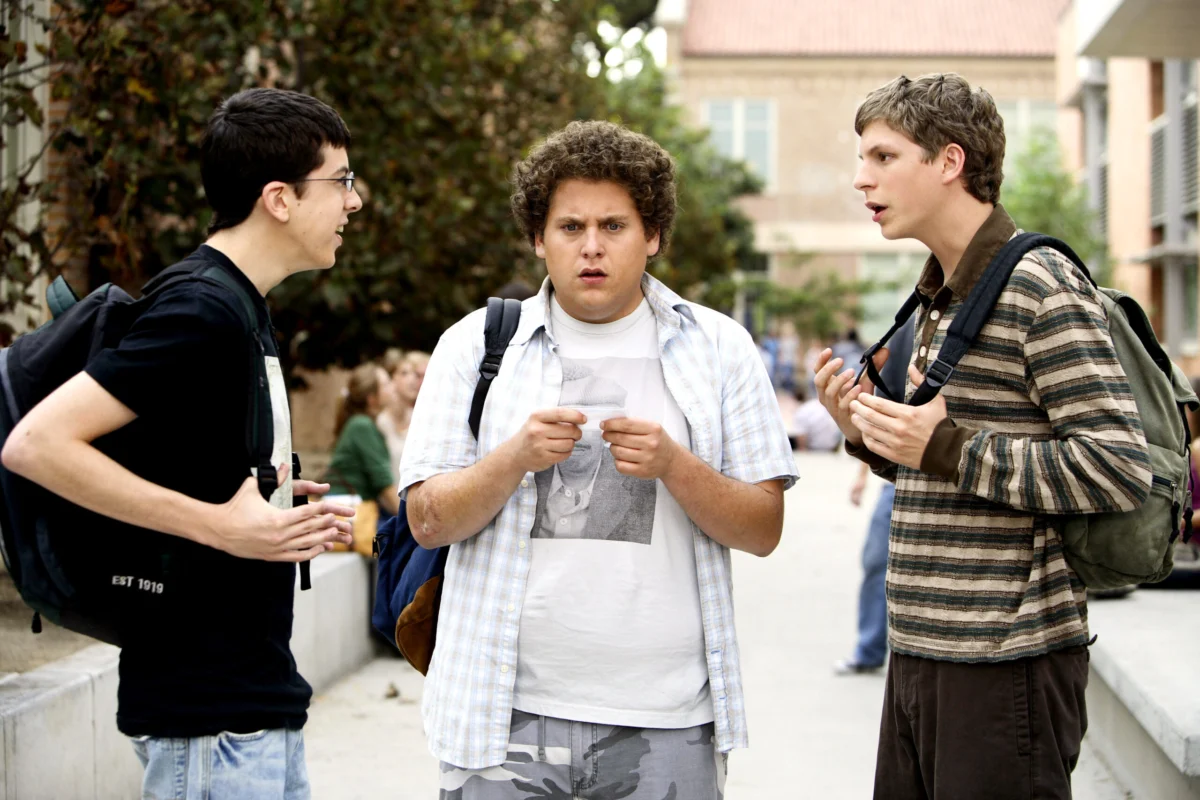
The landscape of modern Hollywood is shifting, moving away from the "creative-first" model that defined the early 2000s and toward a sterile, risk-averse environment dominated by data analytics and brand recognition. For Seth Rogen, co-writer and star of the 2007 cult classic Superbad, this transformation is not merely a change in aesthetic—it is the death of the mid-budget, character-driven comedy.
In a candid, wide-ranging interview with The New York Times, the four-time Emmy winner and co-creator of The Studio laid bare the mechanics of a film industry that he argues has become fundamentally incapable of replicating the serendipitous magic that launched his career.
The Main Facts: The "Superbad" Blueprint
Superbad remains a touchstone of the high school comedy genre. Produced on a modest $20 million budget, the film’s success wasn’t just a financial victory; it was a testament to a studio system that trusted creators to execute a vision without excessive interference.
According to Rogen, the process in 2007 was straightforward: a studio bought a script, established a clear production timeline, and committed to a release date. "When we made that movie, they bought our script, they said it would have a $20 million budget and it would start shooting that year and would come out in August of the following year," Rogen explained. "That’s it."
Today, that streamlined, efficient process is a relic of a bygone era. Rogen asserts that no major studio would currently commit to a production pipeline without first ensuring that every variable—from social media metrics to star power—has been "de-risked."
Chronology of a Shifting Industry
To understand Rogen’s critique, one must look at the historical trajectory of film financing.
The Mid-2000s: The Era of Creative Trust
In the mid-2000s, executives like Amy Pascal, then the head of Sony Pictures, operated under a philosophy of "creative autonomy." The belief was simple: if you hire the funniest, most capable people for a project, the quality of the film will naturally drive its financial success. There was a willingness to gamble on scripts, assuming that the talent behind them would deliver a product that resonated with audiences.
The 2010s: The Rise of the Franchise Model
Following the success of massive comic book properties, studios began pivoting toward intellectual property (IP). The focus shifted from "What is a good story?" to "What is a recognizable brand?" This period saw the gradual atrophy of the mid-budget comedy. Studios became increasingly reluctant to invest in original concepts that did not come with a built-in fan base or a pre-existing franchise footprint.
The 2020s: The Algorithmic Gatekeeper
We are currently in the era of the "Risk-Averse Gatekeeper." Rogen describes a landscape where the primary goal of an executive is not to foster art, but to justify expenditures to a board of directors or corporate stakeholders. The current requirement—having a "package" (famous actors, bankable directors, and viral potential) before a project is even considered—has created a bottleneck that effectively chokes out original, mid-budget storytelling.
Supporting Data: The Economics of Risk Aversion
Rogen’s frustration stems from the intense scrutiny placed on casting. In the contemporary studio system, an actor’s "name recognition" often supersedes their suitability for the role.
"If [the actors] aren’t famous enough, then we’ve got to get different ones, or else we won’t make it," Rogen lamented. "And I know we want it to start shooting in April and release it next summer, but if we don’t have the right actors, we’re not going to do that, because we think these actors will get us more money than these actors, even though they might not be the funniest actors for the role."
This focus on "marketability" over "suitability" creates a perverse incentive structure. Studios are spending millions to acquire "star power" in hopes of mitigating risk, yet this very process often alienates the audience, who can sense when a performance feels manufactured rather than organic. Rogen notes that while you may eventually reach the "funniest people" for a role, the process of getting there is now fraught with bureaucracy and fear, effectively stripping the creative process of its vitality.
The "YouTube Effect" and the New Wave of Filmmakers
Despite his bleak outlook on the studio system, Rogen remains observant of new, disruptive trends. When questioned about the recent success of horror films like Obsession and Backrooms—both spearheaded by young, YouTube-native creators—Rogen acknowledged a shifting tide.
He revealed that he had met with Backrooms director Kane Parsons four years ago, long before the industry realized the potential of creators emerging from the internet. This suggests that while traditional studio gatekeepers are failing to innovate, the industry is seeing a "tectonic shift" from the bottom up.
"I think by definition it is a volatile industry," Rogen said. "The one defining feature of Hollywood from my experience is that every few years there’s a tectonic shift."
This indicates that Rogen does not believe film as a medium is dying; rather, the traditional method of film production is becoming obsolete. The audience’s appetite for fresh, authentic content remains, but the power dynamic is moving away from studio boardrooms and toward creators who can build their own audiences independently.
Implications: The Future of Original Content
The implications of Rogen’s critique are profound for both the industry and the audience.
1. The Erosion of Mid-Budget Cinema
If the current trend of risk aversion continues, we are likely to see a further decline in the "R-rated comedy" or the grounded, character-focused drama. These films rely on chemistry and timing, not special effects or franchise recognition. As these projects become harder to greenlight, the variety of content available in theaters will continue to narrow.
2. The Rise of the Independent Disruptor
As Rogen noted, the "tectonic shifts" in Hollywood often come from unexpected places. If studios refuse to take risks on original scripts, filmmakers will continue to turn to platforms like YouTube or independent streaming ventures to bypass traditional gatekeepers. We may be entering an era where the next Superbad is not a $20 million studio production, but a $500,000 viral project that proves its worth to a studio after it has already cultivated a massive, proven fan base.
3. The Professionalization of "Packaging"
The "packaging" of films—the need for big names and guaranteed returns—is unlikely to disappear. However, the industry may reach a breaking point where the cost of these packages exceeds the potential for profit. When the risk of "safe" movies becomes as high as the risk of "original" movies, studios may be forced to revert to the creative-first model that Rogen fondly recalls.
Conclusion: Rogen’s Stoic Outlook
Despite his criticisms, Rogen maintains a pragmatic, almost stoic approach to his career. He does not view it as his responsibility to dictate the evolution of the industry. "Thank god it’s not really my job to be overly invested in these trends," he remarked. "I’m able to keep my head down, and we’re aware of them, and we’ll ride the waves if it fits in with our own creative ambitions."
Seth Rogen’s perspective serves as a wake-up call to an industry that has become paralyzed by its own desire for certainty. In a business defined by volatility, the attempt to eliminate risk is, ironically, the greatest risk of all. By prioritizing spreadsheets over scripts and name recognition over chemistry, Hollywood may be inadvertently starving itself of the very content that makes it worth watching. As the landscape continues to shift, the question remains: will the studios learn to trust creators again, or will they continue to watch as the next generation of talent builds a new industry on the fringes?

 Sagoh
Sagoh
 Nana Wu