Lina Irawan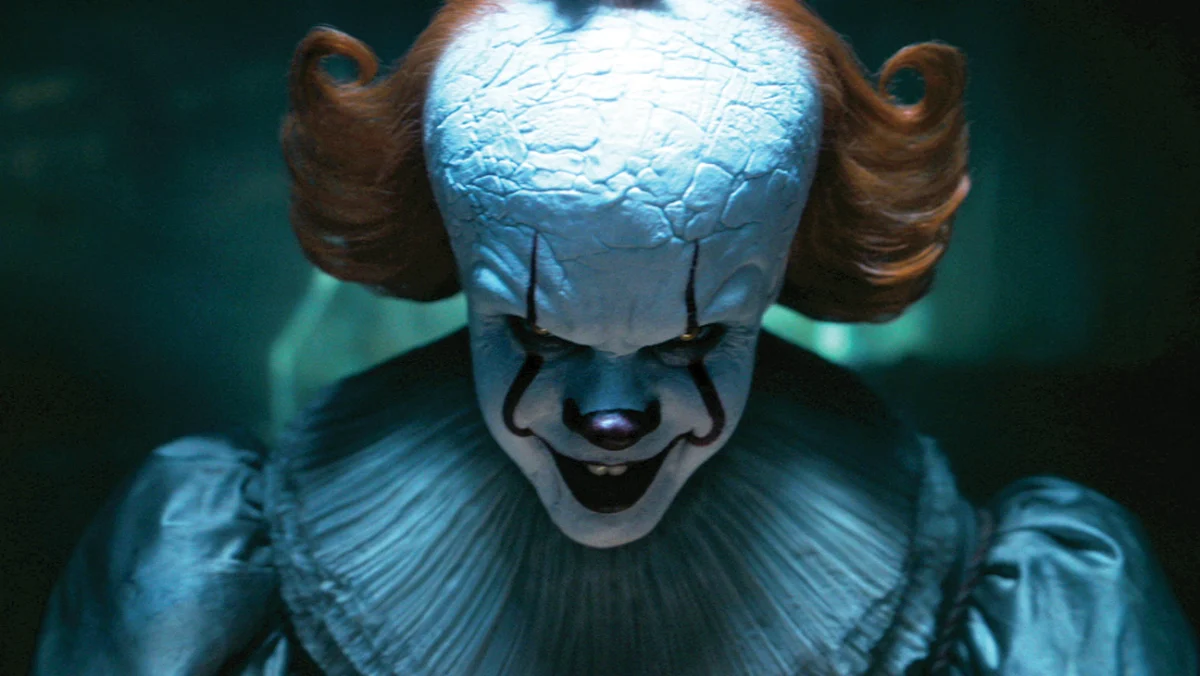
In the landscape of modern prestige television, where the allure of seamless, green-screen-heavy visual effects often dictates the aesthetic of genre storytelling, HBO’s It: Welcome to Derry stands as a defiant, slime-covered anomaly. By merging the technical precision of modern VFX with the tactile, stomach-churning heritage of "old-school" practical effects, the prequel series—which serves as a precursor to the events of the 2017 It film—has set a new benchmark for visceral horror.
The series, which transports viewers 25 years before the events of the blockbuster films, captures the town of Derry in the 1960s. It is a world of encroaching darkness, where the supernatural is not merely a digital overlay but a tangible, suffocating presence. Through the lens of co-developer Andy Muschietti and VFX supervisor Daryl Sawchuk, the production has crafted an experience that prioritizes the "real" over the "rendered," proving that in the world of horror, there is no substitute for physical grime.
The Foundation of Fear: Practicality at the Forefront
To understand the unique visual language of Welcome to Derry, one must look at the "Mother Thing," a surreal, nightmare-inducing creation featured in the show’s second episode. In the sequence, young Ronnie (Amanda Christine) finds herself trapped in a hallucinatory womb, a space where her deceased mother morphs into the very bed she hides beneath.
To the casual observer, the scene screams "post-production wizardry." Yet, the reality is far more grounded. The production team constructed a specialized bed capable of housing two actresses, with one performer dedicated to the creature’s upper body. Every fold of drapery, every flicker of calculated lighting, and the "disgusting-looking intestine" that Ronnie reaches out to touch were physically present on the soundstage.

"That stuff that we photographed was real," explains VFX supervisor Daryl Sawchuk. "The drapery, the lighting, everything in the room was a solid foundation. We went in and withered the mom away and made her more of a corpse, with a dried-out mummified effect, but we had such a great foundation to work on."
This philosophy—that VFX should supplement, not replace, physical reality—was the guiding principle for the entire season. Muschietti, a staunch proponent of prosthetics, makeup, and visceral set-pieces, encouraged a workflow where digital enhancements were used only to augment the "foundation" captured on camera.
Chronology of Development: From Script to Screen
The path to Welcome to Derry was anything but conventional. While typical episodic television is often hamstrung by tight production schedules and budgetary constraints that force a reliance on CGI, this production benefited from an unexpected two-and-a-half-year development cycle.
- Ideation and Pre-Production: Muschietti and his team approached the series not as an eight-episode television run, but as a singular, extended cinematic experience. This allowed for an unusual level of collaboration between the prosthetic departments and the VFX team.
- The Birthing Sequence: The series opens with a bold, bloody entry point: the birth of a flying mutant baby. While industry standards might have dictated a fully CG creature, the production team opted for puppetry. The result was a raw, shocking sequence that set the tone for the series’ uncompromising vision.
- Refinement Phase: Due to industry-wide strikes and scheduling shifts, the VFX team found themselves with the luxury of time. This allowed for "extra reps and extra refinements," ensuring that every frame of slime, every twitch of an eye, and every anatomical detail of Pennywise was polished to a degree rarely seen in television.
- Final Polish: Even in the final stages of post-production, Muschietti remained hands-on. According to Sawchuk, no shot was considered truly "finished" until it was effectively taken out of their hands, ensuring the aesthetic remained consistently grotesque and high-quality.
Supporting Data: Anatomy of an Icon
Perhaps the most significant challenge for the production was the return of Pennywise, played once again by Bill Skarsgard. While the character is iconic, the creative team was determined to avoid a "rinse and repeat" approach. Instead, they leaned into the "anatomical" nature of the villain.

Working closely with Montreal-based vendor Rodeo FX—who were instrumental in the original films—the team scrutinized how the character moved and changed. They focused on the subtle, terrifying mechanics of the face: how the orbital bones shift when the mouth stretches, how the skin pulls against the muscle, and the sheer, wet realism of the clown’s interior features.
"I thought we could do something that was a little more anatomical," says Sawchuk. "We could really play into how as the mouth stretches open, what the orbital bones do, and how that structurally pushes and pulls the anatomical features underneath the face. As a result, it was a more aggressive-looking Pennywise."
By shifting the focus to these minute, naturalistic details, the team ensured that the audience would perceive Pennywise not just as a monster, but as a biological threat. In the chilling tunnel sequence, where Pennywise remains frozen while his eyes twitch, the camera lingers on the drool, the teeth, and the texture of his makeup. It is a masterclass in using high-end VFX to highlight, rather than hide, the practical work underneath.
Official Responses and the "HBO Factor"
The creative freedom afforded to the team is a point of significant discussion for the production. Sawchuk admits that had they been working on a more restrictive platform, many of the show’s more visceral moments might have been sanitized.

"I think on any other platform or with any other studio, there probably would’ve been a lot of notes and maybe a more conservative approach," Sawchuk notes. He draws parallels to the shock-value of Game of Thrones, where the unexpected death of a protagonist set the stage for a series that refused to play by traditional rules.
The studio’s willingness to embrace the "shocking and visceral" allowed the VFX team to experiment with imagery that might otherwise have been deemed too intense for a broader audience. Whether it is the puppeteered birthing scene or the mummified decay of the Mother Thing, the collaboration between the network and the creative team fostered an environment where "too much" was rarely a concern.
Implications: The Future of Horror Television
The success of Welcome to Derry in blending practical and digital effects has significant implications for the horror genre. It demonstrates that viewers, particularly in the streaming age, crave the texture and weight of practical effects.
The "convenience factor" of blue-screen production, while cost-effective in the short term, often leads to a "flat" visual aesthetic that can detract from the sense of danger in a horror story. By choosing the more difficult, labor-intensive path, Muschietti and his team have created a benchmark that other genre productions will find difficult to ignore.

Furthermore, the show’s success highlights the importance of collaboration between departments. When prosthetics, art direction, and VFX are treated as a unified whole rather than silos, the resulting imagery is significantly more immersive. The decision to spend years developing these looks—and to treat a series as an "eight-hour feature film"—suggests that the future of premium horror television lies in the return to craft.
As Sawchuk aptly puts it, the goal was always to push the "old-school horror film work" to its limits. In the world of Welcome to Derry, the rule is simple: when in doubt, add more goo. It is a philosophy that has not only elevated the series but has reminded audiences why we turn to horror in the first place—to see the impossible made, through hard work and creative ingenuity, terrifyingly real.

 Nana Wu
 Layla Zulfa