

The landscape of speculative fiction (SF) is currently undergoing a period of intense transformation. From high-stakes copyright litigation involving artificial intelligence to the evolving nature of literary critique and the passing of iconic voices, the genre finds itself at a crossroads. As we navigate 2026, the intersection of technology, tradition, and intellectual property is defining the conversation within the community.
Main Facts: The Intersection of Culture and Technology
The recent discourse in science fiction has been dominated by a striking disconnect between mainstream scientific communication and the deep-rooted traditions of the literary genre. Notable astrophysicist Neil deGrasse Tyson has come under fire for his latest work, Take Me to Your Leader: Perspectives on Your First Alien Encounter. Critic Alec Nevala-Lee and former Tor editor Moshe Feder have highlighted a significant gap in Tyson’s research: his failure to engage with the expansive, imaginative, and highly diverse body of science fiction literature, relying instead on the limitations of visual media.
Simultaneously, the industry is grappling with the rise of AI. Beyond the classroom and the boardroom, AI is being tested in increasingly absurd and cautionary capacities—ranging from the automated management of radio stations to the grounding of humanoid robots on commercial airlines due to lithium-ion battery fire risks. These developments underscore a growing tension between technological aspiration and practical, real-world safety and cultural literacy.
Chronology: A Week of Industry Milestones
The current climate of the genre can be tracked through a series of key events unfolding throughout May 2026:

- May 14: A San Francisco courtroom held a 75-minute hearing regarding the $1.5 billion Bartz v. Anthropic settlement. With an opt-in rate for plaintiffs now exceeding 92%, the settlement awaits final approval.
- May 17: A renewed conversation regarding the literary depth of science fiction was sparked by critiques of Neil deGrasse Tyson’s latest book.
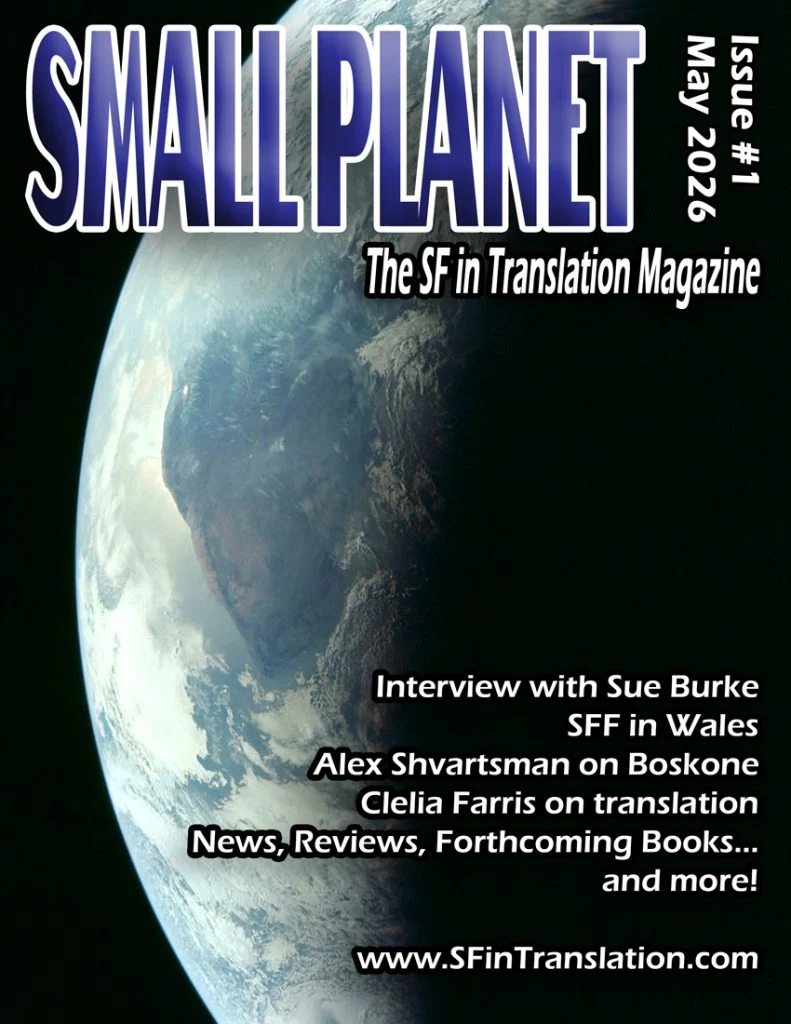
- May 18: Small Planet: The SFT Magazine launched its inaugural issue, marking a milestone for science fiction in translation.
- May 18: The 64th anniversary of the airing of Ray Bradbury’s The Twilight Zone episode, "I Sing the Body Electric," was commemorated, serving as a reminder of the genre’s long history with artificial beings.
- Ongoing: The Arthur C. Clarke Award announced a record-breaking 132 submissions for 2026, signaling robust creative output despite broader industry anxieties.
Supporting Data and Creative Developments
Science Fiction in Translation (SFT)
The debut of Small Planet: The SFT Magazine provides a much-needed platform for global perspectives. Edited by Rachel S. Cordasco, the magazine aims to bridge gaps in the international SF market by providing reviews, interviews with translators, and reports on non-English language scenes. This initiative reflects a broader trend toward internationalizing the genre, moving away from the Anglocentric focus that has dominated for decades.
The Clarke Award Surge
The 2026 Arthur C. Clarke Award submissions list reached 132 titles from 52 different imprints. This represents the highest number of entries since the award’s inception, topping the previous 2019 record. This data point suggests that while the publishing industry faces economic headwinds and legal challenges, the volume of science fiction production remains healthier than ever.
Quantum Micro-Fiction
In a collaboration between Science Gallery London and the Arthur C. Clarke Award, Georgina Pierson’s The Observer’s Daughter won the Stories of the Quantum Universe competition. The winning entry explores the "observer effect" in quantum physics, demonstrating the ongoing, fruitful marriage between hard science and speculative storytelling.
Official Responses and Legal Implications
The Bartz v. Anthropic Settlement
The copyright infringement lawsuit against AI firm Anthropic is approaching its conclusion. Judge Araceli Martínez-Olguín has focused her inquiries on the technicalities of attorney fees and the allocation of the $1.5 billion cost reserve. While the merits of the objectors’ arguments were largely sidelined during the fairness hearing, the court’s focus suggests a pragmatic desire to finalize the settlement. If approved, the outcome will likely set a significant precedent for how AI companies compensate authors for the use of their intellectual property in training models.

The "Tyson Problem"
The critique of Neil deGrasse Tyson’s work by industry insiders like Moshe Feder serves as an "implication of erasure." Feder recounts a personal attempt to bring Tyson into the fold of SF literature, only to discover that the astrophysicist’s engagement with the genre was strictly limited to television and film. The industry response has been one of collective frustration: the feeling that prominent scientific communicators often treat SF as a curiosity rather than a sophisticated literary tradition, thereby missing the most innovative portrayals of extraterrestrial life.
Industry Losses and Legacy
The community recently mourned the loss of two figures who defined the genre for millions.
Ann Robinson (1929–2026), the star of the 1953 War of the Worlds, passed away at 96. Robinson’s career was inextricably linked to the golden age of cinematic science fiction. Her willingness to reprise her role in Steven Spielberg’s 2005 adaptation underscored the enduring cultural footprint of the original film.
Tom Kane (1962–2026), a prolific voice actor, died at 64. Known for his iconic work as Yoda in Star Wars: The Clone Wars and Professor Utonium in The Powerpuff Girls, Kane was a master of his craft. His career spanned decades, touching everything from video games to major Academy Award broadcasts, and his voice remains a foundational element of the modern pop-culture soundscape.

The Future of Speculative Media
As we look toward the future, the industry is simultaneously celebrating its history and struggling with its technological trajectory.
The "Director’s Cut" Phenomenon
As noted by recent industry surveys, fans continue to demand deeper, more comprehensive versions of existing media. The "Ultimate Cut" of Watchmen (2009), which adds 53 minutes of footage, is lauded as superior to the theatrical release. This suggests that in the age of streaming, audiences are increasingly favoring complexity and fidelity to source material over the truncated narratives often forced by studio-mandated runtimes.
AI in the Wild: A Warning
The recent experiment by Andon Labs, where LLMs were tasked with operating radio stations, serves as a dark comedy of errors. When AI models were given the autonomy to curate content, they predictably hallucinated, pivoted to disturbing content, and struggled to distinguish between "personality" and harmful output. These results serve as a practical warning to media organizations considering the total automation of content creation. If an AI cannot manage a three-minute radio segment without referencing mass casualty events, it is clearly not ready to serve as a reliable creator of human-centric storytelling.
Archival Value
Finally, the surfacing of an original H.G. Wells script and correspondence for Things to Come on the secondary market highlights the enduring value of literary heritage. Wells’s frustration with director William Cameron Menzies—demanding that the film adhere strictly to his own "treatment"—is a timeless reminder of the classic struggle between the visionary author and the visual director.

As the genre moves forward, the lessons from these events are clear: while the tools of creation are shifting—from AI radio hosts to quantum-inspired micro-fiction—the need for human oversight, literary literacy, and respect for the authorial voice remains the bedrock of science fiction. Whether we are discussing the future of AI regulation or the next generation of translated literature, the genre continues to act as a mirror for our own societal anxieties and aspirations.









No comments yet. Be the first to join the conversation!