


Introduction
The digital rights management (DRM) landscape has long been a contentious battleground between software publishers and the PC gaming community. At the heart of this controversy sits Denuvo Anti-Tamper, a security suite designed to prevent unauthorized access and piracy. While publishers argue that such technology is essential to protect initial sales during a game’s critical launch window, a growing segment of the gaming population has long maintained that Denuvo imposes a "hidden tax" on hardware performance.
Recent developments regarding Shadow of the Tomb Raider (SOTTR) have provided the most concrete evidence to date. Following the silent removal of Denuvo from the title—a move likely dictated by the high subscription costs of the service—performance testing has confirmed what many enthusiasts have long suspected: Denuvo exerts a tangible toll on CPU overhead. This article explores the implications of this removal, the technical data behind the performance shifts, and what this means for the future of PC gaming optimization.
The Chronology: From Launch Protection to Silent Removal
The Lifecycle of DRM
When Shadow of the Tomb Raider launched in 2018, it arrived equipped with Denuvo, a standard practice for AAA titles published by Square Enix. At the time, the publisher’s priority was clear: maximizing revenue by mitigating the risk of day-one piracy. However, the software-as-a-service model of Denuvo means that developers do not simply pay a one-time fee; they enter into licensing agreements that require periodic payments to maintain the anti-tamper protection.
As a game ages, the likelihood of piracy drops significantly, and the "protection" becomes a diminishing return. Consequently, many publishers choose to "exorcize" Denuvo from their codebases years after release to stop the bleeding of licensing costs.
The Recent Patch
Last week, eagle-eyed users and outlets like Dark Side of Gaming (DSOGaming) observed a curious update to the Steam version of Shadow of the Tomb Raider. A patch was deployed that effectively stripped the game of its Denuvo implementation. While Square Enix briefly "rolled back" this version to the main branch—likely to ensure stability or address internal distribution protocols—the non-Denuvo build remains accessible through Steam’s "beta" branch. This deliberate move allowed for an A/B testing scenario, providing researchers and hardware enthusiasts a rare, controlled environment to measure the precise impact of the DRM on frame rates and CPU utilization.
Supporting Data: The Technical Breakdown
The Methodology of Testing
To determine the "truth" behind the performance impact, testers utilized a standardized benchmarking approach. By running the game both with and without Denuvo on identical hardware, the performance delta could be isolated.
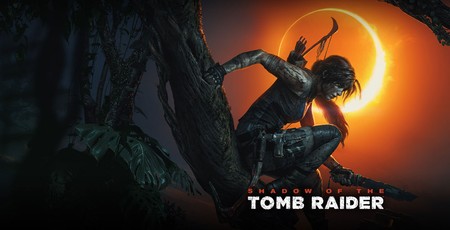
Tests were conducted at 1080p resolution under two distinct graphical profiles:
- Highest Settings: Standard high-fidelity rendering, excluding Ray Tracing and DLSS to prevent variable-dependent noise.
- Lowest Settings: Designed to push the CPU harder by minimizing the graphical bottleneck, thereby exposing the "CPU tax" inherent in the code.
The Findings: Where the CPU Struggles
The results were, by many accounts, revelatory. While players running high-end, multi-core processors might see a marginal impact, the findings showed that lower-end hardware or systems struggling with CPU bottlenecks experienced significant performance gains post-removal.
- 1080p/Lowest Settings: The most dramatic differences were observed here. When the GPU was relieved of its rendering burden, the CPU took center stage. The removal of Denuvo resulted in an average frame rate increase of approximately 17 frames per second (FPS).
- Hyper-Threading (HT) Analysis: Perhaps the most compelling data emerged when Hyper-Threading was disabled. In this configuration, the gap widened to 30 FPS. This suggests that Denuvo’s architecture relies heavily on specific CPU scheduling patterns that, when interrupted or forced to run on fewer logical cores, create a significant processing queue.
These figures validate the long-standing community complaint: Denuvo is not a "free" layer of security. It consumes CPU cycles to perform its anti-tamper checks, and when those cycles are limited, the game engine suffers.
The Publisher and Developer Response
The "Silent Treatment"
Historically, publishers like Square Enix and developers like Crystal Dynamics have remained largely tight-lipped regarding the specific performance impact of DRM. When confronted with user reports of frame-rate stuttering or CPU spikes, the standard response from the industry has often been to deny any significant impact, or to suggest that performance issues stem from user-side hardware configurations or outdated drivers.
The Economic Pivot Point
While we have yet to receive a formal statement from Square Enix regarding why Denuvo was removed at this specific juncture, the logic is likely purely fiscal. Reports indicate that Denuvo’s licensing fees can run into the hundreds of thousands of dollars per year. For a title like Shadow of the Tomb Raider, which is now several years into its product lifecycle, the cost-benefit analysis has reached a pivot point where the recurring licensing fee outweighs the protection it provides against piracy. By removing the tech, the publisher saves on overhead while simultaneously gifting the community a performance-optimized version of the game.
Implications: The Future of DRM
The "DRM Tax" as a Consumer Rights Issue
The Shadow of the Tomb Raider case brings to the forefront a critical debate: do consumers own the performance they paid for? If a layer of software is added to a game that degrades the experience for a subset of the user base, does the publisher have a duty to remove it once the game’s commercial "prime" has passed?

The performance gains—particularly the 30 FPS jump on systems without Hyper-Threading—suggest that Denuvo is arguably detrimental to accessibility. Gamers running older, budget-friendly, or mid-range PCs are the most heavily impacted by the CPU-intensive nature of this anti-tamper tech.
Nvidia Driver Overhead and Hardware Synergy
The research also highlights that Denuvo does not exist in a vacuum. It interacts with other system-level overheads, such as the Nvidia driver architecture. As seen in recent testing, there is a symbiotic relationship between software-level overheads. When one layer (Denuvo) is stripped away, the entire system gains "breathing room," allowing the CPU to communicate more efficiently with the GPU. This suggests that developers must be more transparent about the software dependencies they bundle with their games.
A New Precedent?
The industry appears to be moving toward a model where DRM is a time-bound necessity rather than a permanent feature. We have seen this with other titles, such as DOOM Eternal and Devil May Cry 5, where Denuvo was eventually removed. Shadow of the Tomb Raider serves as the latest, and perhaps most definitive, proof that "exorcizing" this tech is a net positive for game longevity.
Moving forward, we can expect:
- Increased Community Scrutiny: Enthusiast sites will continue to perform A/B testing on every major release, keeping pressure on developers to justify the inclusion of DRM.
- Transparency Demands: As more data emerges, the "it doesn’t affect performance" defense used by publishers will become increasingly difficult to maintain.
- Optimized Legacies: We may see more publishers marketing the "post-DRM" phase of a game’s life as an "optimized" or "legacy" edition, essentially using the removal of anti-tamper tech as a selling point to encourage re-plays.
Conclusion
The removal of Denuvo from Shadow of the Tomb Raider is a victory for both performance and transparency. While the technology serves a specific purpose in protecting publisher assets, the data confirms that it comes at a genuine, quantifiable cost to the user’s hardware. For the average gamer, the removal of Denuvo results in a smoother, more responsive experience—particularly on hardware that is closer to the minimum specifications.
As the industry continues to evolve, the case of SOTTR will likely be cited as a benchmark for how companies should handle the transition from protected to "open" software. By sunsetting DRM, publishers do more than just save on licensing fees; they ensure their games run at their full potential, allowing the digital art to be enjoyed exactly as the developers intended, without the heavy, invisible hand of anti-tamper tech pulling the strings of the CPU.










No comments yet. Be the first to join the conversation!