Jia Lissa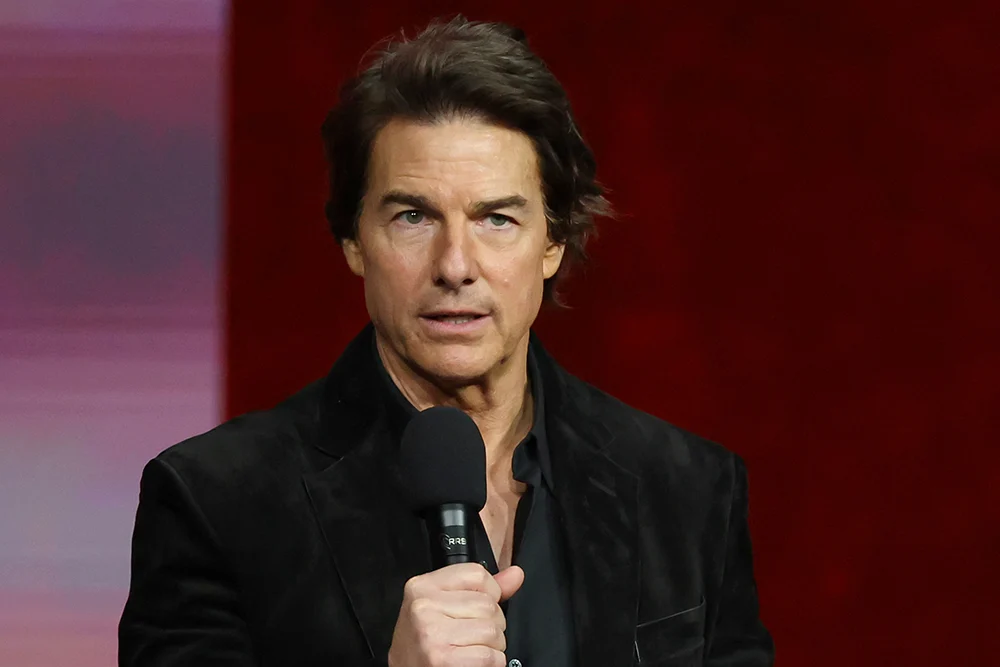
In an era defined by the rapid encroachment of artificial intelligence into the creative arts, one of Hollywood’s most enduring icons is doubling down on the visceral power of the human experience. During an intimate "Life in Pictures" conversation hosted by BAFTA in London this past Monday, Tom Cruise—a man whose four-decade career has served as the gold standard for cinematic spectacle—offered a defiant, optimistic vision for the future of film.
While the industry grapples with the existential anxieties brought on by generative AI, Cruise’s message was clear: technology may evolve, but the audience’s hunger for tangible, human-crafted storytelling remains an unshakeable constant.
A Legacy of Innovation
The BAFTA event served as a reflective bridge between Cruise’s storied past and his ambitious future. Over the course of the evening, the actor looked back on a filmography that has shaped the landscape of modern blockbusters and prestige drama alike. From the high-octane aerial maneuvers of Top Gun to the nuanced emotional depths of Jerry Maguire and the sprawling, interconnected narrative of Magnolia, Cruise has consistently demonstrated a commitment to pushing the boundaries of what is possible on screen.
However, it was his signature Mission: Impossible franchise that served as the focal point for the discussion regarding the intersection of technology and art. As the franchise has evolved, it has remained at the forefront of technical innovation—often blurring the lines between real-world stunts and cutting-edge visual effects. With the upcoming 2025 release, Mission: Impossible – The Final Reckoning, the series confronts the AI debate head-on, casting the technology as the primary antagonist.
The Human Imperative: Why Real Matters
When moderator Edith Bowman asked Cruise how he perceived the looming shadow of AI over the film industry, he did not shy away from the reality of its advancement. "You know, it is coming and it’s going to happen," he acknowledged. Yet, his response was rooted in a profound belief in the unique alchemy that occurs between a performer and an audience.
"Here’s the thing: There is nothing like human," Cruise stated. He argued that the current anxiety surrounding AI overlooks the fundamental truth of why people go to the movies. For Cruise, the theatrical experience is not merely about content consumption; it is a "different art form" that requires a collective gathering of people. It is this communal aspect—the shared gasps, the synchronized laughter, and the collective immersion—that technology cannot replicate.
"I have nothing against streaming or anything like that," Cruise clarified, noting that digital platforms have their place. However, he insisted that the cinematic experience is uniquely equipped to satisfy a deep-seated human need for connection and shared narrative. "People want that experience. They’re going to movie theaters. I always believe in humanity."
Supporting Data: The Box Office Resurgence
Cruise’s confidence in the theatrical model is not merely a philosophical stance; it is supported by the most recent market data. Despite widespread industry fears regarding a post-pandemic decline in ticket sales, the summer of 2026 proved that the appetite for the "big screen" is stronger than ever.
The industry saw record-breaking performance during the summer window (May 1 to Labor Day), grossing an unprecedented $4.76 billion. This surge in box office revenue serves as a powerful counter-narrative to the idea that audiences have abandoned the cinema in favor of home-based digital alternatives. For Cruise, this data confirms his long-held thesis: if you provide the audience with high-quality, authentic storytelling, they will show up in droves.
The success of recent major titles suggests that the audience is not suffering from "superhero fatigue" or "sequel syndrome," but rather a "lack of craft" fatigue. When filmmakers double down on practical effects, authentic locations, and deeply human character arcs, the audience responds with their wallets.
The Transformation in Digger
Nowhere is Cruise’s commitment to the "human" element more apparent than in his upcoming project, Digger. Directed by Alejandro G. Iñárritu—known for his penchant for raw, visceral realism—the film features a nearly unrecognizable Cruise.
In a departure from his typical action-hero roles, Cruise portrays a wealthy oil tycoon. The transformation process was an exercise in extreme dedication, requiring the actor to wear a fat suit and complex prosthetics that initially took six hours to apply. This commitment to the physical reality of a character, rather than relying on digital de-aging or CGI-enhanced appearances, underscores Cruise’s philosophy: the audience can sense when a performance is "real."
"I’ve never read a movie like this," Cruise shared with the BAFTA audience. "It’s the most original film and one of the most moving films I’ve ever seen." Digger, which is set to hit theaters on October 2 via Warner Bros., represents a pivot for the star, signaling his desire to challenge himself creatively while maintaining the same level of intensity that he brings to his action work.
Implications for the Industry
The debate over AI in Hollywood has reached a fever pitch, with concerns ranging from the displacement of background actors and writers to the ethical implications of using likenesses without consent. Cruise’s perspective offers a path forward that focuses on agency rather than obsolescence.
His message to his fellow creatives is simple: "Keep creating."
The implications of his stance are significant for several reasons:
- Practicality as a Premium Product: As AI-generated content becomes more accessible, the value of "human-made" content will rise. Just as vinyl records saw a resurgence in a world of compressed digital audio, physical, human-centric filmmaking may become a premium commodity.
- The Theatrical Experience as a Sanctuary: Cruise is positioning the theater as a "sanctuary" for the human experience. By advocating for the theatrical window, he is encouraging studios to prioritize the quality of the communal experience over the volume of content.
- The Shift in Stardom: Cruise’s willingness to undergo grueling physical transformations for artistic roles—rather than relying on his status as a "brand"—highlights the importance of the actor as a craftsman.
Conclusion: A Future Built on Craft
As the industry stands at a crossroads, the tension between technological convenience and human artistry is palpable. However, Tom Cruise remains an unbothered optimist. He sees the encroachment of AI not as a death knell for cinema, but as a challenge to the industry to be more human, more daring, and more authentic.
By continuing to prioritize the "real" in an increasingly digital world—whether through death-defying stunts in Mission: Impossible or radical physical transformation in Digger—Cruise is betting on the audience. He believes that no matter how sophisticated algorithms become, they will never be able to replicate the resonance of a human being reaching out from the screen to connect with another.
"People want to see real things," he concluded. In a world where reality is becoming harder to define, that simple desire may be the greatest asset the film industry has. As the curtain rises on Digger this October, the world will be watching to see if the industry follows his lead, or if it loses its way in the digital ether. For now, Tom Cruise is leading the charge, proving that the most advanced technology in cinema is still the human spirit.

 Sagoh
Sagoh
 Azzam Bilal Chamdy