
 Suro Senen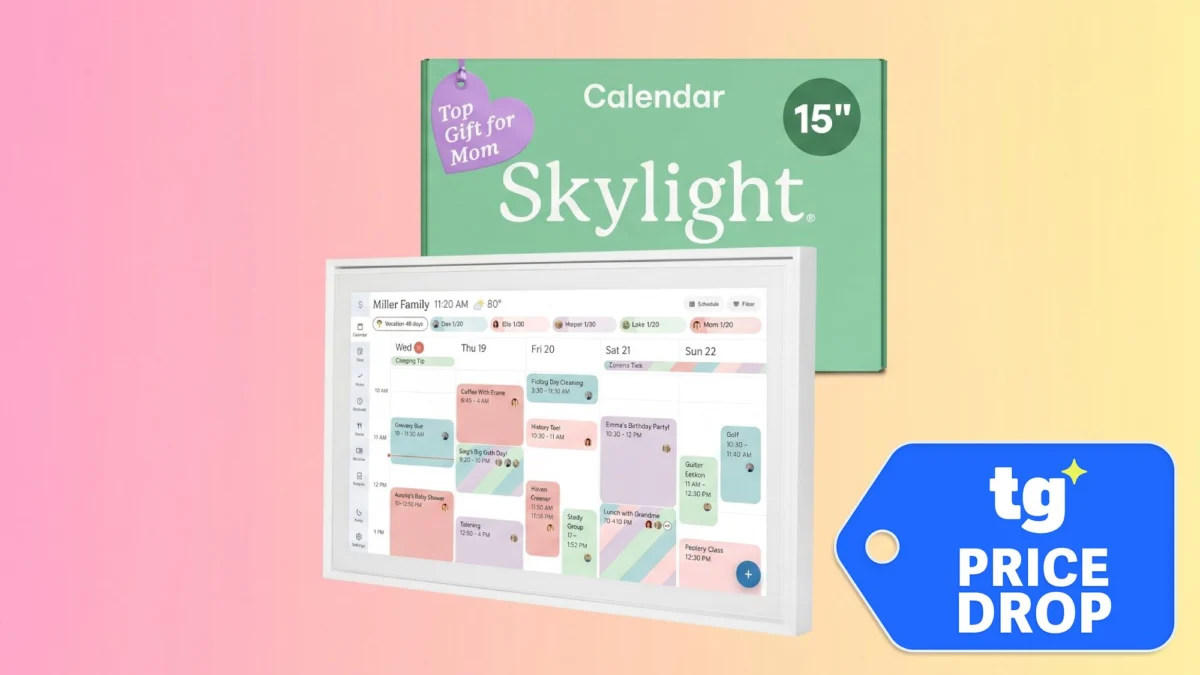
For many modern families, the simple act of coordinating schedules has evolved into a logistical marathon. Between extracurricular activities, medical appointments, school projects, and the shifting demands of professional lives, the "family calendar" has historically been a fragmented landscape of color-coded sticky notes, refrigerator magnets, and disjointed digital alerts. As households become increasingly complex, the need for a centralized, highly visible source of truth has never been greater. Enter the Skylight Calendar, a device that has recently emerged as a cornerstone of the "smart home" movement, currently available at its lowest-ever price of $249 on Amazon.
Main Facts: Bringing Order to Household Chaos
The Skylight Calendar, specifically the 15-inch touchscreen model, represents a departure from the multi-purpose smart displays like the Amazon Echo Show or the Google Nest Hub. While those devices aim to be all-encompassing portals for entertainment, automation, and communication, the Skylight Calendar maintains a singular, laser-focused mission: the organization of time and responsibility.
The device serves as a digital wall-mounted command center. Its primary utility lies in its ability to synchronize disparate digital calendars—such as Google, Outlook, or iCloud—into a single, high-definition display. By consolidating these accounts, the device eliminates the "silo effect" where one parent is unaware of an event added to the other’s phone.
Key features of the device include:
- 15-Inch Touchscreen Interface: Designed for high visibility, the screen is large enough to be read from across a kitchen, yet compact enough to fit into most interior design aesthetics.
- Color-Coded Personalization: Every member of the family can be assigned a specific color, allowing users to glance at the board and immediately identify who is responsible for which task or appointment.
- Chore and Task Management: Beyond dates and times, the system allows for the integration of to-do lists and chore charts, ensuring that daily responsibilities are as visible as major milestones.
- Dual-Purpose Display: When not actively managing the family’s schedule, the device transitions into a digital photo frame, allowing families to cycle through memories rather than staring at a static white wall.
Chronology: The Evolution of Family Organization
The journey toward the digital family hub has been a decades-long transition. In the early 2000s, the "command center" was a corkboard or a whiteboard in the kitchen, often cluttered with loose papers and dried-out markers. As the smartphone era took hold, organization moved to the cloud, but this created a new problem: visibility. If a schedule exists only on a locked screen in a parent’s pocket, children and other household members remain disconnected from the family’s collective rhythm.
The Skylight company identified this gap in the market. Initially finding success with the Skylight Frame—a digital photo frame designed for seniors to receive photos from family members—the company leveraged its expertise in user interface and hardware to pivot toward the "connected home" space.
By 2022 and 2023, the brand began heavily iterating on the Calendar software. The current iteration reflects a sophisticated understanding of household pain points: the need for ease of use, the demand for aesthetic integration, and the requirement for multi-user, multi-platform compatibility. The current price drop to $249 serves as a significant inflection point, signaling that the device is moving from a "niche luxury" to a "mass-market utility" ahead of key gifting seasons like Mother’s Day.
Supporting Data: Why Digital Management Matters
The psychological burden of household management—often referred to as "cognitive load"—is well-documented in sociological studies. The effort required to keep track of everyone’s location, appointments, and chores is a form of labor that often falls disproportionately on one individual.
According to various consumer technology reports, households that transition from paper-based or purely mobile-based tracking to a centralized digital display report a 30% reduction in "scheduling friction." This refers to the number of conflicts that arise due to miscommunication or lack of awareness.
Furthermore, the integration of smart displays in the home environment has seen a compound annual growth rate (CAGR) of over 15% in the last five years. While smart speakers focus on audio, smart displays like the Skylight Calendar address the visual nature of time management. The data suggests that when information is physically present in a shared space—like a kitchen or mudroom—family compliance with schedules increases significantly compared to devices that require the user to actively seek out information on an app.
Official Responses and Industry Perspectives
While the company has not released specific internal sales figures, the consistent demand for the 15-inch model has led to frequent stock fluctuations on major e-commerce platforms. Industry analysts often point to Skylight as a case study in "purpose-built hardware."
"Many tech companies try to do everything," says Sarah Jenkins, an analyst in the consumer electronics space. "They want to be your phone, your TV, your smart home hub, and your calendar. Skylight succeeded by saying ‘no.’ They realized that people didn’t want another smart speaker that spies on them; they wanted a better version of the refrigerator calendar. By focusing on the interface and the synchronization, they’ve carved out a loyal user base that views the product as an essential utility rather than a gadget."
User feedback has consistently highlighted the setup process as a primary strength. By allowing users to sync their existing Google or Apple calendars, the device removes the "cold start" problem where a user has to manually input their entire life history into a new system.
Implications: The Future of the Connected Household
The success of the Skylight Calendar suggests a shift in how we perceive the home environment. As we move further into the age of the Internet of Things (IoT), the "smart home" is being redefined. It is no longer just about turning lights on with your voice or setting a thermostat via an app. The next frontier of the smart home is the "organizational home"—a space that actively manages the chaos of human interaction.
The Impact on Family Dynamics
By centralizing information, the device fundamentally changes family communication. Children reach an age where they must take ownership of their own schedules. A device like the Skylight provides them with a tangible way to see their responsibilities. It moves the responsibility of "who is doing what" from a top-down parental command to a shared, visible, and democratic system.
Privacy and Security Considerations
As with any Wi-Fi-connected device, there are implications for data privacy. The Skylight system requires access to calendar data, which can be sensitive. The company has emphasized its commitment to encryption and user privacy, noting that the device is designed to be a tool for the family, not a data-mining operation for third-party advertisers. Users looking to adopt such technology are encouraged to review the device’s privacy policy, specifically regarding how calendar data is synced and stored on the device’s local memory versus the cloud.
The Last-Minute Gift Phenomenon
The current promotion, offering the device at its lowest price point, is timed strategically. It addresses the perennial challenge of "last-minute gifting" for holidays like Mother’s Day. In an era where physical gifts often become clutter, the Skylight Calendar represents a "functional gift"—something that solves a problem rather than adding to the physical load of the home.
Conclusion
The Skylight Calendar is more than just a screen; it is a manifestation of the modern family’s desire for clarity in an increasingly busy world. By bridging the gap between the digital and the physical, it offers a solution that is both high-tech and grounded in traditional household needs.
For those currently struggling with the "Post-It note pile-up," the transition to a dedicated digital calendar may feel like a significant shift, but it is one supported by the increasing necessity for clear, visible communication. With the current sale making the 15-inch model more accessible than ever, it serves as a compelling entry point for any family looking to streamline their daily operations and regain control over their most precious commodity: time. Whether it is tracking the kids’ soccer practices, managing work deadlines, or simply displaying photos that bring a smile to your face, the Skylight Calendar stands as a testament to the fact that sometimes, the best technology is the kind that makes life simpler, not more complicated.


 Raul Delapena Setiawan
 Neng Nana




