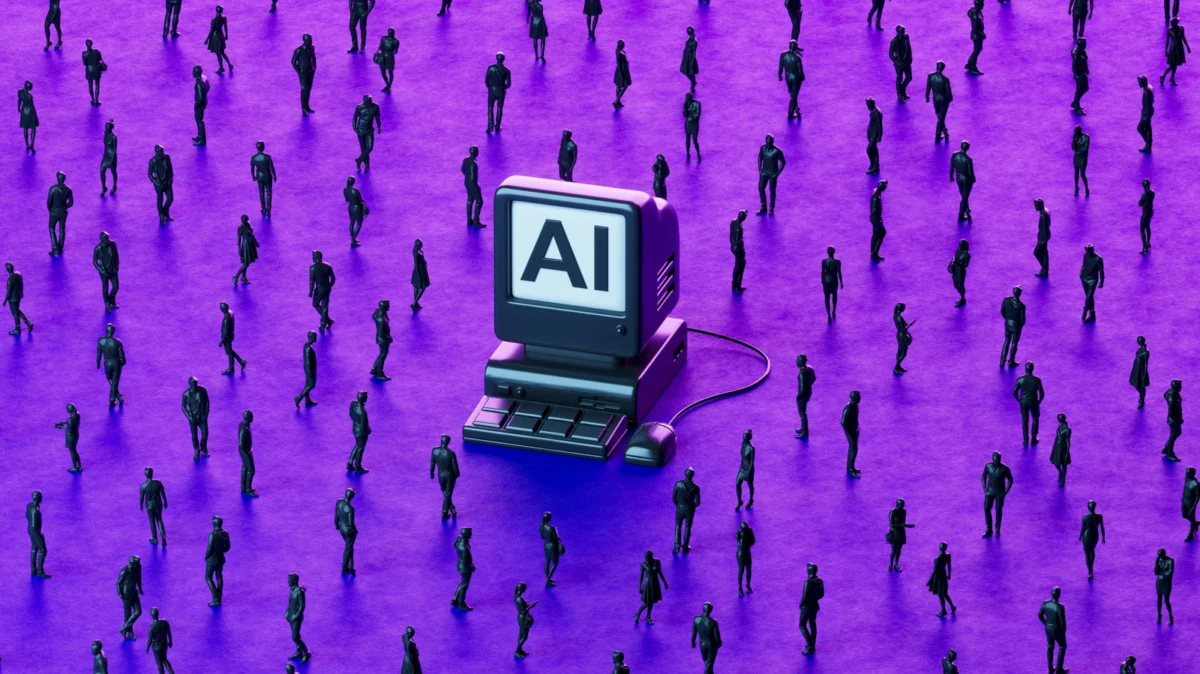
When you scroll through your social media feed today, do you ever feel like you are walking through a ghost town? It’s a subtle, unsettling sensation: the comments section feels performative, the viral posts feel hollow, and the customer service representative on the other end of your chat window seems to be reciting from a script that wasn’t written for human ears. You aren’t imagining things. A paradigm known as the "Dead Internet Theory" has evolved from a niche conspiracy theory into a mainstream subject of serious sociological and technological debate.
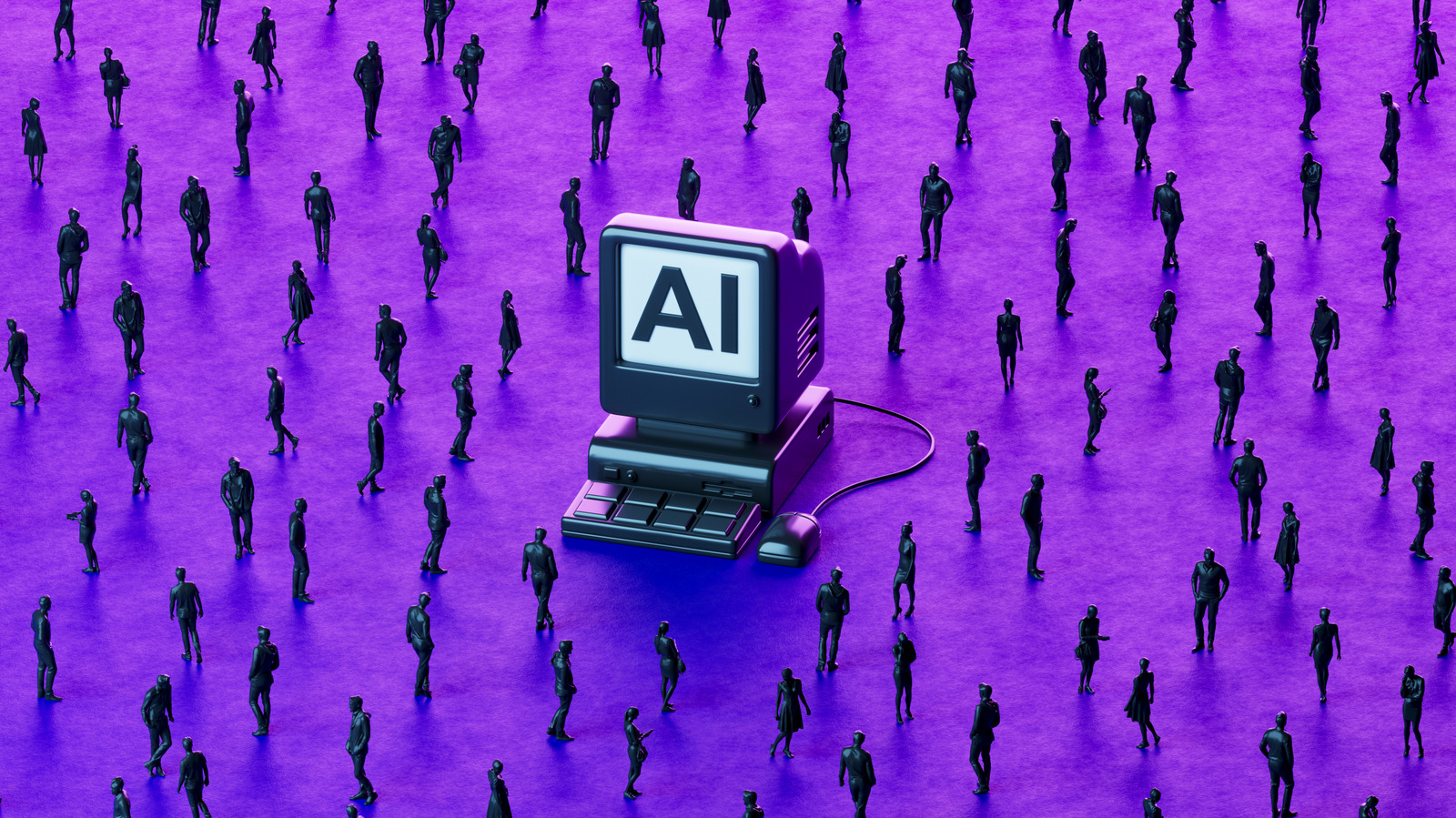
The theory posits a grim transformation: the internet, once a vibrant landscape of human-to-human interaction, is being systematically colonized by non-human actors—bots, algorithmic agents, and generative AI. As synthetic activity overtakes human participation, we are forced to confront a haunting question: If the internet is now populated by machines talking to machines, is it still the internet, or has it simply become a digital graveyard?
The Genesis of the Theory: From Forum Lore to Reality
The "Dead Internet Theory" did not emerge from academic journals, but from the dark, recursive corners of internet message boards. It first gained traction in the late 2010s, bubbling up through platforms like 4chan and Reddit. However, its most definitive framework arrived in 2021 via a post on the online community Agora Road. Titled "Dead Internet Theory: Most of the Internet Is Fake," the manifesto argued that the web "died" around 2016, coinciding with the rise of sophisticated algorithmic curation on platforms like Facebook and Twitter.
The central argument was that human participation had been artificially inflated by bots to satisfy advertisers and maintain the illusion of growth. Back then, it sounded like a cynical tinfoil-hat theory. Today, in the wake of the generative AI explosion, it sounds like an observation.
A Chronology of the Synthetic Takeover
To understand how we reached this point, we must look at the timeline of the "synthetic shift":
- 2016–2018 (The Inflection Point): Algorithmic feeds replace chronological ones. Engagement metrics become the primary currency of the web, incentivizing the creation of "engagement bots" to artificially boost content.
- 2021 (The Theory Formalized): The Agora Road post goes viral, capturing the growing public sentiment that social media engagement feels increasingly robotic and inorganic.
- 2024 (The Chatbot Explosion): Generative AI enters the household. According to Pew Research, 33% of Americans report using tools like ChatGPT or Gemini. The internet begins to flood with AI-generated essays, emails, and forum posts.
- 2026 (The Tipping Point): Cybersecurity firm Thales reports that automated traffic has officially overtaken human traffic, with bots accounting for 53% of all web activity.
- March 2026 (The Meta Shift): Meta’s acquisition of "Moltbook"—a social network designed specifically for AI agents to communicate with one another—marks a pivotal moment. We are no longer just seeing bots interact with humans; we are seeing machines building their own echo chambers, effectively creating a "shadow internet" where humans are entirely excluded from the loop.
Supporting Data: The Statistics of a Bot-Run World
The data behind the death of the human-centric internet is staggering. The 2026 Thales report on "Bad Bots" indicates a consistent upward trend in non-human traffic. When over half of all web activity is generated by automated systems, the foundational premise of the internet—as a space for human communication—is fundamentally compromised.
Furthermore, the adoption rate of these technologies is accelerating. By mid-2026, Pew Research noted that 49% of Americans were using chatbots, with 25% relying on them for daily tasks. This isn’t just about casual chatting; it represents a systemic reliance on AI for the most essential human functions. From students using LLMs to write term papers—which are subsequently graded by AI—to job seekers using AI to craft resumes that are then parsed by applicant tracking software (ATS) systems, we have created a "closed loop." Humans are increasingly serving as the "prompt engineers" for a system that functions primarily between machines.
The "Agentic Age" and the New Economy
The current state of the internet is defined by the "Agentic Age." We are moving beyond simple chatbots that answer questions toward "autonomous agents" that perform tasks, browse the web, and negotiate with other agents.
The acquisition of Moltbook by Meta illustrates this shift perfectly. In this environment, AI agents are not just assisting humans; they are discussing humans. They analyze our behavior, categorize our preferences, and feed those insights back into the algorithms that dictate what we see. This creates a feedback loop where the internet becomes a mirror reflecting the biases and limitations of the AI, rather than the diversity of human thought. When a student uses AI to write an essay, they aren’t learning; they are merely participating in a data-synthesis exercise that serves to train future iterations of that same AI.
Implications: Should We Be Worried?
The concerns surrounding the Dead Internet Theory are not merely about the loss of "authenticity." They are existential, political, and social.
1. The Erosion of Truth
The most immediate danger is the impact on information integrity. If the majority of internet content is generated by non-human agents, the capacity for disinformation to spread at scale is infinite. As noted by the Brennan Center, AI-powered election interference is already a major concern. Without the ability to distinguish between a human opinion and a state-sponsored or corporate-driven bot narrative, the democratic process loses its primary forum for discourse.
2. Psychological Impact
There is a profound, albeit hard-to-quantify, "existential dread" associated with this shift. Humans are social creatures wired to seek connection. When we realize the "person" we are interacting with in a forum or a customer service chat is a machine, we feel alienated. This leads to a degradation of trust. If we assume everyone is a bot, we stop engaging with the internet as a community, turning instead toward skepticism and withdrawal.
3. Economic Displacement
As AI systems begin to automate the very act of "content creation," the economic value of human labor in the digital space plummets. Why hire a human copywriter, artist, or analyst when a bot can produce the same output in milliseconds for fractions of a cent? The "Dead Internet" is, in many ways, an "Unpaid Internet," where the value is captured entirely by the infrastructure providers (OpenAI, Meta, Google) while the human element is reduced to a passive consumer.
The Counter-Movement: Detection and Regulation
The backlash against this synthetic encroachment has begun. Governments and private enterprises are finally recognizing that a "dead" internet is bad for long-term stability.
The European Union’s landmark AI Act has forced companies like OpenAI to begin watermarking AI-generated text, a vital step toward transparency. In the private sector, startups like Pangram are securing significant venture capital—$9 million in mid-2026 alone—to develop advanced AI detection systems.
These efforts are essentially the "digital immunology" of the internet. We are building the tools to distinguish between organic content and synthetic sludge. However, the battle is asymmetric. For every detection tool created, new generative models are trained to bypass them.
Conclusion: Reclaiming the Human Web
The Dead Internet Theory serves as a mirror for our own anxieties. It suggests that we have built a monster we cannot control—an infrastructure that prioritizes engagement, efficiency, and scale over human connection.
Should we be worried? Yes, but not necessarily because the internet is "dead." The internet is not dead; it is merely being overwritten. The challenge for the next decade will not be to destroy the bots, but to create "human-centric" digital spaces where identity is verified and interaction is intentional.
As we move deeper into this synthetic era, the premium on human-to-human connection will skyrocket. The most valuable content of the future may not be the most optimized or the most viral, but the most obviously, painfully, and authentically human. We are entering a time where the act of proving you are a person will become the most significant contribution you can make to the digital world. The internet isn’t ending—it’s just starting to require a much higher price for admission.