In an era where the boundary between human-generated content and synthetic deception has all but evaporated, the act of "scrolling" has transformed from a passive leisure activity into a high-stakes cognitive challenge. We are told by wellness experts to disconnect, to reclaim our attention from the glowing rectangle of our smartphones, and to prioritize human connection over algorithmic engagement. Yet, for the average citizen, the internet is no longer optional. It is the primary infrastructure for modern existence: a workspace, a utility hub for banking and governance, and a vital pulse-check on the political landscape.
As we navigate this complex digital ecosystem, we are increasingly forced to confront a sobering reality: our internal compass for truth is broken. In a landscape saturated with AI-generated "slop," sophisticated bot networks, and profit-driven recommendation engines, the very instincts that helped us navigate the early internet are now actively working against us.
The Anatomy of a Digital Crisis: Main Facts
The modern internet is fundamentally built for speed, designed to prioritize high-arousal content that triggers an immediate, visceral reaction. This design choice—a pillar of the attention economy—is the primary engine driving misinformation. When more than half of Americans rely on social media as their primary news source, the implications are profound.
The crisis is characterized by three converging phenomena:
- The Proliferation of Synthetic Content: Recent data suggests that over one-third of all new web content is AI-generated, with some estimates placing the volume of "AI slop" at more than 50% of the total internet.
- The Automation of Influence: Bot traffic has eclipsed human activity. According to Cloudflare, agentic bot usage now accounts for over 57% of total internet traffic, leaving human users as a shrinking minority in a space built for their engagement.
- The Erosion of Trust: Because social media platforms are not neutral conduits of information, they incentivize content that keeps users in a state of agitation. This creates a fertile environment for disinformation, where the most outrageous, polarizing, and manipulated content consistently outperforms nuanced, factual reporting.
A Chronology of the Decline
The transition from an open, human-centric internet to the current "black box" of algorithmic manipulation did not happen overnight.
- The Early 2010s: The rise of the infinite scroll and personalized recommendation algorithms. Platforms shifted from chronological feeds to engagement-based feeds, prioritizing time-on-site above all else.
- 2020-2022: The "Great Moderation Rollback." As economic pressures mounted, major platforms like X (formerly Twitter) and Meta began dismantling human moderation teams, shifting the burden of truth-seeking onto under-resourced automated systems or the "community note" model.
- 2023: A turning point in awareness. The U.S. Surgeon General issued a formal advisory on the impact of social media on youth mental health, explicitly calling for intentional media literacy instruction.
- 2024-2025: The "Indistinguishability Threshold." AI tools became widely accessible, making it possible for bad actors to generate hyper-realistic audio, video, and text at scale. A 2025 Pew Research survey highlighted that nearly half of American adults now struggle to discern fact from fabrication in their daily feeds.
Supporting Data: The Scope of the Problem
The statistics surrounding digital literacy paint a bleak picture of our preparedness. While the internet has become more complex, our educational systems have largely failed to keep pace.

- Educational Gaps: According to a 2024 survey by The National Association for Media Literacy Education, only 12% of U.S. schools incorporate media literacy into their core curriculum. Chuck Salter, president and CEO of the News Literacy Project, notes that most states simply do not require districts to provide the tools necessary to navigate modern information.
- The Literacy Divide: Beyond digital literacy, basic literacy remains a challenge; roughly 25% of U.S. adults read at the lowest proficiency level. In the professional sphere, one-third of workers lack basic digital skills, making them particularly vulnerable to phishing, deepfakes, and targeted misinformation.
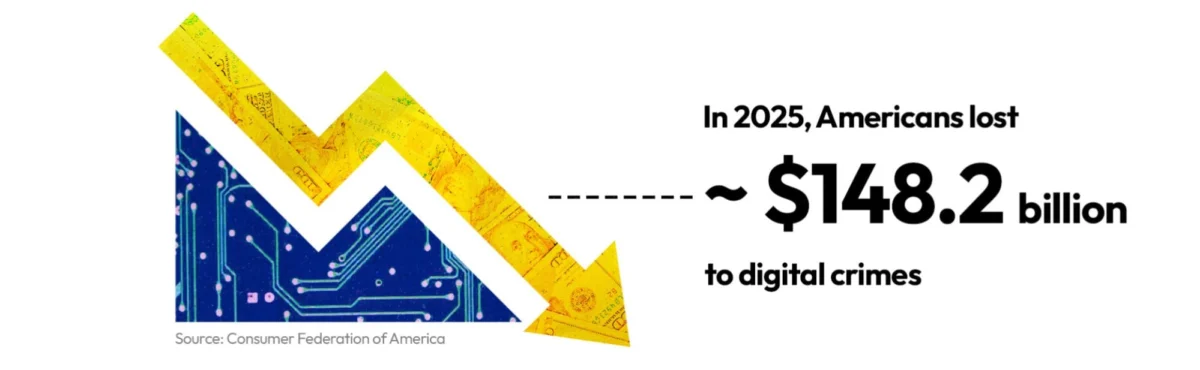
- Economic Impact: The cost of digital manipulation is not just social—it is financial. In 2025 alone, Americans lost over $148 billion to digital crimes, a testament to the efficacy of social engineering tactics that leverage "cutesy" AI agents to bypass human skepticism.
Official Responses and Expert Insights
The consensus among security experts and media watchdogs is that we are experiencing a systemic failure of design.
"Social media is littered with false and misleading content," says Sofia Rubinson, Senior Editor at the misinformation watchdog NewsGuard. "It is inevitable to come across AI fakes, twisted political claims, and foreign disinformation when scrolling."
The problem is exacerbated by the lack of structural safeguards. Marijus Briedis, CTO of NordVPN, points out that the lack of standardized fact-checking tools on platforms like TikTok and X forces users to rely entirely on intuition. "We scroll fast, react on instinct, and read likes and shares as ‘lots of people believe this,’" notes Roei Sherman of Mitiga.
Zohaib Ahmed, CEO of Resemble.AI, introduces the concept of the "Indistinguishability Threshold"—the point at which the human eye and ear can no longer distinguish between the real and the synthetic without technological assistance. When platforms slash human moderators in favor of automated systems that are prone to their own biases and errors, the user is left in a void where truth is whatever the algorithm says it is.
The Implications: Why We Must "Pause"
The most dangerous consequence of this digital environment is not just that we might believe a lie, but that we might lose the ability to trust anything at all. As Briedis warns, "Once people understand that anything can be faked, they start doubting the real things too. You do not get that back easily."
This leads to a dangerous state of cynicism. While skepticism is a healthy, necessary component of citizenship, cynicism—the belief that everything is a lie and truth is unknowable—is a corrosive force that leads to societal paralysis.

Strategies for the Modern User
If we are to remain online, we must fundamentally alter our habits. Experts offer a few essential strategies for reclaiming agency:
- Adopt a "Pause" Protocol: The algorithm thrives on your impulse to react. Before liking, sharing, or even fully processing a piece of news, stop for 60 seconds. Ask yourself: Why is this in my feed? Why did this account post this? Is this designed to make me angry?
- Avoid the "Frictionless" Trap: AI agents and chatbots promise to consolidate our digital lives into a single, seamless experience. This is a vulnerability. Resist the urge to outsource your critical thinking to a single prompt; verify information across multiple, independent, and human-verified sources.
- Prioritize "Real-World" Verification: If a story seems shocking, talk to the people in your life. Discussing viral content with friends and family acts as a "social fact-check," pulling information out of the algorithmic echo chamber and into the light of human discourse.
- Distinguish Between Skepticism and Cynicism: Do not let the prevalence of "AI slop" turn you into a nihilist. Acknowledge that the medium is flawed, but maintain the belief that objective, verifiable truth still exists.
Conclusion: The Path Forward
We have reached a critical juncture in the history of the information age. The infrastructure of the internet is currently designed to exploit our biological vulnerabilities, using our own psychology against us to generate profit.
"AI makes it really easy to avoid thinking for yourself," says Chuck Salter. "We have to exercise our agency."
Protecting yourself does not require a degree in computer science or a background in cybersecurity. It requires a fundamental shift in behavior: moving from a state of passive consumption to active, intentional engagement. As the internet continues to be flooded with synthetic agents and deceptive content, the most radical act of rebellion is to slow down, question the source, and refuse to let the algorithm dictate the boundaries of your reality. The "digital mirage" is only as powerful as our willingness to look at it without blinking.