In the landscape of contemporary cinema, a recurring thematic thread has begun to tighten around the neck of modern storytelling: the archetype of the man who seeks to reshape his romantic partner to satisfy his own ego, only to find the resulting “perfection” hollow, monstrous, or entirely transformative. This psychological friction serves as the bedrock for The Fox, a daring new black comedy from visionary writer-director Dario Russo. Scheduled for a nationwide theatrical release on December 4, 2026, the film promises to be one of the most eccentric and provocative entries in the coming years.
What distinguishes The Fox from its contemporaries is not merely its satirical bite, but its surrealist execution. The film features the incomparable Olivia Colman in a voice-acting performance as a titular, anthropomorphic fox, alongside the late, legendary Sam Neill, who voices a cynical magpie—a performance that marks one of his final contributions to the medium.
The Premise: A Deal with the Devil’s Creature
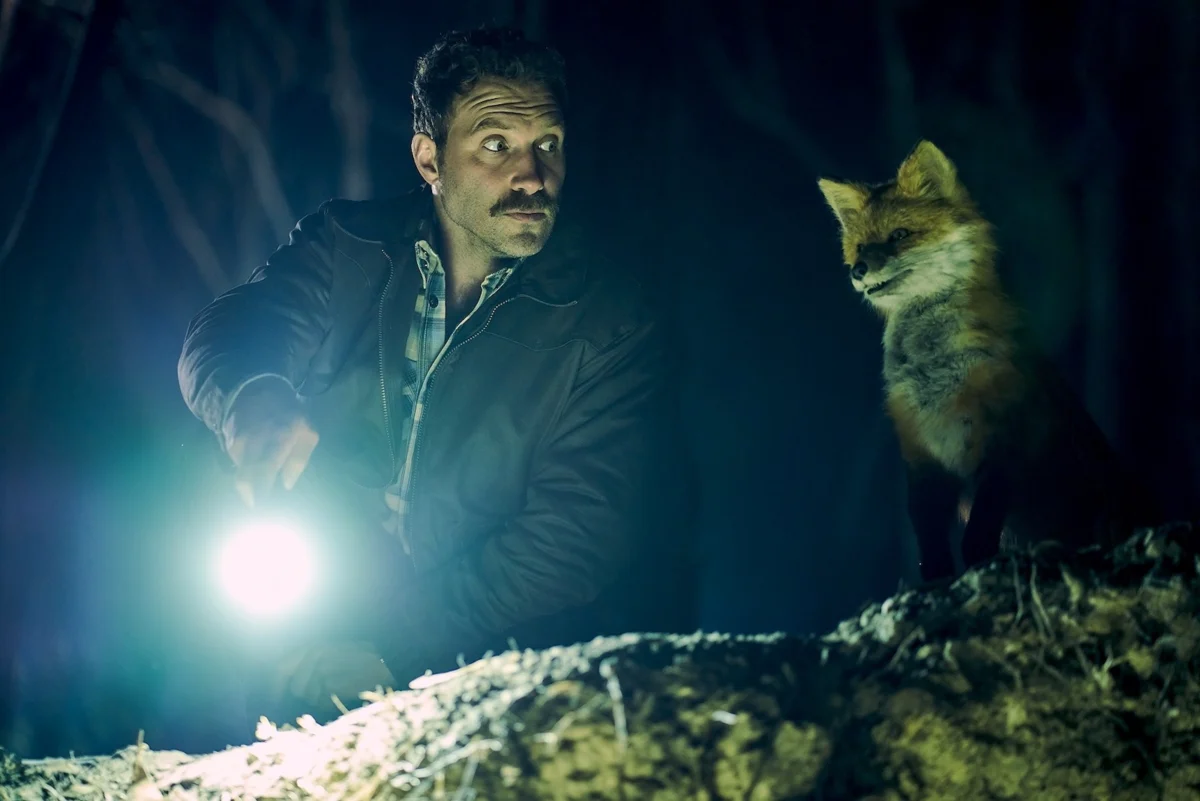
The narrative centers on Nick, played with a frantic, desperate charm by Jai Courtney. As the affable, somewhat aimless heir to a sprawling rural estate, Nick represents a certain class of privilege that believes everything, including human affection, can be purchased or bargained for. When he discovers his fiancée, Kori (Emily Browning), is involved in an extramarital affair, his response is not to engage in introspection or communication, but to seek an immediate, surgical solution to his “problem.”
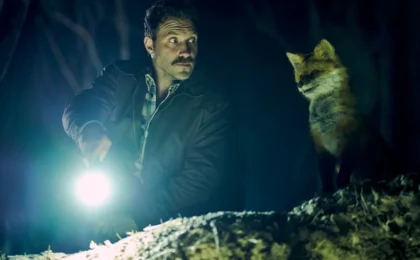
The inciting incident occurs during a solitary night in the Australian wilderness, where Nick captures a rogue, talking Fox. The creature, voiced by Colman with a mix of predatory wisdom and manipulative wit, presents a Faustian bargain: if Nick spares her life, she will provide him with the means to save his crumbling relationship. The method is as bizarre as it is dark: Nick is instructed to lure Kori into a “magic hole”—a literal, supernatural tear in the fabric of their reality—that possesses the power to transmute her into the “perfect partner” he believes he deserves.
The film then pivots into the uncanny. The Kori who emerges from the hole initially appears to be the answer to every one of Nick’s suppressed desires. However, as the veneer of domestic bliss begins to crack, her strange, newfound behavioral quirks and shifted temperament force Nick to confront the devastating realization that he has traded a flawed human for a constructed ideal—and that he may have ruined his life in the process.
Chronology of Production and Development
The genesis of The Fox dates back to Dario Russo’s desire to modernize the classic fable format. Russo, known for his ability to blend the mundane with the macabre, sought to ground the film in an “absurd version of our reality.”
- 2023–2024 (Conceptualization): Russo begins drafting the script, conceptualizing the Australian landscape as a character in itself—a place where the thin veil between civilization and the wild allows for supernatural interference.
- Early 2025 (Casting): The production secures a high-profile ensemble, including Emily Browning, Claudia Doumit (The Boys), and Damon Herriman (Neagley). The late casting of Sam Neill and Olivia Colman as the animal counterparts added a layer of prestige and gravitas that elevated the project from a simple dark comedy to a high-concept piece of cinema.
- Mid-2025 (Principal Photography): Filming took place across rural Australia, utilizing a combination of practical effects and cutting-edge CGI to bring the Fox and the Magpie to life. The production design focused on the contrast between the high-society, pastoral luxury of Nick’s estate and the dark, overgrown, mythic quality of the surrounding woods.
- 2026 (Post-Production): The team focused on the integration of the voice performances. With the passing of Sam Neill, the film became a poignant tribute, with the production team ensuring his final performance was treated with the highest degree of technical care and emotional reverence.
Supporting Data: The Anatomy of a Modern Fable
While the film is inherently fantastical, its success hinges on the “emotional reality” that Russo emphasizes. To understand the impact of The Fox, one must look at the structural elements that differentiate it from standard romantic dramas:
- The Satire of Entitlement: The film serves as a sociological mirror for the “modern man’s” struggle with control. In an era where dating apps and algorithmic matchmaking offer the illusion of perfect compatibility, Nick’s decision to use a supernatural entity to “fix” his partner is a sharp, satirical critique of modern relationship dynamics.
- The Animal Allegory: In folklore, the fox is a classic trickster—a creature that blurs the line between the natural and the supernatural. By casting Olivia Colman, the film taps into the uncanny valley, using a voice synonymous with warmth and humanity to deliver cold, transactional advice. This creates a cognitive dissonance that keeps the audience off-balance.
- The Cast and Crew: The inclusion of actors like Claudia Doumit and Damon Herriman provides a grounding, naturalistic counterpoint to the surreal elements. Their performances represent the “real world” observing the chaos of Nick’s descent into madness.
Official Responses and Director’s Intent
Dario Russo has been vocal about his intentions for the project. In press statements released during the film’s promotion, Russo described The Fox as “a cautionary tale for the modern age.”
“We are living in a time where we are constantly told we can optimize our lives, our health, and our relationships,” Russo stated. “I wanted to take that premise to its most logical, absurd conclusion. If you could press a button and change the person you love to be exactly who you want, would you really be happy, or would you just be lonely in a house with a stranger?”
The response from the studio and the cast has been one of collective pride, particularly regarding the performance of the late Sam Neill. “Sam brought a sense of ancient, weary wisdom to the Magpie,” a production spokesperson noted. “He understood that this wasn’t just a comedy; it was a film about the cost of regret. His performance is a haunting, beautiful final bow.”
Implications for Future Cinema
The Fox arrives at a pivotal moment in the industry. As audiences become increasingly fatigued by franchise fatigue and predictable superhero narratives, there is a burgeoning appetite for “elevated absurdity”—films that are willing to take bold, irrational swings.
1. The Rise of the “Supernatural Indie”
The success of The Fox (pre-release buzz suggests a significant cult following) indicates that major studios and independent financiers are becoming more comfortable with high-concept, genre-bending scripts. By utilizing Australian folklore and blending it with a modern suburban setting, the film establishes a blueprint for how to create world-building that doesn’t require a multi-film budget.
2. The Legacy of Practical and Vocal Performance
The film’s reliance on the interplay between physical acting (Courtney, Browning) and high-level voice work (Colman, Neill) highlights a shift in how character-driven films can be made. Rather than relying solely on visual effects to tell the story, the emotional weight is placed on the performances themselves. This could influence how directors approach animal-centric or magical-realist films in the future, prioritizing the “soul” of the creature over the technical complexity of its rendering.
3. A Mirror to Toxic Masculinity
Perhaps the most significant implication is the film’s unflinching look at male insecurity. By externalizing the desire to “fix” a partner into a physical, magical act, the film forces the viewer to confront the inherent toxicity of that mindset. It is likely that The Fox will become a staple of film studies and cultural criticism, serving as a text for discussing the evolution of the “male ego” in 21st-century cinema.
Conclusion: A Must-See Experience
As the release date of December 4, 2026, approaches, the discourse surrounding The Fox continues to intensify. Is it a comedy? A tragedy? A horror film disguised as a fable? The answer is likely all of the above.
For those looking to engage with a film that challenges the status quo of romantic storytelling, The Fox offers a visceral, unsettling, and ultimately hilarious journey. It invites us to ask ourselves: if we were given the chance to change the people in our lives to suit our own selfish designs, would we have the strength to say no? Or, like Nick, would we be lured into the hole, leaving our own humanity behind in the dirt?
The trailer, which has already garnered significant attention for its erratic pacing and visual flair, provides only a glimpse into the “bonkers” brilliance of the project. To truly understand the gravity of the film’s message—and the final, masterful work of Sam Neill—one must step into the cinema and surrender to the narrative. The Fox is not merely a movie; it is a dark, necessary mirror held up to our own desires, and it is undoubtedly the film to watch this winter.