The internet is no longer just a place to find information; it has become a sophisticated, high-stakes theater of deception. As artificial intelligence continues to lower the barrier to entry for bad actors, the landscape of the web is being reshaped by a deluge of "pink slime"—fake local news sites, deepfake influencers, and hyper-realistic phishing portals. With an estimated one-third of all recent web content now generated by AI, the question is no longer just "is this news," but "is this reality?"
The New Frontier: Why Digital Trust is Eroding
The democratization of generative AI has created a "Wild West" environment for digital fraud. Historically, creating a convincing, large-scale misinformation campaign required state-level resources, professional graphic designers, and a network of human operatives. Today, those same results can be achieved for a few hundred dollars using "scam kits" found in open-source markets.
These kits are comprehensive, offering everything from automated social media engagement bots and AI-generated blog content to sophisticated video-call spoofing software. According to Zohaib Ahmed, CEO of Resemble.AI, bad actors are now exploiting models without built-in safety guardrails, allowing them to iterate and refine their spoofs without triggering the detection mechanisms present in mainstream tools like ChatGPT or Claude.
This decline in platform moderation, coupled with the rapid evolution of AI, has effectively rendered traditional "red flags"—such as poor grammar, pixelated images, or robotic speech—largely obsolete. Today’s scammers can produce content that mimics human nuance with terrifying precision.

Chronology of a Crisis: From "Clickbait" to "Deepfakes"
To understand the current threat, one must look at how the internet’s economy of attention has evolved:
- The Early 2010s: The era of "Nigerian Prince" emails and obvious, poorly constructed phishing sites. Detection was simple because the indicators were stark.
- The Mid-2010s: The rise of "Clickbait" and the proliferation of fake news during the 2016 election cycle. This was the birth of "pink slime"—sites that looked like local newspapers but were essentially content farms.
- 2020–2023: The integration of automated social media bots. Influence operations became more surgical, targeting specific demographics through hyper-personalized, albeit human-written, misinformation.
- 2024–Present: The Generative AI explosion. We have moved from automated text to automated visual and auditory deception. AI influencers now hold massive followings, and "typosquatting" (creating domains that look identical to reputable ones) has become a fully automated process.
Supporting Data: The Scale of the Problem
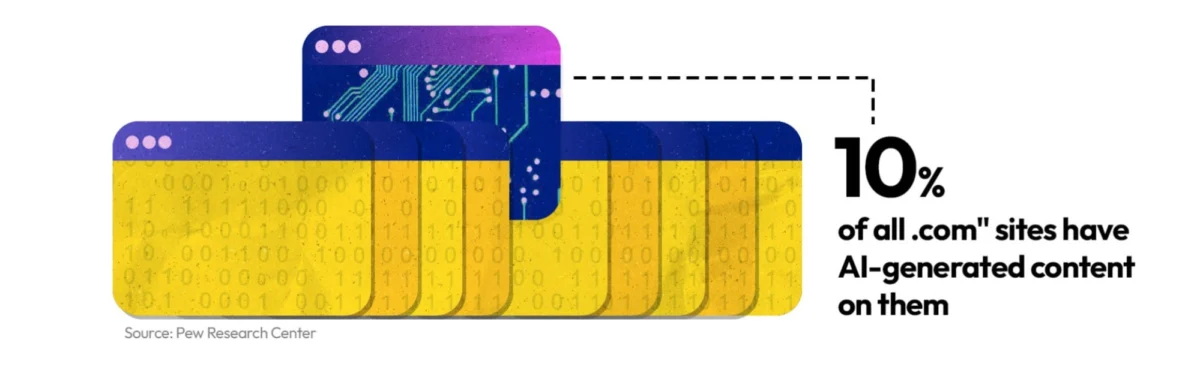
The statistics behind the proliferation of fake content are sobering. A recent report from the Pew Research Center indicates that roughly 10 percent of all ".com" websites now contain AI-generated fingerprints. Furthermore, NewsGuard has documented a "sad milestone": there are now more "local news" websites being operated by AI content farms than there are legitimate local newspapers in the United States.
These sites don’t just exist for ad revenue; they are often used to build "authoritative" profiles for fake personas, which are then used to push disinformation campaigns. When users perform a search for a topic, these sites often appear in the results, lending a false sense of legitimacy to the misinformation they carry.
The Anatomy of Modern Deception
The modern scammer relies on "attention harvesting." They know that users are scrolling through feeds at a rapid pace, making them prone to "system one" thinking—fast, instinctive, and emotional.

1. URL Hijacking and Typosquatting
The most common technique remains the mimicry of trusted entities. Attackers register domains like abcnews.com.co or spoof the URLs of global organizations like FIFA. By banking on the fact that users rarely check the full address bar, they lure victims into entering credentials or financial information into a site that looks indistinguishable from the real thing.
2. The Rise of "Rage Bait"
Experts note that emotional manipulation is the primary driver of engagement for fake accounts. By creating content designed to trigger anger or fear, scammers ensure their content is shared, liked, and commented on. This high engagement sends the post to the top of the platform’s algorithm, further amplifying the lie.
3. Off-Platform Steering
A major red flag is any account or site that encourages you to move to an "exclusive" or "unregulated" platform. Whether it’s a link in a gaming chat or an influencer pushing a "secret" link, these maneuvers are designed to take the user away from the protective, moderated environment of major social platforms.
Official Responses and Expert Perspectives
Cybersecurity experts are calling for a complete overhaul of how we define "digital literacy." Donnie Hasseltine, CISO at Arkstone Defense, emphasizes that the era of relying on "visual cues" is over.

"You cannot look at a video anymore and assume it is real because the person is moving their lips," Hasseltine says. "We need to adopt a ‘zero-trust’ approach to the internet."
The News Literacy Project (NLP) advocates for a strategy of "zoning." By categorizing content by its intent—whether it is to inform, persuade, or sell—users can mentally filter what they are consuming. If an article is designed to make you feel a strong emotion, it is likely attempting to bypass your critical thinking faculties.
Strategies for Verification: The New Toolkit
Since the old advice (like "check for spelling errors") is no longer sufficient, we must adopt more rigorous, multi-layered verification habits:
The SIFT Method (Revisited)
- S – Stop: Before you like, share, or click, stop. The delay is your first line of defense against emotional manipulation.
- I – Investigate the source: Click through to the profile. Look at the account creation date, the followers, and the consistency of the posting history.
- F – Find better coverage: If a news story is "breaking," it should be appearing on multiple, reputable outlets. If you only see it on one site, it is likely fabricated.
- T – Trace claims back to the original context: Find the original video, quote, or document. Often, you will find that the context has been completely stripped away or altered.
Lateral Reading
Instead of staying on the page you are viewing, open a new tab and search for the source. What are other, established organizations saying about this entity? If there is no "digital footprint" outside of their own controlled platforms, treat it with extreme suspicion.

The "Zero-Click" Rule for Screenshots
Never trust a screenshot as a primary source. Screenshots are the easiest thing to manipulate using generative AI. If a post shares a "leaked" document or a shocking tweet, demand a link to the original. If a link isn’t provided, consider the information unverified.
Implications for the Future
The implications of this shift are profound. As AI content becomes indistinguishable from human content, the internet faces a "reality collapse." We risk entering an age where the truth is not just hidden, but actively drowned out by a sea of synthetic noise.
For society, the challenge is not just technological—it is psychological. We must transition from passive consumers of content to active, critical skeptics. Platforms have a role to play in labeling AI content, but the burden of verification will ultimately fall on the user. In the coming years, our ability to discern the real from the synthetic will be the most essential skill of the digital age.
Stay vigilant, verify before you trust, and remember: if it feels like it was designed to make you angry, it was probably designed to deceive you.