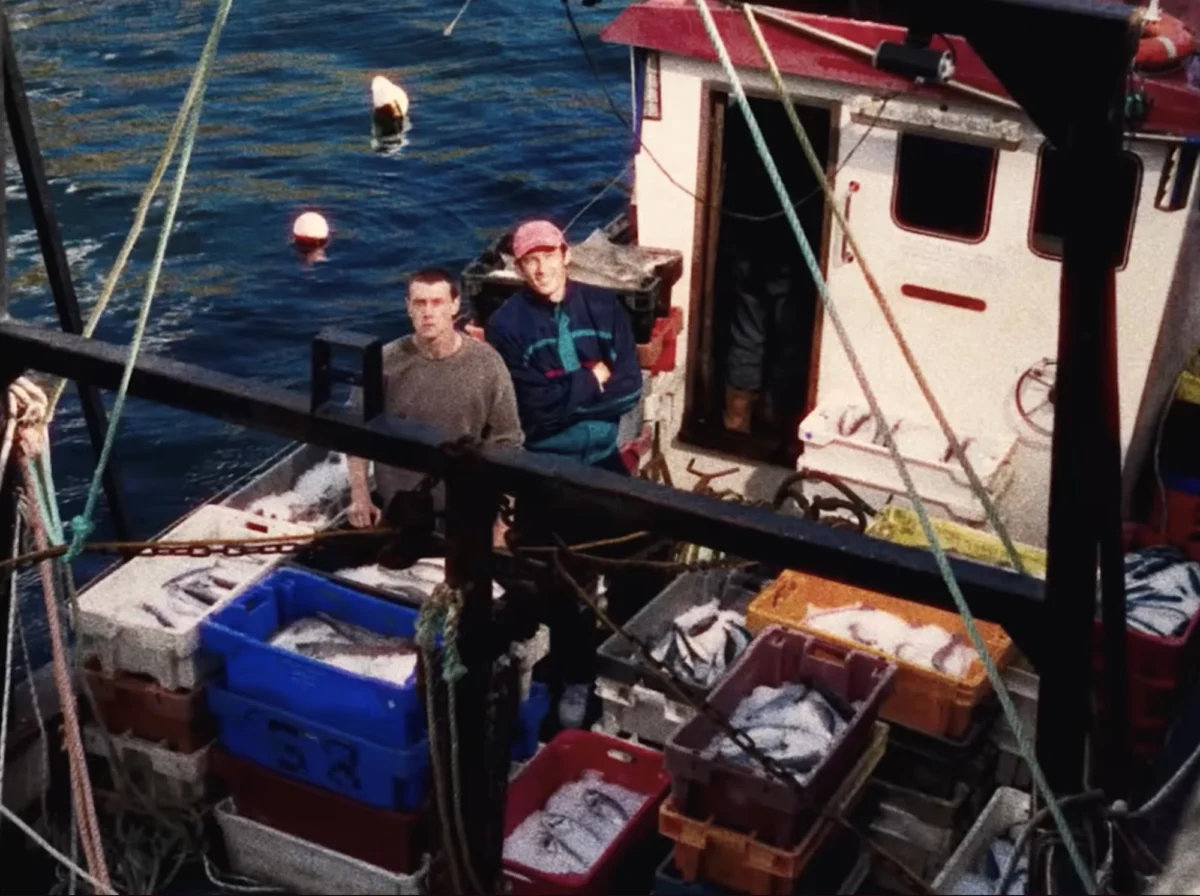
Mark Jenkin’s latest cinematic endeavor, Rose of Nevada, is not merely a film; it is a visceral, unsettling experience that defies the traditional boundaries of genre. Set against the desolate, windswept backdrop of a modern-day Cornish fishing village, the film serves as both a chilling supernatural mystery and a biting critique of socio-economic decay. Since its premiere at the New York Film Festival in September, the film has polarized audiences, leaving many with a profound sense of physical and existential queasiness—a testament to its haunting, unconventional craftsmanship.
A Chronology of a Village Out of Time
The narrative begins with a haunting premise: thirty years after the Rose of Nevada, a small fishing vessel, vanished at sea with all hands on deck, the boat mysteriously reappears in its home harbor. It is rusted, filthy, and entirely devoid of crew, yet it remains hauntingly whole.
For the residents of the modern-day village—a place defined by its obsolescence and emptiness—the arrival of the ship is met not with shock, but with a weary, hollow resignation. The village itself is a ghost town; its harbor is silent, the pubs are deserted, and the remaining youth—personified by a restless girl named Jess—find themselves adrift in a community that has lost its purpose.
The story follows two young men, Nick (George MacKay) and Liam (Callum Turner), who are thrust into this mystery. Nick is a portrait of quiet, desperate endurance, struggling to provide for his wife, Emily, and their toddler in a home plagued by leaks and a lack of resources. His life is defined by the weekly trip to a community food pantry. In stark contrast, Liam is a drifter—an opportunist who relies on charm to survive his various failings.
The two are recruited by the boat’s owner, Mike, to crew the Rose of Nevada alongside a grizzled, enigmatic captain named Murgey (Francis Magee). As they set sail, the film shifts. The men, initially unskilled, are forged into a crew through the brutal, rhythmic labor of the sea. They learn to cast, haul, gut, and endure, only to return to a harbor that seems to have shifted in time.
Supporting Data and Technical Mastery
The film is the third in director Mark Jenkin’s loose "Cornwall Trilogy," following the critical successes of Bait and Enys Men. Known for his rigorous, artisanal approach to filmmaking, Jenkin employs a 16mm Bolex camera, shooting in short, staccato bursts. The dialogue, sound effects, and score are recorded and layered in post-production, creating a sonic landscape that feels intentionally "off"—a sensory misalignment that reinforces the film’s central theme of being unstuck in time.
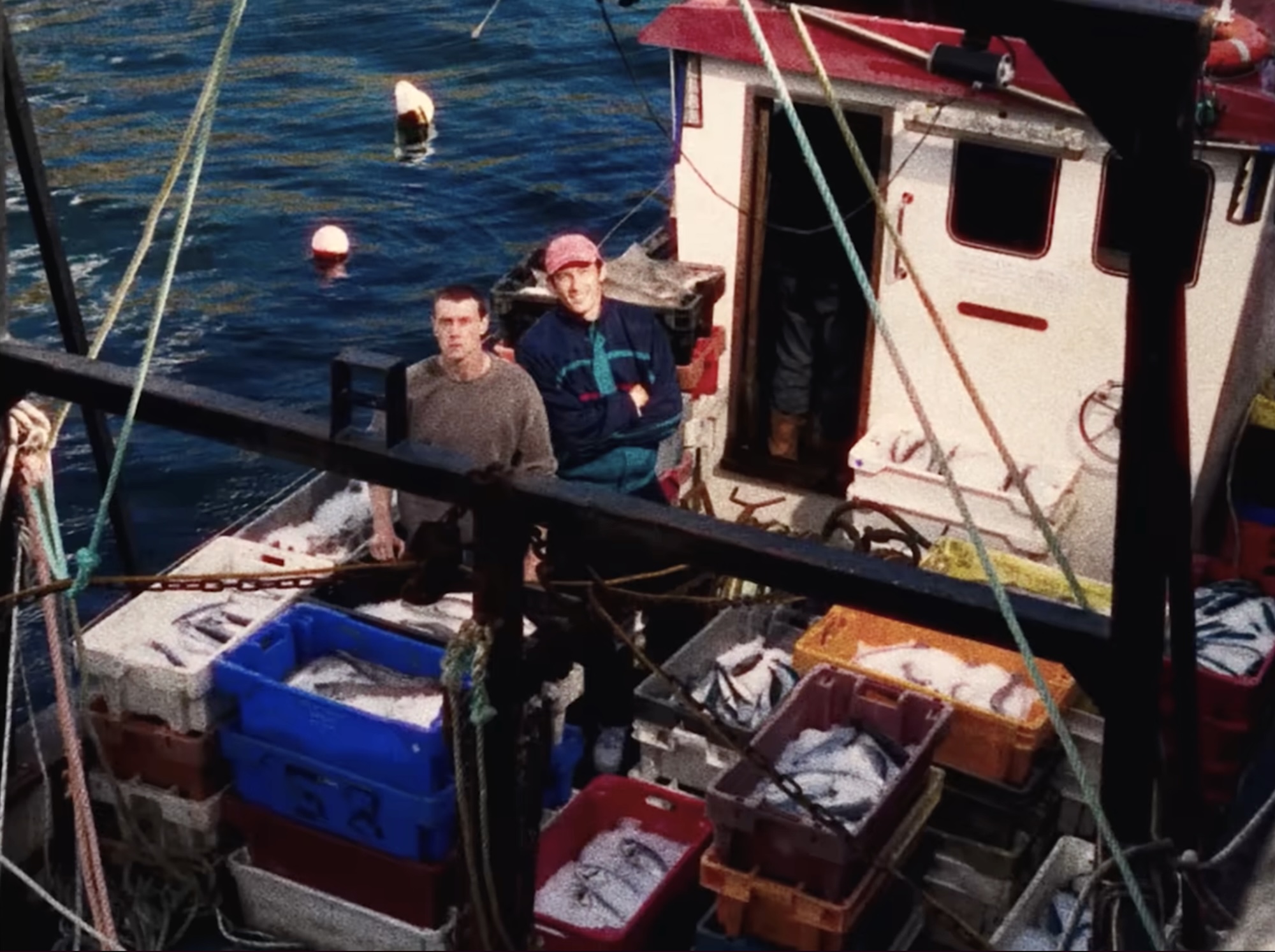
The visual aesthetic is equally deliberate. Reminiscent of a grittier, more claustrophobic take on 1930s and 40s Technicolor, the film’s saturated, flickering textures contribute to an uncanny, almost hallucinogenic viewing experience. It is a work that demands much from the viewer, often to the point of physical discomfort, yet it succeeds in creating an atmosphere that is impossible to shake.
Character Dynamics and Performance
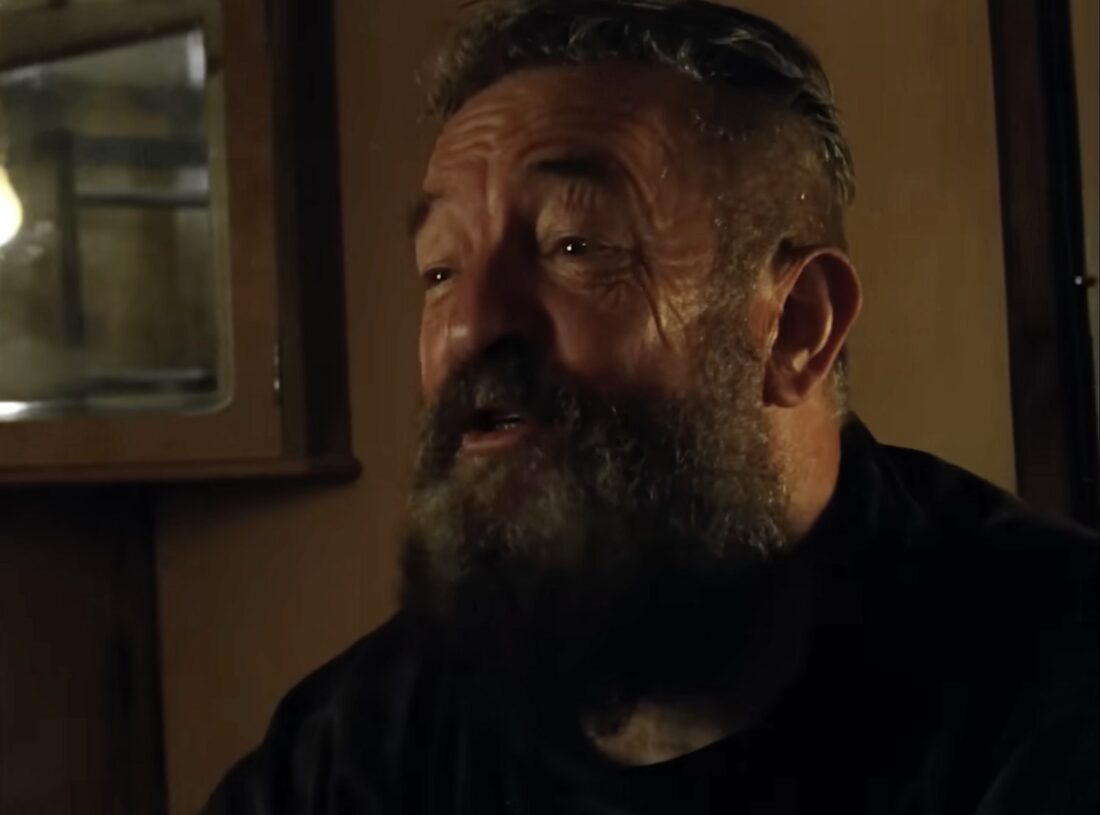
The performances anchor the film’s more abstract concepts. George MacKay’s portrayal of Nick is a masterclass in subtlety; he communicates the exhaustion of a man whose future has been mortgaged by the past through his eyes alone. Callum Turner’s Liam serves as the perfect foil, his body language—constantly leaning, calculating, and shifting—offering a sharp commentary on the survival instincts of the marginalized. Francis Magee’s Murgey provides the film’s most terrifying arc, transforming from a trope of the "salty sea dog" into an integral part of the narrative’s inescapable loop.
The Anatomy of a Working-Class Nightmare
Rose of Nevada functions as a horror story not because of jumpscares or gore, but because of its depiction of the time loop as a mechanism of labor exploitation. In traditional time-loop narratives, protagonists often seek to solve the "mechanics" of their predicament—to find a way out, or to change the outcome.
Jenkin’s film offers no such luxury. Here, the loop is not a puzzle; it is a maw. The village’s past—a 1993 version of the town where the pub is vibrant and the economy appears to be thriving—is revealed to be built entirely on the backs of young men who must perform dangerous, grueling labor. The community thrives only as long as it continues to feed on the lives of those willing to risk them.
This "horror" is underscored by a poignant, albeit brief, encounter with pop culture. A television advertisement from 1993 plays in the background, chirping that it is "not too late" to reverse environmental collapse. Viewed from the vantage point of 2026, this moment is devastating—a reminder that the older generation has, in the eyes of the film, effectively devoured the future of the young.
Implications: A Critique of Collective Sacrifice
The film’s implications are deeply political. By framing the fishing industry as both a source of honorable tradition and a site of tragic exploitation, Jenkin invites the audience to consider the cost of community. Is a community worth preserving if its survival necessitates the sacrifice of its most vulnerable members?
The "COVID" Influence
In various interviews, Mark Jenkin has noted that the script was written during the COVID-19 lockdowns. During this period, he observed how his own community in Cornwall came together to care for one another, even as the broader political and governmental structures failed them. Rose of Nevada captures this duality—the warmth of communal care juxtaposed against the terrifying isolation of relying on an indifferent nature and an absent state.
The film poses a haunting, final question: to what extent are we all performing roles expected of us until our lives become "deep grooves" whose original meaning has been lost? The village in the film may find a semblance of healing, but it is a healing built on an unsustainable foundation. If we are to sacrifice our youth and our future to maintain the status quo of the past, we must ask if the "community" we are saving is worth the price of the souls we are losing to the sea.
Conclusion: A Lamentation and a Curse
Rose of Nevada is a challenging, profound, and deeply unsettling film. It does not offer easy answers or the cathartic resolution typical of the time-loop genre. Instead, it offers a mirror. By the time the credits roll, the viewer is left with the sensation of having witnessed something sacred being violated by the very forces that claim to protect it.
Jenkin’s work is a testament to the power of independent, auteur-driven cinema to tackle massive, systemic issues through the intimate lens of local storytelling. While the film may indeed cause a sense of "queasiness," it is a necessary discomfort—a reflection of the churning, toxic waters of a society that has forgotten how to value anything beyond its own survival. Rose of Nevada is not just a ghost ship story; it is a ghost story for the modern working class, and it is a film that will linger in the collective consciousness long after the final frame has faded.