Rarely does an artist possess the foresight to create work that feels not merely contemporary, but increasingly essential as decades pass. The visionary interdisciplinary artist Ana Mendieta (1948–1985) is one such figure. Her radical, transient, and profoundly intimate practice—which effortlessly traversed the boundaries of photography, land art, performance, and sculpture—is the subject of a massive, immersive survey that opened today at London’s Tate Modern.
Featuring more than 120 works, the exhibition offers a comprehensive look at an artist whose brief but incandescent career remains a beacon for those grappling with displacement, identity, and the fragile, pulsating connection between the human body and the natural world.

Main Facts: A Survey of Absence and Presence
The Tate Modern exhibition serves as a definitive re-examination of Mendieta’s contributions to 20th-century art. It does not merely catalogue her achievements; it invites the viewer to step into the "earth-body" dialectic that defined her practice.
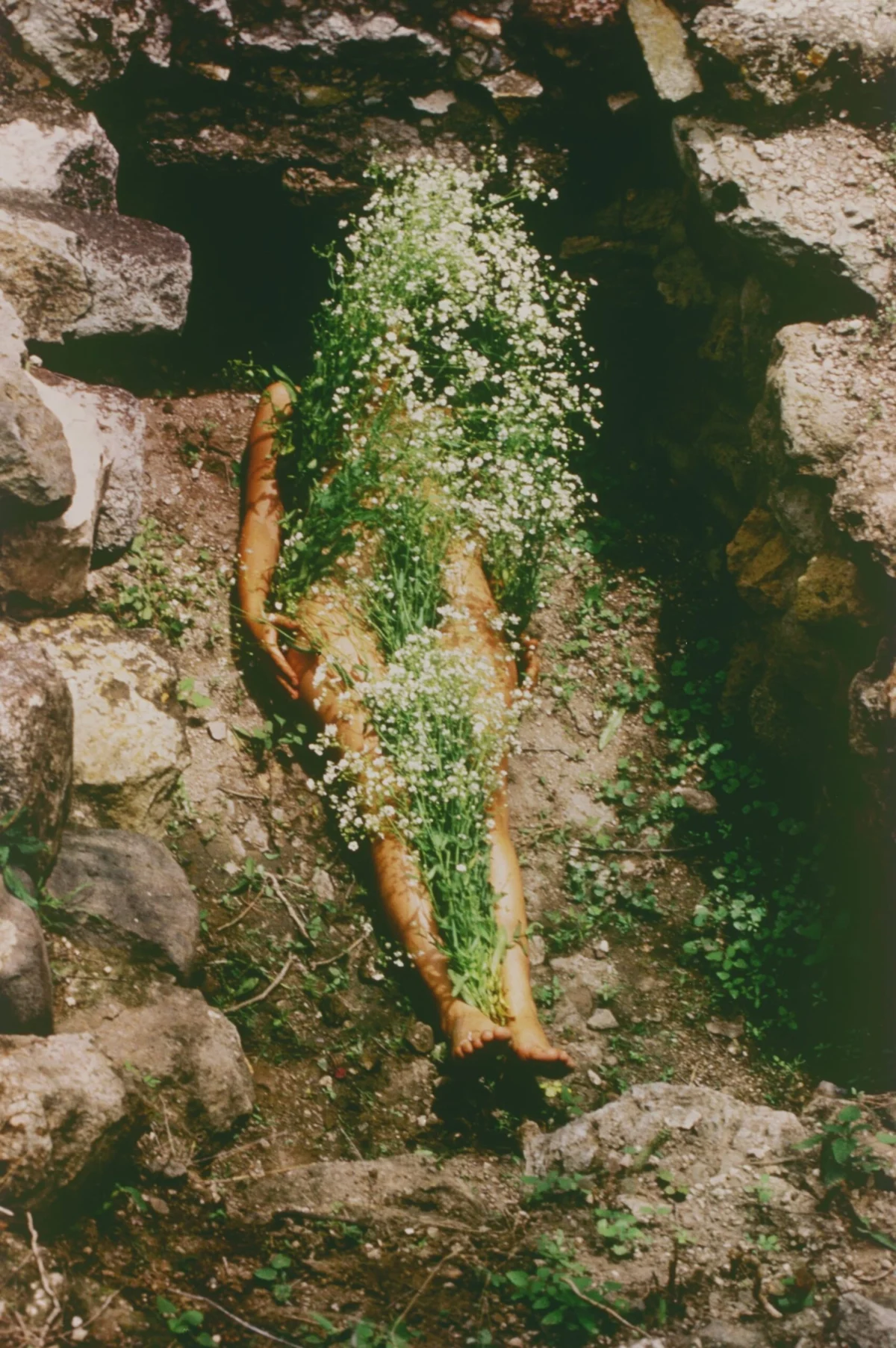
Mendieta is perhaps most iconic for her Silueta Series, a monumental body of work in which she imprinted the shape of her own body into the landscape—using water, mud, grass, gunpowder, and rock. These works are spectral. Some are delicate outlines etched into the earth; others are visceral, such as her tributes rendered in gunpowder on fallen trees, frozen in photographs as eternal, half-ablaze silhouettes. By creating these marks, she suggested a presence that had been there for millennia, as if the desert or the stone had simply risen up to cradle her form.

The exhibition at Tate highlights this "empathetic exchange" with nature. It demonstrates how Mendieta shifted the perspective of land art—a genre often dominated by the massive, masculine, industrial interventions of the 1970s—toward a more intimate, ephemeral, and feminist dialogue.
A Chronological Trajectory: From Exile to Earth-Body
To understand Mendieta’s work, one must understand the fissure in her personal history. Born in Havana in 1948, her life was irrevocably altered at age 12 when she and her sister were sent to the United States as part of Operation Peter Pan following the 1959 Cuban Revolution. Separated from her parents and brother, Mendieta spent her formative years in foster homes and institutions in the American Midwest.

The Early Years: Displacement and Identity
The trauma of this forced migration became the silent engine of her creative output. In her early work, particularly during her time in Iowa, she grappled with themes of disconnection. Her initial self-portraits show a youthful, experimental phase, such as the series where she distorted her face with pantyhose or arranged flowers to slowly obscure her identity. These images, while occasionally humorous, hinted at a deeper search for self in a world that had rendered her an "other."
The Mid-Career Pivot: The Silueta Era
By the mid-1970s, Mendieta had moved away from the literal depiction of her face and toward the symbolic representation of her body. Her work became increasingly solemn and archaeological. "My art is the way I reestablish the bonds that unite me to the Universe," she once noted. "It is a return to the maternal source."

During this period, she traveled frequently to Mexico, where the landscape—rich with pre-Columbian history—provided the perfect setting for her "earth-body" sculptures. Works such as Imágenes de Yágul (1973) see the artist lying in a rocky niche, covered in flowering grasses, blurring the line between human flesh and the organic earth.
The Final Years: Ritual and Archetype
Toward the early 1980s, Mendieta’s work adopted a more enigmatic tone. She began to focus on the "vivification of the flesh," exploring how the human form could be carved into the very memory of the landscape. Her fascination with Neolithic art deepened, as she moved toward using materials that held emotional and sensual weight rather than merely formal utility. Her work in this final stage was characterized by voids, primordial shapes, and a profound sense of ritual.

Supporting Data: The Anatomy of the Exhibition
The Tate Modern survey is structured to guide the viewer through the emotional and physical geography of Mendieta’s life. The exhibition spaces are curated to emphasize the scale and materiality of her output:
- Multimedia Integration: The exhibition includes several of her rarely seen film works, which capture the flicker of candles in her Ñañigo Burial (1976) or the slow erosion of a clay figure.
- Archival Context: The show provides extensive documentation of her process, including the sketches and field notes that preceded her site-specific installations.
- The "Labyrinth of Venus": A highlight of the show is the recreation of her La Vivificaciòn de la Carne: El Laberinto de Venus series (1982), which demonstrates her late-career move toward large-scale sculptural installations that invite the viewer to walk through, and perhaps lose themselves in, her artistic vision.
Official Perspectives and Critical Reception
The curatorial team at the Tate Modern has emphasized that this exhibition is intended to move beyond the tragic circumstances of Mendieta’s 1985 death, focusing instead on the intellectual rigor and enduring power of her practice.

"Mendieta’s work was always a dialogue," notes a representative from the Tate. "It was a dialogue with her home, her gender, the soil beneath her feet, and the history of art itself. By positioning her within the canon of ecofeminism, we are finally recognizing that she was not just an artist of her time, but a precursor to the environmental and identity-based art that defines the current generation."
Critics have long pointed to Mendieta as a pivotal figure in the transition from minimalist sculpture to performance art. Her ability to synthesize the political with the spiritual—the way she channeled the violence of exile into the beauty of a silhouette in the mud—remains a masterclass in subjective storytelling.

Implications: A Mirror for Modernity
The relevance of Mendieta’s work in the year 2026 cannot be overstated. We live in an era defined by profound social discord, technological alienation, and an accelerating climate crisis. Mendieta’s practice, which hinges on a "visceral biophilia," acts as a necessary counterpoint to our increasingly digital existence.
The Eco-Feminist Legacy
Mendieta was a pioneer of ecofeminism, a movement that draws parallels between the exploitation of nature and the subjugation of women. Her work asserts that the earth is not a resource to be mastered, but a living partner to be honored. In the context of the 2026 climate landscape, her works function as a silent protest against our detachment from the environment.

The Politics of Displacement
Furthermore, in an age where global migration and the refugee crisis are at the forefront of geopolitical tension, Mendieta’s explorations of displacement feel hauntingly current. She did not just write about being a foreigner; she physically embedded her longing for Cuba into the soil of the United States and Mexico. Her work reminds us that "home" is often a fragile, reconstructed concept, maintained through ritual and memory.
The Resilience of the Body
Finally, Mendieta’s work speaks to the persistence of the individual within the collective. Her "silhouettes" are both specific to her body and universal to all humanity. As we navigate a world of deepfakes and algorithmic representations of the self, Mendieta’s raw, unmediated, and physical engagement with the world offers a path back to authentic experience.

The exhibition at the Tate Modern is more than a retrospective; it is a summons. It invites us to consider our own footprints on the earth and to question what we leave behind when we are gone. Ana Mendieta, who sought to "reestablish the bonds" between herself and the universe, ultimately succeeded in establishing those bonds for us all.
The exhibition "Ana Mendieta" is on display at the Tate Modern, London, through January 17, 2027. Visitors are encouraged to book tickets in advance via the official Tate website.