Siti Muinah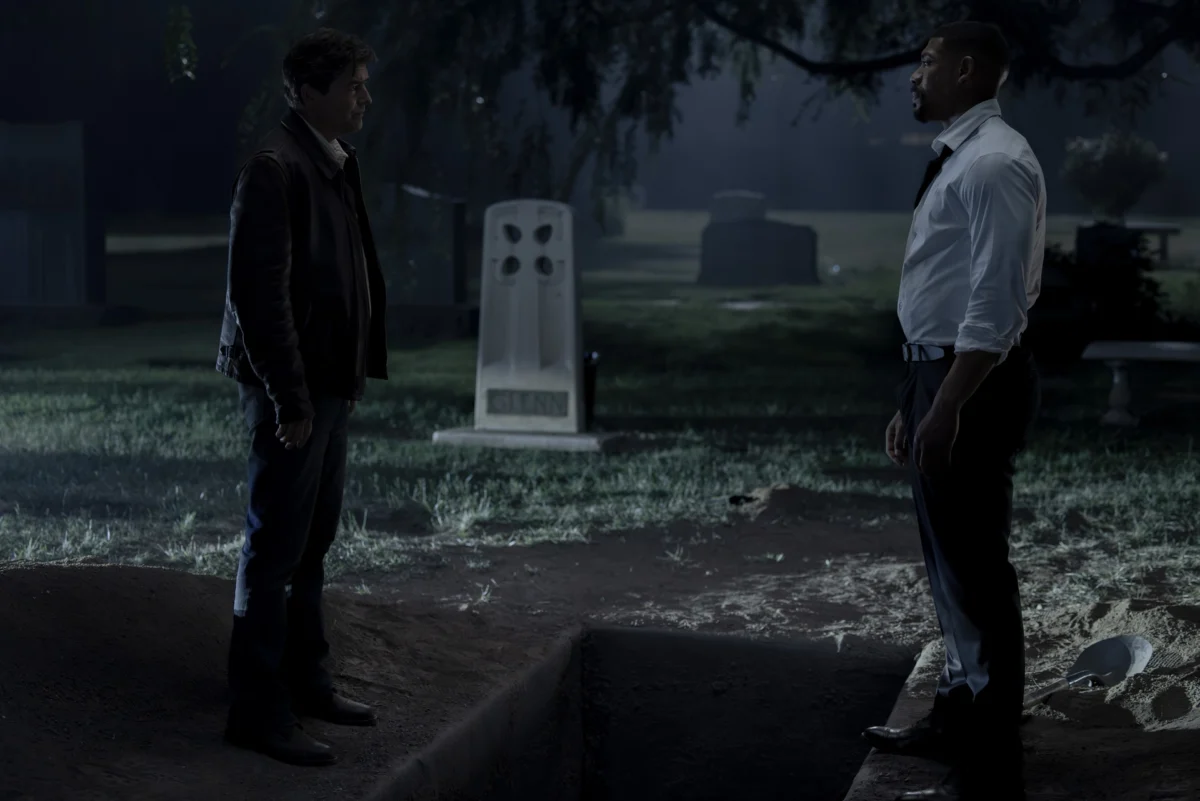
In the landscape of 2026, the status quo for former Green Lantern John Stewart has shifted from cosmic guardianship to the calculated, grounded reality of architecture. Working alongside his brother, Marcus, Stewart has pivoted his focus toward the construction of high-end, state-of-the-art panic rooms. This transition represents more than a career change; it is an attempt to manifest safety in a world forever altered by the cataclysmic events in Metropolis and the lingering trauma of Rushville. However, the fragile peace Stewart has constructed is shattered by the sudden, violent death of his former comrade, Hal Jordan, setting off a chain of events that forces Stewart back into the orbit of the very life he tried to leave behind.
The Chronology of a Cold Case
The narrative begins with a forced reunion. Bernadette Stewart, John’s mother, initiates contact—a rare occurrence given their strained, distant relationship. She reveals that she has been maintaining a secret, decade-long correspondence with Hal Jordan during his incarceration following the Rushville incident. Claiming that Hal had sought to make amends and was suffering from profound loneliness, she pressures John to meet his former partner in a Rushville café.
The encounter is a disaster. Rather than an apology, Hal offers a cold, pragmatic assessment of their shared history. He insists that the blood on their hands is mutual, dismissing the possibility of reconciliation in favor of a raw, nihilistic appraisal of their survival. The meeting culminates in physical violence: Stewart strikes Jordan, breaking his nose before storming out. Hours later, the Sheriff informs Stewart that Jordan has been found dead, frozen in the bleachers of the local football field. His power ring—the symbol of his former office—is missing.

The subsequent investigation reveals a town that harbored deep, vitriolic resentment toward Jordan. Despite his attempts to perform menial labor and seek forgiveness from the townspeople of Rushville, he was met with nothing but scorn. Stewart’s investigation, aided by Sheriff Kerry, leads them to a storage facility containing a mysterious, voice-locked cube. When an attempt to bypass the security with a recording fails, the device issues a chilling final warning, indicating that the path to the truth is as dangerous as it is cryptic.
Supporting Data: The Anatomy of a Fallen Lantern
The death of Hal Jordan serves as a catalyst for revealing the rot beneath the surface of Stewart’s post-Lantern life. Evidence gathered at the scene and in Jordan’s residence highlights a man who was as isolated as he was dangerous. A rigged shotgun trap at his living quarters serves as a testament to his state of constant, paranoid defense.
Furthermore, the involvement of Guy Gardner, the current Green Lantern, complicates the narrative. Gardner is reluctant to engage, citing "bad optics," yet he holds the key to the bureaucratic lock of the Corps. Stewart eventually leverages his past history with the Corps—specifically his decision to decline the ring—to force Gardner’s hand. The reveal that Sinestro has escaped the Guardians’ prison provides a new, ominous context: had Jordan been alive, he would have been the primary suspect.

Stewart’s personal life further unravels as he is forced to confront his family obligations. His brother Aaron, a musician bankrolled by Stewart, remains detached, while his father’s mental health deteriorates, leading to a violent outburst. Simultaneously, Stewart is blackmailed by Maggie, a café employee who witnessed his confrontation with Jordan. She demands "reparations" for her trauma, threatening to expose Stewart to the authorities if he fails to meet her financial terms.
Official Responses and the Funeral of a Hero
The funeral of Hal Jordan stands as the episode’s emotional anchor. Despite the town’s hatred, Stewart insists on a military burial, ensuring Jordan is laid to rest in his uniform and ring—a request fulfilled only after Gardner secures the decommissioned ring from Oa. The service is attended by Carol Ferris, who delivers a eulogy penned by Jordan himself.
The eulogy, a mixture of dark humor and profound existential despair, culminates in the haunting question: "I hope I mattered." For Stewart, the funeral is not an end, but a strategic maneuver. That night, under the cover of darkness, he exhumes the body. In a final, desperate bid for answers, he activates a holographic recording of Jordan. As the "Halogram" flickers to life and looks down at its own decaying remains, the mystery of the case shifts from a simple murder investigation to a potential cosmic conspiracy.

Implications: The Burden of What We Owe
The events surrounding Jordan’s death force a brutal re-evaluation of the "emotional electromagnetic spectrum" that governs these characters. The central conflict of the narrative is not merely the murder of a hero, but the crushing weight of obligation. Stewart’s life as an architect of panic rooms is an obvious manifestation of his desire to provide the safety he could not find in Rushville. Yet, his design of a sterile, "Hannibal-esque" home suggests a life defined by the absence of connection rather than the presence of peace.
The Failure of Traditional Heroism
The narrative posits that traditional heroism, as defined by the Green Lantern Corps, is a flawed, often destructive construct. Jordan and Stewart both spent their lives seeking validation from institutions and people—parents, governments, the Corps—who were ultimately incapable of offering the nurturing they required. The refusal of the Rushville community to forgive Jordan, even in death, underscores the inadequacy of "making amends" through service.
The Role of Family and Duty
The dynamic between John and his mother, Bernadette, is particularly telling. Her secret correspondence with Jordan suggests a woman who valued the strength of the "warrior" over the well-being of her own son. This has left Stewart in a state of perpetual struggle: he is the provider for his brother Marcus, the benefactor for his brother Aaron, and the reluctant guardian for his aging father. He is, in essence, trying to build a world where he can protect everyone, yet he remains the most vulnerable person in the room.

Political Ambition and Hidden Agendas
The subplot involving young Noah, who harbors dreams of the presidency, adds a layer of political intrigue. The guidance he received from his grandmother, combined with his proximity to Stewart and the recent violence, suggests a looming transformation in the local power structure. The "signal" installed in the center of town—meant as a mea culpa by Gardner—has become a flashpoint for local hostility, proving that symbols of authority no longer hold the weight they once did.
Conclusion: The Search for Truth
As Stewart stands over the grave of his former partner, the lines between his past and present have effectively dissolved. The "bad optics" cited by Gardner are now the least of Stewart’s concerns. With a hologram of a dead man as his only potential witness, Stewart is entering a phase of his life where the "architecture of safety" he has built is no longer sufficient.
The truth behind Hal Jordan’s death remains elusive, but the implications are clear: the past is never truly buried. Whether it involves the machinations of a rogue like Sinestro or a darker, more localized conspiracy involving the people of Rushville, Stewart is being drawn back into the light. He is no longer building shelters for others; he is forced, for the first time in a decade, to confront the structural integrity of his own soul. The investigation is far from over, and as the Halogram surveys the wreckage of its own legacy, it is evident that the final, most dangerous chapter of their partnership is only just beginning.


 Iffa Jayyana
 Ammar Sabilarrohman