Raul Delapena Setiawan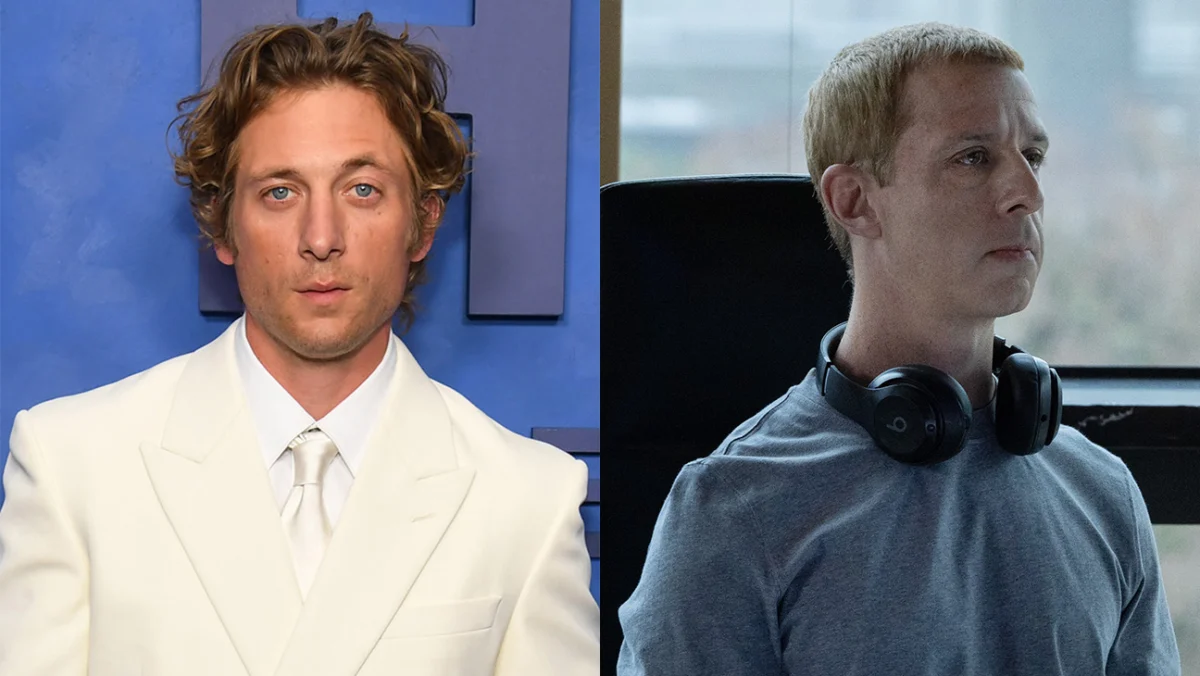
In the pantheon of modern cinematic sequels, few projects carry the weight of expectation quite like The Social Reckoning. As the long-gestating follow-up to David Fincher’s 2010 masterpiece The Social Network, the film promises to transition from the origin story of a digital empire to the moral and societal consequences of its maturity. At the heart of this anticipation is the casting of Jeremy Strong as Mark Zuckerberg, a choice that has sent ripples through the industry. Even for those involved in the production, the transformation remains a revelation.
Jeremy Allen White, currently navigating the final season of FX’s critically acclaimed The Bear, finds himself in the unique position of having starred in the film without ever sharing the screen with its central figure. At the New York City premiere of The Bear, White offered a rare glimpse into the production dynamics of the upcoming Sony Pictures drama, admitting that even he was stunned by the accuracy of Strong’s portrayal when the official trailer finally dropped.
The Mystery of the Method: A Disconnected Production
The production of The Social Reckoning was, by design or necessity, a compartmentalized affair. Despite their pivotal roles in the film’s narrative arc, Jeremy Allen White and Jeremy Strong never crossed paths during principal photography. This separation highlights the vast scope of the film, which spans the internal machinations of a tech giant and the external investigations of the press.
“Jeremy and I spent zero time together filming—we were totally separate,” White revealed to The Hollywood Reporter. For an actor, this creates a peculiar detachment from the final product. “The first I heard was the trailer with you guys, but it’s incredible.”
This sense of awe is shared by audiences who have grown accustomed to Strong’s transformative, immersive approach to acting—a style often characterized by its intensity and precision. White, an actor who is himself celebrated for his grounded, high-pressure performances in The Bear, expressed a deep professional respect for his co-star. “I thought it was great, but that’s what I expect of Jeremy. He’s so talented. He works so hard. It makes perfect sense to me.”
From Rise to Reckoning: The Chronology of a Tech Saga
To understand the gravity of The Social Reckoning, one must look back to the cultural phenomenon of its predecessor. The Social Network, written by Aaron Sorkin and directed by David Fincher, captured the frenetic, caffeine-fueled atmosphere of Harvard dorm rooms and the betrayal that birthed a multibillion-dollar company. It introduced the world to Jesse Eisenberg’s sharp, acerbic take on Mark Zuckerberg, and chronicled the legal battles involving Eduardo Saverin (Andrew Garfield) and the Winklevoss twins (Armie Hammer).
Seventeen years have passed since the events of the original film—a timeline that mirrors the real-world evolution of Facebook from a niche social experiment into a pervasive global force. While the first film functioned as a Shakespearean tragedy about ambition and intellectual property, The Social Reckoning shifts the lens toward the long-term societal impact of these digital tools.
Written and directed by Aaron Sorkin, the sequel finds the social media landscape in a state of crisis. The plot follows the investigations of Wall Street Journal reporter Jeff Horwitz (White), who collaborates with former Facebook employee and whistleblower Frances Haugen (Mikey Madison). Together, they embark on a mission to peel back the layers of the tech giant, exposing the internal secrets that have arguably reshaped modern discourse, privacy, and democracy.
The Analytical Landscape: Data and Social Consequences
The Social Reckoning arrives at a time when the "addictive aspects" of social media are no longer theoretical concerns but documented phenomena. The film serves as a dramatic interrogation of the algorithms that govern our attention.
For Jeremy Allen White, the process of researching the role of a tenacious investigative journalist served to solidify his existing skepticism regarding Big Tech. Unlike some actors who claim that a role fundamentally alters their perspective, White admits that the film reinforced a pre-existing ideological stance.
"I don’t know if it changed [my views]," White noted. "I think I have always held similar feelings to what we’re trying to provoke with the film, so I don’t think it changed my mind in any way. But it definitely strengthened my opinions. There’s a lot of proof about the addictive aspects of this stuff, and we should all take a step back."
This sentiment echoes the central thesis of the film: that the convenience of global connectivity has come at a cost that society is only now beginning to calculate. By focusing on the Wall Street Journal investigation, Sorkin is pivoting away from the "founder myth" and toward the "accountability era," a narrative structure that demands a more mature, cynical, and perhaps more dangerous tone than the original.
The Evolution of the Screenplay
Aaron Sorkin’s return to this universe is significant. Having won an Academy Award for the original screenplay, Sorkin is uniquely positioned to bookend the narrative. If the first film was about the creation of a medium, the second is about the corruption of that medium.
The choice to include characters like Frances Haugen provides a necessary bridge between the corporate boardrooms and the public interest. By casting Mikey Madison as the whistleblower, the film shifts the emotional center away from the founders and toward the individuals who saw the system from the inside and chose to challenge it. It is a story of institutional rot versus individual courage, a classic Sorkin dichotomy that fits perfectly into the current cultural zeitgeist.
Implications for the Film Industry
The release of The Social Reckoning on October 9 by Sony Pictures serves as a major litmus test for "prestige adult dramas" in the current theatrical climate. In an era dominated by franchise blockbusters, a dialogue-heavy, character-driven sequel to a 14-year-old film is a bold proposition.
The casting of Jeremy Strong—who, like White, is an actor associated with the highest echelons of modern television drama—suggests that the studio is banking on the "prestige" factor. Both actors represent a generation of performers who are prized for their ability to bring nuance to complex, often unlikeable, or morally ambiguous characters. Their involvement guarantees that the film will be dissected for its performances as much as its political message.
Looking Forward: A Call for Digital Detachment
As the world waits for the film’s October release, the discourse surrounding it is already mirroring the themes of the movie itself. The irony of using social media platforms to discuss, share, and promote a film that critiques those very platforms is not lost on the cast.
White’s comments regarding the need for society to "take a step back" serve as a poignant reminder of the film’s intent. Whether The Social Reckoning will trigger a widespread reassessment of how we interact with technology remains to be seen. However, by grounding the film in the high-stakes world of investigative journalism and portraying the psychological toll of these technologies, Sorkin and his ensemble cast appear to be crafting a piece of cinema that is as much a warning as it is a story.
In the final assessment, The Social Reckoning is poised to be one of the most significant cultural artifacts of the year. It combines the narrative pedigree of the original film with a new, urgent focus on the consequences of the digital age. As Jeremy Allen White prepares for the conclusion of his own monumental chapter in The Bear, he enters the next phase of his career with a project that demands we look at our screens—and the people who built them—with a far more critical eye.

 Nana Wu
 Layla Zulfa