Muslim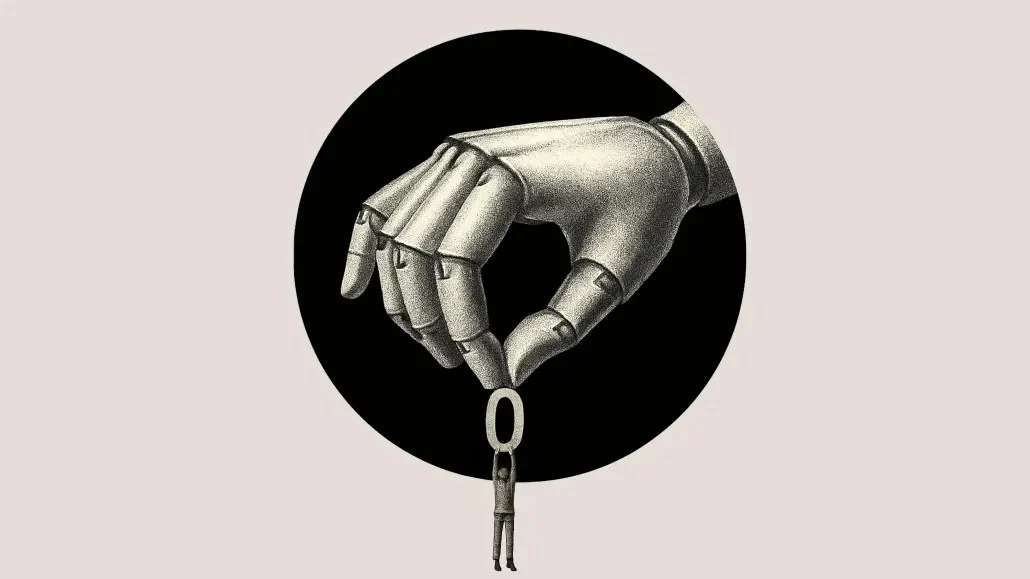
In the rapidly evolving landscape of advertising technology, a new paradigm is taking shape: the rise of "agentic" media buying. As artificial intelligence moves from simple generative tasks to executing complex, multi-step workflows, the advertising industry stands at a precarious crossroads. For marketers, the transition from human-led buying to machine-orchestrated campaigns offers the allure of unprecedented speed and efficiency. However, it also brings a visceral fear: that they are ceding control, transparency, and strategic nuance to "black box" algorithms.
WPP, the global communications giant, has moved to address these anxieties head-on. By unveiling its "Buyer Agent for Video" and a powerhouse coalition of premium media owners—including Disney, Netflix, NBCUniversal, Paramount, and Fox—WPP is attempting to frame the next era of advertising not as a tech-first revolution, but as a governance-first evolution.
The Core Strategy: Governance as a Competitive Moat
On June 18, WPP signaled that the era of "wild west" automation is over. Alongside its technological unveiling, the company announced partnerships with standards bodies IAB Tech Lab and Prebid.org. The message to the industry is clear: the company is positioning itself as the "responsible adult" in the room.
The primary tension in agentic media buying is not merely about what AI might do wrong—such as misallocating budgets or placing ads in brand-unsafe environments—but what marketers are being asked to relinquish. If an autonomous agent handles the entirety of a campaign lifecycle, where does the human strategist fit in?
"Automation for us isn’t the goal; better decision-making is the goal," explains Lauren Wetzel, Global President of Data and Technology Solutions at WPP.
This philosophy is grounded in a "Rosetta Stone" problem. As every major media owner develops its own proprietary "seller agent" on its own infrastructure, the industry faces the imminent threat of a new layer of extreme fragmentation. Without shared protocols, these systems will become more opaque and harder to audit than the current programmatic ecosystem. WPP’s current mission is to build the connective tissue—the shared protocols for how buyer and seller agents communicate, validate decisions, and execute transitions.
Chronology of the Shift: From Programmatic to Agentic
The industry’s path to this point has been a long, often painful, lesson in unintended consequences.
- The Early 2000s (The Programmatic Dawn): The industry embraced programmatic advertising, promising efficiency and scale. However, this ushered in years of "ad tech tax," lack of transparency, and the rise of complex, hidden supply chains.
- 2023-2024 (The AI Surge): Generative AI and Large Language Models (LLMs) began to permeate the marketing stack. The concept of "agentic" media—where AI doesn’t just suggest a bid but executes the trade—moved from theory to prototype.
- June 18, 2024 (The WPP Pivot): WPP officially launched its Buyer Agent for Video, signaling that the agency intends to lead the transition by building the underlying governance structures simultaneously with the technology.
- 2027 (The Milestone): WPP has indicated that findings from its initial testing phase will be compiled and published for broader industry use, marking a three-year window of R&D where the agency refines the balance between machine efficiency and human oversight.
Supporting Data: Why Video and CTV?
WPP has intentionally chosen Connected TV (CTV) and premium video as its testing ground. These platforms represent the "hardest version of the problem." They involve the largest budgets, the most complex audience targeting, and the most stringent brand safety requirements.
By tackling the most difficult segment of the media landscape first, WPP believes it can establish a blueprint for simpler channels. The company is currently testing across multiple platforms simultaneously rather than anchoring to a single vendor. While specific performance data remains under wraps until 2027, the near-term goal is to achieve large-scale, automated TV and video buying within six to nine months.
The "Open Intelligence" solution, WPP’s proprietary marketing model, acts as the fuel for these agents. Unlike static, off-the-shelf datasets that are obsolete the moment they are utilized, Open Intelligence pulls in dynamic, real-time signals—social listening, past performance, and contextual cues—to create what Wetzel calls an "asymmetric advantage" for brands.
Official Responses and Internal Perspectives
The internal culture at WPP regarding this shift is one of measured, iterative testing. There is a candid admission that the "thresholds" for automation—where the AI is allowed to make a decision versus where it must wait for a human—will shift over time.
"In some instances, it will probably be the humans, especially at the starting point," Wetzel admits. "Over time, we’re going to make changes on what the role of governance is based on what we see performing better at what point in the workflow."
This represents a significant departure from the "AI-everything" narrative dominating Silicon Valley. It is an acknowledgment that human expertise is not being replaced, but rather that the domain of human expertise is shifting. Humans remain at the helm, while agents are kept firmly in the "loop."
However, not all industry observers are convinced of the benevolence of this approach. Robert Webster, founder of AI marketing consultancy TAU and a former WPP executive, offers a word of caution. "WPP Open will be attractive to many advertisers," Webster notes, "but many will not want to ‘rent out’ their marketing brain. They prefer control and transparency. My big concern is that WPP has many in-house owned media options where they take a margin. How can you trust an agency AI that is tied to margin? The Google DOJ case showed us this is a bad idea."
The Implications: A New Era of Agency Value
The implications of this shift are profound for the entire advertising ecosystem.
1. The Death of the "Black Box"
If WPP succeeds in its goal of creating common standards, it effectively forces a level of interoperability that the programmatic era lacked. This would necessitate that publishers (like CNN or News UK, who are building their own agents) comply with these shared protocols, potentially creating a more transparent marketplace where the "rules of the road" are agreed upon by both sides before the auction begins.
2. Publishers as "Intelligence Partners"
Wetzel’s re-classification of publishers as "intelligence partners" rather than mere "inventory partners" is a signal that the relationship between agencies and media owners is becoming more collaborative. In the agentic world, the quality of the data fed into the agent is everything. Publishers who can provide proprietary, high-quality signals will become more valuable than those who simply provide commoditized ad space.
3. The "First and Careful" Paradox
The industry is currently grappling with a fundamental question: Is it possible to be first and careful at the same time? Two decades ago, the pioneers of programmatic built empires, but they also built a system plagued by fraud and inefficiency. WPP is attempting to rewrite that history. By embedding audit trails and approval thresholds into the very architecture of its agent, the company hopes to avoid the "fix it later" mentality that characterized the last generation of ad tech.
4. The Client Control Dilemma
While the current version of WPP’s agent operates at scale across multiple advertisers, the roadmap leads toward client-specific configurations. This addresses the fear of commoditization. If every brand uses the same "WPP Agent," they risk achieving the same results. The true test for WPP will be whether it can maintain its rigorous governance standards while allowing brands the "asymmetric advantage" they demand.
Conclusion: The Path Forward
The rise of agentic media buying is inevitable, but the form it takes is still being written. WPP’s bet is that the industry is exhausted by the chaos of unregulated automation and that governance will become a primary service offering.
Whether this results in a more efficient, transparent marketplace or merely a new form of walled-garden control remains to be seen. As the company moves toward its 2027 benchmarking goal, the industry will be watching closely. For now, WPP is attempting to prove that the future of advertising is not about removing the human, but about elevating them to the role of architect—one who dictates the rules, sets the thresholds, and ensures that the machines, however intelligent, remain accountable to the brands they represent.


 Asep Darmawan
 Sagoh
Sagoh