

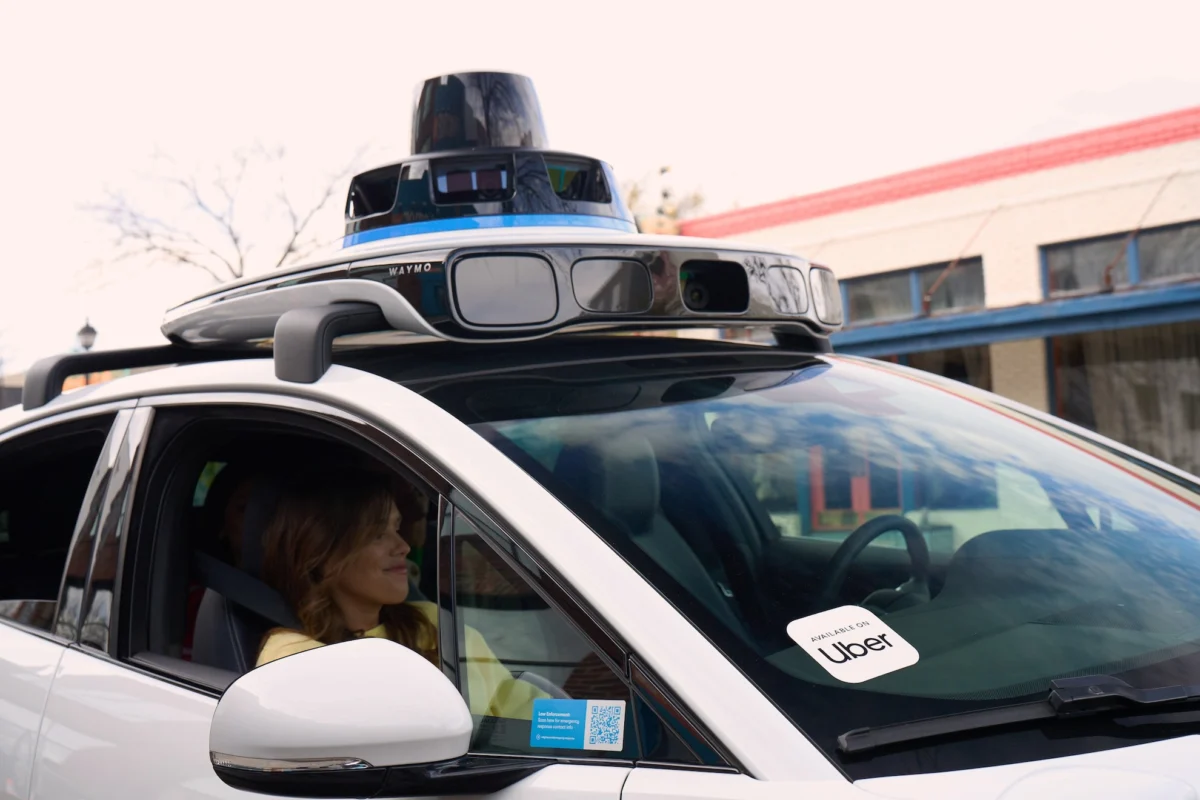
The landscape of urban mobility has undergone a seismic shift over the last three years, nowhere more evident than in the evolving relationship between the industry’s two titans: Waymo and Uber. This week, both companies confirmed the quiet conclusion of a nearly three-year partnership in Phoenix, Arizona, marking the end of a pilot program that once symbolized a truce between former legal adversaries. While the vehicles have been pulled from Uber’s ride-hailing interface in the desert city, both firms insist the move is not a sign of failure, but rather a strategic realignment in an increasingly crowded and competitive autonomous vehicle (AV) market.
The Core Facts: A Strategic Pivot
The removal of Waymo robotaxis from the Uber app in Phoenix marks the dissolution of a highly specific experiment. For the past three years, Phoenix served as the only city where Waymo operated its own standalone service while simultaneously feeding ride requests into the Uber network.
According to official statements, the integration was discontinued in May. Waymo has since re-absorbed the vehicles previously dedicated to the Uber pilot back into its primary Phoenix fleet. These vehicles remain fully operational and available to the public exclusively through the Waymo One app, as well as through existing integrations with partners like Via and DoorDash.
For Uber, the departure of Waymo from its Phoenix app does not signify a retreat from autonomous technology. On the contrary, the ride-hailing giant confirmed it is currently preparing to launch a separate, as-yet-unnamed autonomous vehicle partnership in the city. The identity of this new partner remains a closely guarded secret, fueling speculation about which AV developer will take over the space vacated by Waymo.
Chronology: From Legal Battles to "Frenemies"
To understand the significance of this breakup, one must look at the turbulent history between the two companies.
The Litigious Origins (2017–2018)
The relationship between Waymo (then the Google self-driving project) and Uber began in a courtroom, not a boardroom. In 2017, Waymo filed a high-profile lawsuit against Uber, alleging that the ride-hailing company—aided by former Google engineer Anthony Levandowski—had stolen trade secrets related to LiDAR technology. The legal battle was one of the most sensational in the history of Silicon Valley, culminating in a 2018 settlement that saw Uber pay a $245 million equity stake to Waymo and agree to strict oversight of its own internal AV development.
The Reconciliation (2023)
By 2023, the narrative had shifted from litigation to cooperation. As Waymo scaled its operations and Uber looked to diversify its fleet, the two companies announced a landmark pilot in Phoenix. At the time, the partnership was viewed as a pragmatic move: Waymo gained access to Uber’s massive user base, while Uber added a "premium" autonomous option to its platform.
The Expansion and Divergence (2024–2025)
The partnership successfully expanded to Austin and Atlanta, where it continues to operate. However, as the industry matured, the "frenemy" dynamic became strained. As Waymo began rolling out its next-generation "Ojai" robotaxi—a purpose-built van manufactured by Zeekr—the company signaled a shift toward total control of the passenger experience. Simultaneously, Uber began signing deals with a variety of other AV developers, effectively hedging its bets and reducing its reliance on any single provider.
Supporting Data: Scaling the Autonomous Revolution
The decision to end the Phoenix pilot reflects the broader maturity of the AV sector. When the partnership began in 2023, the industry was in a state of uncertainty. Cruise, a subsidiary of General Motors, was still considered a primary threat, and the concept of a "driverless" city was largely theoretical.
Today, the data paints a different picture:
- Fleet Growth: Waymo has scaled its operations to a fleet of approximately 4,000 vehicles across its various markets.
- Trip Volume: The company now facilitates more than 500,000 trips every week, a staggering figure that underscores the move from "pilot" to "mass transit."
- Market Reach: Waymo is currently operational in 11 major U.S. metropolitan areas, with plans to launch in 20 additional cities throughout the remainder of the year.
- Uber’s Diversification: Uber has shifted its strategy to become an "AV-agnostic" platform. By integrating dozens of autonomous partners, Uber is positioning itself as the "operating system" for urban transportation, rather than just a taxi company.
Official Responses: A "Productive" Conclusion
Both companies were quick to frame the end of the Phoenix pilot as a natural evolution of their business models.
"This was a productive pilot that paved the way for future expansions and partnerships across the globe," a Waymo spokesperson stated. "After hundreds of thousands of trips with Uber, we have integrated these vehicles back into our Phoenix fleet, where they will continue to serve riders through Waymo… We’re grateful to all of the Uber customers who took fully autonomous trips with us."
Uber’s commentary echoed this sentiment, emphasizing the "limited" nature of the initial program. "Phoenix was our first pilot market with Waymo and was an intentionally limited deployment, reaching just over a dozen vehicles dedicated to the program," an Uber representative noted. "We learned a lot from that collaboration, which helped us to quickly scale Austin and Atlanta, where hundreds of Waymo AVs are available exclusively on Uber."
Implications: A Looming Showdown in London and Beyond
The quiet end of the Phoenix pilot serves as a precursor to what industry analysts are calling the "Robotaxi Showdown." As both companies look toward international markets, their interests are increasingly colliding.
The London Conflict
Perhaps the most significant implication is the impending rivalry in the United Kingdom. Reports suggest that Uber, Waymo, and the British startup Wayve are all jockeying for position in London. In this theater, the companies are not collaborators; they are direct competitors vying for the same regulatory approvals and rider segments. The tension in London suggests that the "partnership" phase of the autonomous era may be coming to an end, replaced by a cutthroat race for market dominance.
The Standardization of Autonomy
The failure to continue the Phoenix partnership also suggests that robotaxi operators are finding more value in controlling their own data and user interfaces. By keeping users within the Waymo One app, Waymo can collect proprietary data, refine its AI models more effectively, and maintain a consistent brand experience—something that becomes diluted when the service is white-labeled through a third-party app like Uber.
The Future of the "Super-App"
For Uber, the goal remains the creation of a "super-app" for mobility. By maintaining a network of various AV partners rather than relying on Waymo, Uber ensures that its platform remains the primary destination for riders, regardless of which company owns the car. This strategy protects Uber from the risks associated with any single AV developer’s technical failures or regulatory hurdles.
Conclusion
The end of the Waymo-Uber partnership in Phoenix is a milestone in the maturation of the autonomous vehicle industry. It marks the transition from the era of "proof-of-concept" pilots to the era of industrial-scale competition. While the two companies proved that they could cooperate to navigate the early complexities of autonomous transit, their diverging long-term goals—Waymo’s push for a standalone, branded ecosystem and Uber’s ambition to be the universal gateway to autonomous travel—have inevitably led to a parting of ways in the desert.
As we look to the remainder of the decade, the industry will likely see less collaboration and more intense, head-to-head competition. The Phoenix pilot served its purpose: it taught the industry how to walk. Now, as the technology reaches a level of unprecedented capability, both Waymo and Uber are preparing to run—and they are doing so on their own terms.











