For decades, the holy grail of marketing was the “customer base.” Brands spent billions to identify, segment, and convert consumers based on demographic markers like age, income, and zip code. Then came the era of “community building,” where the goal shifted toward fostering digital spaces where customers could interact with one another. Today, as media fragmentation reaches a fever pitch and consumer skepticism toward traditional advertising hits an all-time high, the marketing landscape is undergoing its most radical transformation yet: the pivot to fandom.
Fandom represents more than just a loyal customer; it is an active, participatory identity. It is the language of shared symbols, internal jokes, and deep-seated emotional investment. As the industry grapples with this shift, major players are moving to secure the expertise necessary to navigate this new terrain, most notably signaled by Havas’s recent acquisition of a majority stake in Archrival, a youth-culture and experiential activation agency.
The Evolution of the Consumer: From Demographics to Passions
To understand why the industry is betting so heavily on fandom, one must look at the historical trajectory of marketing. For much of the 20th century, marketing was a game of "awareness and reach." The primary challenge was simply getting a message in front of the right eyeballs. Advertisers relied on broad demographic buckets to define their targets, assuming that people with similar economic backgrounds would respond to similar messaging.
However, the rise of the digital age shattered the traditional media monolith. With the advent of social media and the subsequent fragmentation of content channels, the old "spray and pray" demographic model began to fail. Consumers stopped organizing their lives around television schedules or magazine subscriptions and started organizing themselves around shared interests, hobbies, and niche subcultures.
"People are increasingly organizing themselves around interests, rather than demographics," explains Eileen Flynn, chief strategy officer at Archrival. "These are the places where identity is formed, where influence is created, and ultimately, where purchasing decisions are shaped."
This shift marks a departure from the passive consumption of goods to the active contribution to culture. Consumers no longer want to just be "targeted"; they want to belong to something larger than themselves.
The Archrival Acquisition: A Strategic Play for Culture
Havas’s decision to bring the nearly 30-year-old Archrival into its fold under the Havas Play division is a direct response to this changing climate. By integrating an agency renowned for its expertise in sports marketing, creator engagement, and experiential activation, Havas is signaling that the future of the holding company is rooted in "participation marketing."
"The brands we work with are demonstrating a need for partners that understand how to create participation among consumers," says Andrea Isaac, managing partner at Havas Play North America. "With Archrival, we will have a much more connected model that can help brands show up in culture in ways that are much more authentic and meaningful."
This acquisition is not merely about expanding service offerings; it is about infrastructure. In the past, agencies could get away with creating a glossy ad campaign and pushing it out across social platforms. Today, that is insufficient. Brands now require the agility to build experiences that invite consumers to participate, share, and ultimately own a piece of the brand’s narrative.
The Anatomy of Fandom vs. Community
While "community" and "fandom" are often used interchangeably in boardrooms, industry experts are beginning to draw a sharp distinction between the two.
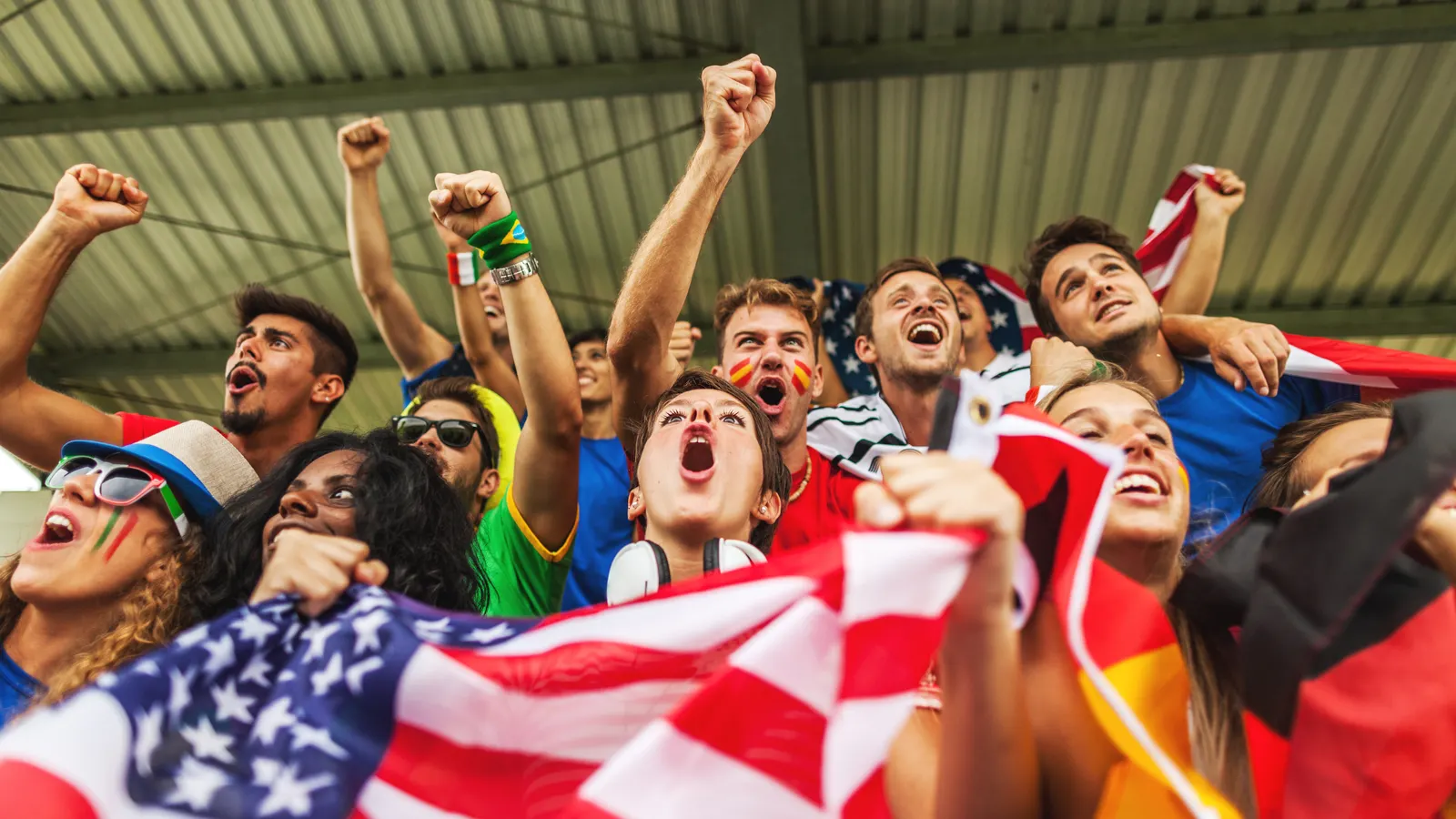
A community, by definition, creates connection. It is a group of people who share an interest and a space—perhaps a subreddit or a Facebook group—where they can discuss a brand. Fandom, however, is characterized by contribution.
"The difference between a community and fandom is often the depth of engagement," says Flynn. "Where communities create connection, fandom encourages contribution where people don’t just consume content; they are actually creating it."
This distinction is visible across platforms like TikTok and Instagram. A member of a community might watch a brand’s video; a "fan" will create a reaction video, edit the footage, share it with their own network, and engage in the "hidden codes" of the brand’s subculture. They are no longer spectators; they are stakeholders.
The Double-Edged Sword: When Fans Become Critics
As brands move to cultivate these deep-rooted fanbases, they must contend with a significant trade-off: the surrender of control.
When a brand treats its customers as a mere audience, it retains total control over the messaging. When a brand treats its customers as fans, it invites them into the "inner circle," and with that invitation comes the risk of loud, frequent, and sometimes brutal feedback. Fandom is not an absence of criticism; often, it is the exact opposite.
"One of the most important things for brands to understand is that fandom isn’t the absence of criticism," Flynn notes. "In many cases, it’s the opposite: the most passionate communities are often the most vocal because they care deeply about the outcome."
This creates a high-stakes environment for brand managers. They must learn to distinguish between "noise"—transient internet griping—and "meaningful feedback"—the consistent, passionate critique from a community that feels a sense of ownership over the brand. Ignoring the latter can be catastrophic, but reacting to the former can dilute a brand’s identity.
The Authenticity Imperative in the Age of AI
Perhaps the most significant hurdle for brands attempting to manufacture or nurture fandom is the "authenticity test." In an era dominated by artificial intelligence—where every interaction, image, and statement is scrutinized for its "humanness"—consumers have developed a sixth sense for corporate manipulation.
"The moment a brand starts manufacturing fan behavior or selectively amplifying something simply because it’s useful from a marketing perspective, communities tend to recognize that pretty quickly," warns Isaac.
Artificial intelligence has made it easier than ever to churn out high-quality, generic content. However, this saturation has only increased the value of human-led, authentic, and "messy" engagement. Fans can distinguish between a brand that is genuinely participating in their culture and a brand that is merely "marketing" to them.
The successful brands of the next decade will be those that can prove their commitment to their values. They must be willing to let fans influence the product, the service, and the brand narrative. This requires a level of vulnerability that many legacy corporations find uncomfortable.
Implications: A Future Built on Participation
What does this mean for the future of marketing budgets and agency relationships?
- Shift in KPIs: Success will no longer be measured solely by "reach" or "impressions." Instead, metrics will evolve toward "depth of engagement," "co-creation rates," and "fan-generated content volume."
- Investment in Experience: As digital spaces become more crowded, brands will likely shift spending from paid media placements toward experiential marketing—events, pop-ups, and creator-led activations that provide a physical or digital venue for fans to gather.
- Internal Cultural Literacy: Brands will need to hire or partner with individuals who are deeply embedded in subcultures. "Translators" who understand the nuances of fan codes will become as vital as data scientists.
- Resilience in Response: Brands will need to build thicker skins. Developing a fandom means inviting people to care enough to complain. Companies will need robust, human-centric systems to listen to their fans and respond in ways that feel like a conversation rather than a corporate press release.
As Andrea Isaac succinctly puts it: "Brands that can prove that they are authentic will win, and I think talking about fandoms and creating experiences allow brands to showcase that."
The transition from demographics to passions is complete. The move from communities to fandoms is underway. For the modern marketer, the path forward is clear: stop trying to reach the consumer, and start trying to earn the fan. It is a more demanding, more volatile, and more labor-intensive path, but in a world where attention is the scarcest currency of all, it is the only way to build a brand that truly lasts.