

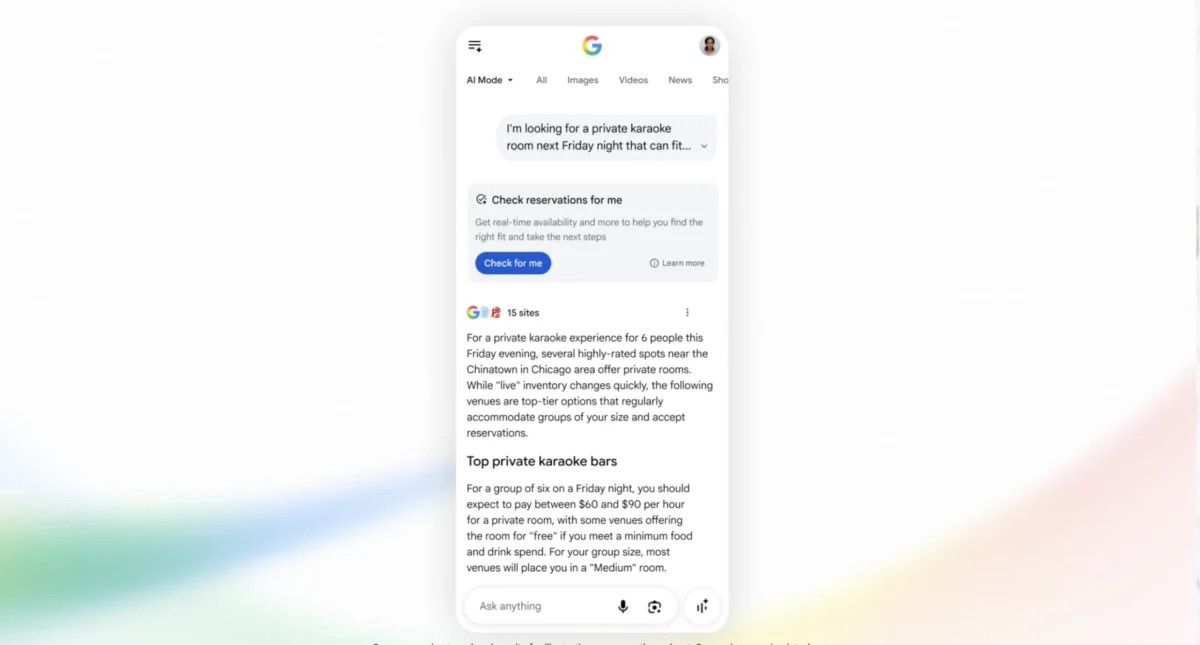
For a quarter of a century, the digital landscape has been defined by a singular, iconic interface: a minimalist white box floating in the center of a barren screen. Since its inception, Google Search has conditioned billions of users to distill their complex thoughts into a handful of keywords, hit "Enter," and navigate a curated list of blue hyperlinks. It was a transactional model—a bridge between human curiosity and the vast, chaotic architecture of the web.
However, at this year’s Google I/O developer conference, the Mountain View-based technology giant signaled that this era is effectively coming to a close. By weaving generative artificial intelligence into the very fabric of its core product, Google is pivoting from a search engine to an "answer engine." This shift represents the most significant architectural overhaul in the company’s history, promising a future where the search bar behaves less like a database query tool and more like an omniscient AI assistant.
The Main Facts: A Paradigm Shift in Information Retrieval
The core of Google’s announcement is the integration of the Gemini model directly into the search experience. This is not merely an aesthetic update; it is a fundamental change in how the engine processes intent.
Under the new paradigm, users are no longer encouraged to be brief. The search bar now invites multi-modal queries. A user can upload a video of a broken bicycle, provide a photo of a specific part, and ask the AI, "How do I fix this, and what tools do I need?" In seconds, the system synthesizes instructions, identifies the components, and provides a step-by-step resolution.
Key features of this new "AI-first" Search include:
- Conversational Continuity: Users can ask follow-up questions without restarting the search, allowing for a deep-dive exploration of topics.
- Multi-Modal Input: The ability to combine text, image, and video queries into a single prompt.
- Cross-Tab Integration: A "Circle to Search" and browser-integrated functionality that allows users to query across their open Chrome tabs, essentially giving the AI access to the user’s active digital workspace.
While Google maintains that traditional web links will remain a fixture of the experience, their placement and utility are being relegated to a secondary status. AI-generated summaries—often referred to as "AI Overviews"—now occupy the prime real estate at the top of the results page, effectively acting as the final word for many casual searchers.
Chronology: A 25-Year Journey to Generative Intelligence
To understand the magnitude of this transition, one must look at the timeline of Google’s dominance:
- 1998–2000: The Keyword Foundation. Google launches, perfecting the PageRank algorithm. The focus is on indexing the web and providing the most relevant links based on keyword density and site authority.
- 2010–2015: The Semantic Shift. With the introduction of Hummingbird and RankBrain, Google begins to understand user intent rather than just keyword matching. The "Knowledge Graph" is introduced, bringing facts directly into the search results page.
- 2019–2022: The Transformer Era. Google researchers publish the seminal paper on the "Transformer" architecture, which underpins modern Large Language Models (LLMs). This lays the technical groundwork for what would become Gemini.
- 2023: The SGE Pilot. Google introduces the Search Generative Experience (SGE) as an opt-in experiment. It is the first time the public sees what a conversational, AI-driven search interface looks like at scale.
- 2024: The Deployment Phase. Google I/O marks the graduation of generative AI from an experimental feature to the default experience for the global search engine.
Supporting Data: The Impact on Digital Behavior
The transition to an AI-driven search experience is backed by shifting user metrics. Internal data from Google, supported by third-party search analytics, indicates a trend toward "long-tail" queries.
- The Rise of Long-Tail Queries: Over the last three years, the average length of a search query has increased by 18%. Users are increasingly framing questions as sentences rather than strings of keywords.
- The "Zero-Click" Phenomenon: Recent industry reports suggest that nearly 60% of Google searches now end without a click to an external website. This is largely attributed to "Featured Snippets" and the increasing density of information provided on the search results page itself.
- Compute Costs: Integrating generative AI into every search query is significantly more resource-intensive than traditional indexing. Industry analysts estimate that an AI-powered query costs the company approximately seven to ten times more in computational power than a standard search, a challenge Google is addressing through massive investments in custom-designed Tensor Processing Units (TPUs).
Official Responses: Navigating the Controversy
The move toward an AI-centric search experience has not been without its critics. Publishers, content creators, and SEO professionals have voiced significant concerns regarding the erosion of web traffic.
In response, Google’s leadership has emphasized the "ecosystem" approach. During the I/O conference, Google executives reiterated that their mission remains to send users to high-quality websites.
"We are not trying to replace the web," stated a Google spokesperson. "We are trying to organize the web’s information in a way that makes it more accessible. When a user asks a complex question, the AI summary acts as a jumping-off point. Our data shows that users who interact with AI-generated overviews are actually more likely to click through to deep-dive articles to verify information or learn more."
However, the company acknowledges the friction. They have announced new tools for publishers, including enhanced attribution methods within AI summaries, designed to ensure that brands and content creators receive credit—and traffic—when their information is synthesized by the AI.
Implications: The Future of Brands and Digital Strategy
For marketers, businesses, and content creators, the implications of this shift are seismic. The "Brandweek" philosophy of shaping what’s next has never been more relevant, as the rules of digital discovery are being rewritten.
1. The Death of SEO as We Know It
Traditional SEO, which relies on keyword stuffing and backlink acquisition, is losing its efficacy. The new game is "Answer Engine Optimization" (AEO). Brands must now focus on providing high-authority, structured, and factual data that can be easily parsed by AI models. Being "the answer" is the new objective.
2. The Fragmented Customer Journey
If the user finds their answer on the Google search page, the path to the website is severed. This forces brands to prioritize "Brand Equity" over "Traffic Volume." If a user trusts a brand because it consistently appears as the authority in AI-generated summaries, the brand remains top-of-mind, even if the user doesn’t click.
3. The Multi-Modal Mandate
With the integration of image and video searching, brands can no longer rely on text-based content strategies. Visual assets must be tagged, optimized, and contextually rich to ensure they appear in the AI’s multi-modal results. A brand’s visual identity is now as important as its written content for search visibility.
4. The Privacy and Data Conflict
As Google’s AI assistant begins to traverse Chrome tabs and personalize results based on user history, the conversation around data privacy will intensify. The ability for the AI to "know" the user requires access to personal data, creating a delicate balance between convenience and surveillance that will define the regulatory landscape for years to come.
Conclusion: A New Frontier of Interaction
Google’s decision to move beyond the blue links is a recognition that the internet has become too vast for manual navigation. The promise of an AI assistant—one that can synthesize, analyze, and visualize information in real-time—is a powerful one.
However, this transition forces a reckoning for the entire digital economy. If Google becomes the primary source of truth, the role of the independent website is diminished. The challenge for the next decade will be to foster an environment where AI provides value to the user without stifling the creativity and the diversity of the web’s ecosystem.
For now, the white box remains, but the experience behind it has been fundamentally altered. The search for information has become an act of conversation, and the brands that thrive will be those that understand that in the age of AI, authority is measured by the quality of the answer, not just the quantity of the links.











No comments yet. Be the first to join the conversation!