

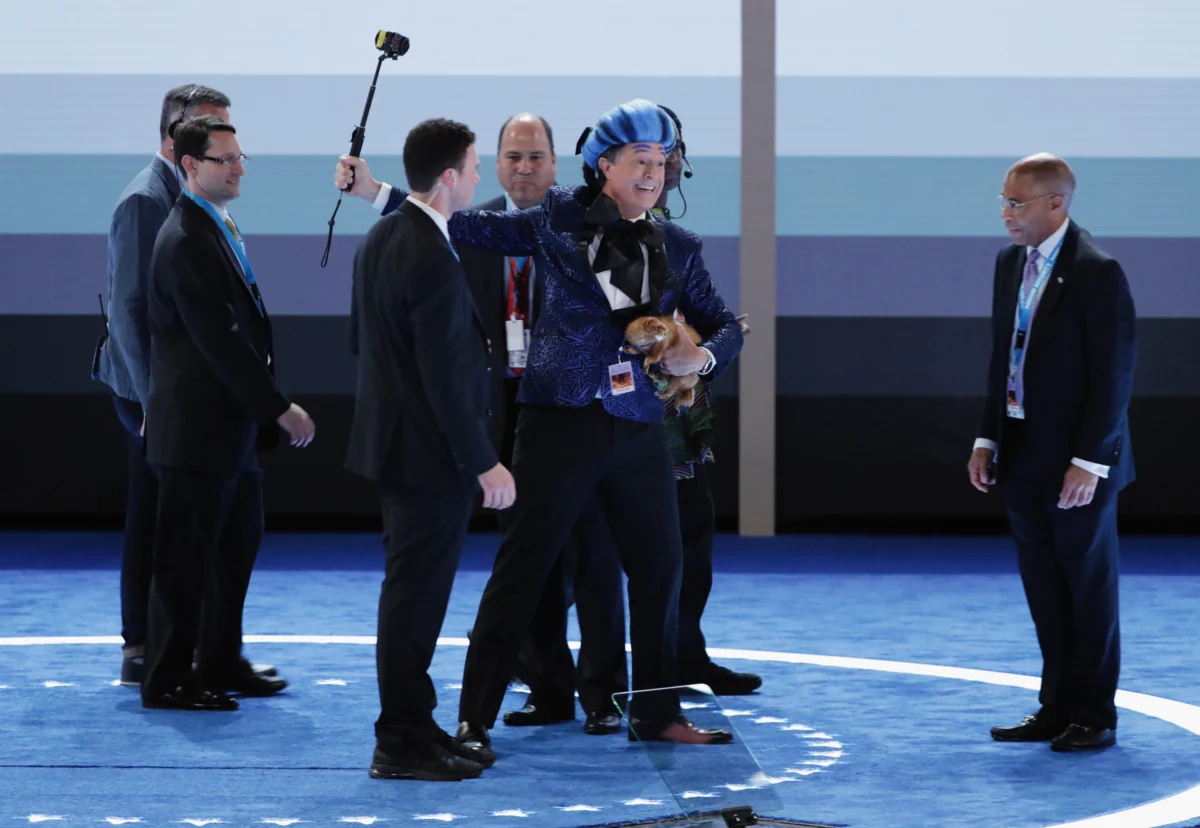
The landscape of late-night television has undergone a tectonic shift as Stephen Colbert, the sharp-witted satirist who redefined the genre, officially signed off from CBS’s The Late Show. His departure marks the end of an eleven-year tenure that saw the franchise evolve from a struggling transition project into a cultural bellwether. Over more than a decade, Colbert transitioned from the persona-driven satire of The Colbert Report to a more nuanced, multifaceted host, navigating a turbulent American political climate, a global pandemic, and the evolving expectations of the television audience.
The Evolution of a Late-Night Titan
When Stephen Colbert took the reins from the legendary David Letterman in 2015, the expectations were monumental. Colbert had spent nearly a decade perfecting the "conservative pundit" character on Comedy Central, a role so immersive that audiences were initially uncertain about how he would perform as himself—unscripted, unmasked, and unfiltered.

The early months were undeniably rocky. Critics pointed to a lack of cohesion and a struggle to find a signature rhythm within the traditional late-night talk show format. However, as the 2016 political cycle intensified, Colbert found his footing. By the time of the political conventions that summer, he had tapped into a vein of existential anxiety and biting political critique that resonated with a country caught in the crosshairs of a polarized election. By 2017, The Late Show had ascended to the top of the ratings, becoming the most-watched show in late-night television, a position it held with remarkable consistency.
Chronology of a Tumultuous Decade
To understand the weight of Colbert’s departure, one must look at the historical milestones that shaped his tenure:

- 2015: The Transition. Stepping out of the shadow of Letterman, Colbert faced early skepticism. His initial interviews with figures like Joe Biden established a new tone—one that prioritized intellectual curiosity alongside comedic timing.
- 2016–2017: The Political Pivot. As the Trump administration took office, Colbert’s monologues became essential viewing. He pivoted from soft-ball celebrity interviews to incisive, often emotional, commentary on executive actions and national discourse.
- 2020: The Pandemic Pivot. When COVID-19 shut down production, Colbert was one of the first to adapt, moving his operation to his home. This era stripped away the spectacle of the Ed Sullivan Theater, revealing a more intimate, vulnerable side of the host that endeared him to a locked-down nation.
- 2021: The Breaking Point. Following the January 6 Capitol riot, Colbert delivered one of the most raw, unscripted segments in the show’s history. Going live on that historic evening, he captured the collective shock of the American public, cementing his role as a voice of reason in chaotic times.
- 2024: The Final Bow. After eleven years, Colbert decided that the time was right to step back, leaving behind a legacy that bridged the gap between traditional broadcast comedy and modern, activist-adjacent political commentary.
Supporting Data: Ratings and Reach
Colbert’s success was not merely a matter of critical acclaim; the numbers tell a story of consistent dominance. Beginning in 2017, The Late Show routinely beat its competitors, including The Tonight Show Starring Jimmy Fallon and Jimmy Kimmel Live!, in total viewership.
At the height of his influence, Colbert’s show reached millions of viewers nightly, with digital clips of his monologues frequently racking up tens of millions of views on YouTube. This multi-platform reach allowed him to maintain relevance with a younger demographic that had largely abandoned linear television. His ability to translate complex, often distressing political news into digestible, humorous segments provided a sense of catharsis for a massive audience, solidifying his role as the "dean" of political late-night.

The Philosophy Behind the Desk: Official Perspectives
Despite his immense success, Colbert has remained strikingly humble—or perhaps, calculatedly self-deprecating—about his impact. In a candid exit interview with The Hollywood Reporter, he addressed the paradox of his ratings success during the Trump years.
"I would trade good ratings for a better president," he remarked, echoing a sentiment he first shared in 2017. This statement highlights the burden of the modern late-night host: the realization that their success is often tethered to the nation’s distress.

Addressing the common criticism that he was an architect of political division, Colbert pushed back against the idea that his show held the power to change the world. "We’re not changing the damn world," he asserted. "Have you seen the world? I promise you, if you think that I’m on some kind of agenda, then I’m really shitty at it because nothing has gone in the direction that I had hoped. I mean, nothing for 25 years."
For Colbert, the mission was always simpler than the political noise suggested: "We harvest laughter for a living, and ultimately that’s the thing I want more than anything else. I just want to make the audience laugh."

Implications for the Future of Late Night
The departure of Stephen Colbert signals a profound transition for the television industry. With the decline of traditional cable and the dominance of streaming, the "monoculture" of the late-night host is fading. Colbert represented the final iteration of the "institution" host—someone who was expected to be a comedian, a journalist, an interviewer, and a moral compass all at once.
The implications of his exit are twofold:

- The Fragmentation of Comedy: As the industry moves forward, it is unlikely that any single host will achieve the same level of ubiquity. Audiences are increasingly finding their comedy through niche influencers, podcasts, and social media, which may lead networks to experiment with more specialized, shorter-form, or digital-first formats.
- The Political Utility of Satire: Colbert proved that audiences want their comedy to engage with reality, but his admission that his political commentary didn’t "move the needle" suggests a cooling of the trend toward highly politicized late-night monologues. Future hosts may lean more toward escapism, recognizing that the audience is currently suffering from "news fatigue."
A Legacy of Laughter
When reflecting on his time at The Late Show, it is easy to focus on the political battles, the viral monologues, and the ratings wars. However, the true legacy of Stephen Colbert lies in his ability to endure. He took a seat that was once occupied by a titan of the medium, faced the skepticism of a transition, adapted to the radical changes of a global pandemic, and consistently made a diverse audience feel seen.
Whether interviewing A-list actors like Keanu Reeves, discussing cinema with Christopher Nolan, or hosting political heavyweights, Colbert treated every guest and every monologue with a meticulous level of craft. He viewed his staff as his greatest asset, often crediting them for the show’s ability to pivot at a moment’s notice.

"The thank-you note is to my staff for being ready," he noted during his final reflections. "Because if it’s not Donald Trump, it’s something else. There will be something else that we care about… but we’re ready to talk about what just happened."
As the lights dim on the Ed Sullivan Theater, the industry is left with a void. Stephen Colbert leaves behind a blueprint for how to navigate the intersection of fame and public service, reminding us that in the darkest of times, the most radical act one can perform is to continue the work of harvest—gathering, refining, and delivering the laughter that keeps a society sane.

The era of Colbert is over, but the standard he set for intelligence, vulnerability, and sheer comedic endurance will serve as a benchmark for all those who follow. As he exits, he leaves the audience not with a political lecture, but with a simple, human desire: to have been a part of a show that made them laugh when they needed it most.










No comments yet. Be the first to join the conversation!