

By Editorial Staff
May 14, 2026
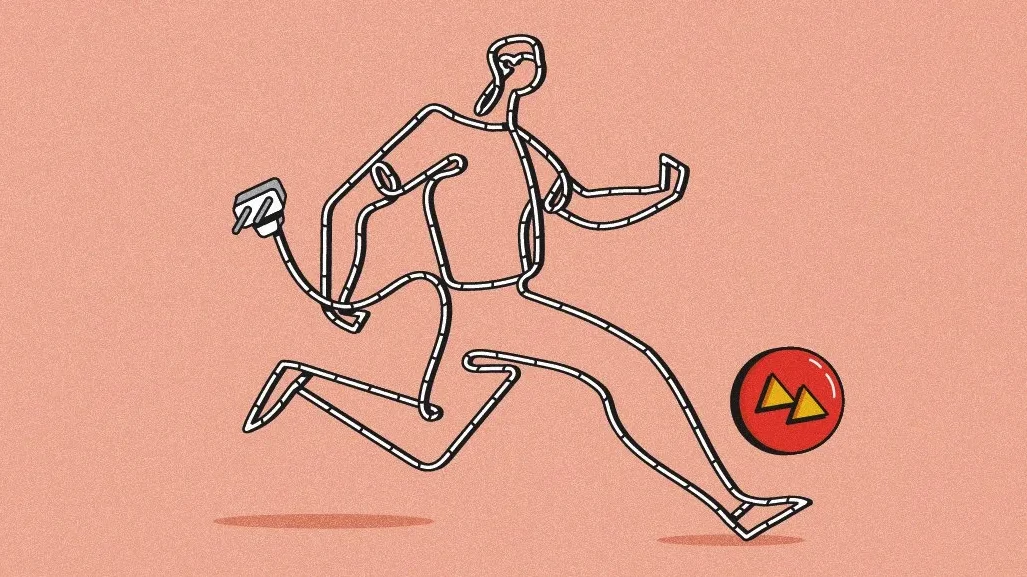
In the modern media ecosystem, live sports stand as the final bastion of "appointment viewing." Unlike scripted entertainment, which is consumed on-demand and at the viewer’s leisure, sports remain tethered to the clock. When the whistle blows, the audience converges. However, the mechanism through which this audience is reached has undergone a seismic shift, creating a paradoxical challenge for advertisers: the content is more valuable than ever, but the pathways to reach the viewer have become dangerously fragmented.
As Drew Groner, SVP and Head of Sales and Marketing at DIRECTV Advertising, notes, the traditional sports advertising playbook is effectively obsolete. With leagues and networks carving out proprietary distribution deals, the industry has shifted from a centralized model to a labyrinth of apps, logins, and walled gardens.
The Chronology of Fragmentation
To understand the current crisis, one must look at the rapid evolution of sports broadcasting over the last decade.
- 2015–2020: The Linear Consolidation: Sports rights were dominated by a handful of cable giants and major networks. Buying ads was a straightforward process of purchasing inventory through national broadcasters and regional sports networks (RSNs).
- 2021–2023: The Streaming Pivot: As cord-cutting accelerated, leagues began experimenting with streaming-exclusive packages. High-profile games moved behind digital paywalls, forcing fans to manage multiple subscriptions.
- 2024–2025: The Hyper-Silo Era: The trend solidified. Major programming deals were split between legacy cable, national streamers, and direct-to-consumer league apps. By the end of 2025, sports accounted for 96 of the 100 most-watched television broadcasts, yet the audience for those events was scattered across disparate digital and physical environments.
- 2026: The Search for Aggregation: As of May 2026, the industry has reached a breaking point. Buyers are struggling to achieve reach and frequency without overspending on duplicative efforts, leading to the rise of "aggregation-first" strategies.
Supporting Data: The Case for a Unified Approach
The necessity for change is backed by hard data. Sports remain the undisputed king of engagement, but the efficiency of reaching that engagement is plummeting.
The fragmentation of rights has created a scenario where advertisers are effectively "tripping over themselves" to reach the same households. A fan might watch a pre-game show on a cable network, switch to a streaming app for the first half, and check scores on a mobile platform. Without a centralized buying platform, an advertiser risks hitting the same fan ten times on one channel while missing them entirely on another.
Furthermore, research from Magna Media Trials and DIRECTV Advertising has highlighted that "pause ads"—a format that allows brands to reach consumers when they stop the action to grab a snack or take a break—see significantly higher engagement in sports environments compared to general entertainment. This indicates that while the delivery mechanism is fragmented, the intent of the sports fan is remarkably consistent.
Regional Loyalty: The Tribal Factor
One of the most overlooked aspects of the current media crisis is the erosion of regional connection. National streaming deals often prioritize "marquee" games, catering to a broad, transient audience. However, the true heartbeat of sports media remains local.
Sports are, by nature, tribal. The devotion to a hometown team—the NBA franchise in a mid-sized market or the local MLB affiliate—is a level of engagement that national ad buys simply cannot replicate. As regional sports networks (RSNs) transition into new, league-led digital models, the risk is that this hyper-local, community-driven connection is lost in the digital shuffle.
"Fans will follow their teams wherever they go," says Groner. "The challenge is that by shifting rights to disparate streamers, the industry has made it harder for national buys to capture that deep, civic pride. A true sports aggregator is no longer a luxury; it is the only way to reach these highly engaged superfans effectively."
Beyond the Living Room: The DOOH Frontier
While the industry has been obsessed with the "home screen," a massive portion of sports consumption happens in the real world. Bars, restaurants, hotels, and airports represent "untapped real estate" for advertisers.
The communal atmosphere of a sports bar during a championship game is a high-octane environment that digital devices in a living room cannot mimic. With the advent of the DIRECTV Remote and other Digital-Out-Of-Home (DOOH) technologies, advertisers can now insert targeted ads into live broadcasts within these commercial settings. This shift allows brands to transition from "household-level" targeting to "context-level" targeting, placing their message exactly where the most vocal, engaged fans are gathered.
Implications: The Move Toward Programmatic Convergence
The solution to the fragmentation crisis is not to return to the past, but to embrace the infrastructure of the future. The rise of programmatic sports inventory is providing a "bridge" over the siloed walls of streaming and linear TV.
By utilizing programmatic infrastructure, buyers can now access linear streaming, FAST (Free Ad-Supported Streaming TV), and DOOH inventory through a single, converged ecosystem. The implications for the market are significant:
- Democratization of Sports Advertising: In the old model, high-level sports inventory was reserved for massive conglomerates with deep pockets. Programmatic access allows mid-sized brands to enter the tentpole programming space, bidding for inventory in real-time.
- Efficiency Through Data: Rather than navigating separate deal structures for every streamer and network, buyers can use a Demand-Side Platform (DSP) to orchestrate a cross-media campaign that follows the fan’s journey, not just the content.
- The "Unified Audience" Objective: The most successful brands in 2026 are shifting their mindset. They are no longer thinking in terms of "TV buys" or "Streaming buys." They are thinking in terms of "Audience Objectives." Whether the fan is watching on a 70-inch 4K screen at home or a mounted monitor at an airport terminal, the message remains the same.
Conclusion: Following the Fan
The sports media landscape will undoubtedly continue to fracture as new platforms emerge and rights packages expire. However, for the savvy advertiser, fragmentation is not an insurmountable obstacle; it is a signal to evolve.
The winning strategy for the remainder of 2026 and beyond is simple: stop chasing the rights, and start chasing the fan. By prioritizing platforms that aggregate content across the linear-digital divide and utilizing programmatic tools to reach viewers in both domestic and communal environments, advertisers can ensure that their message lands with the same intensity as the game itself.
In a world where attention is the scarcest currency, the ability to aggregate that attention—rather than settle for the fragmented pieces—will define the market leaders of the next decade.
Partner insights from DIRECTV Advertising. This article was developed to provide strategic guidance for media buyers navigating the current sports landscape.










No comments yet. Be the first to join the conversation!