

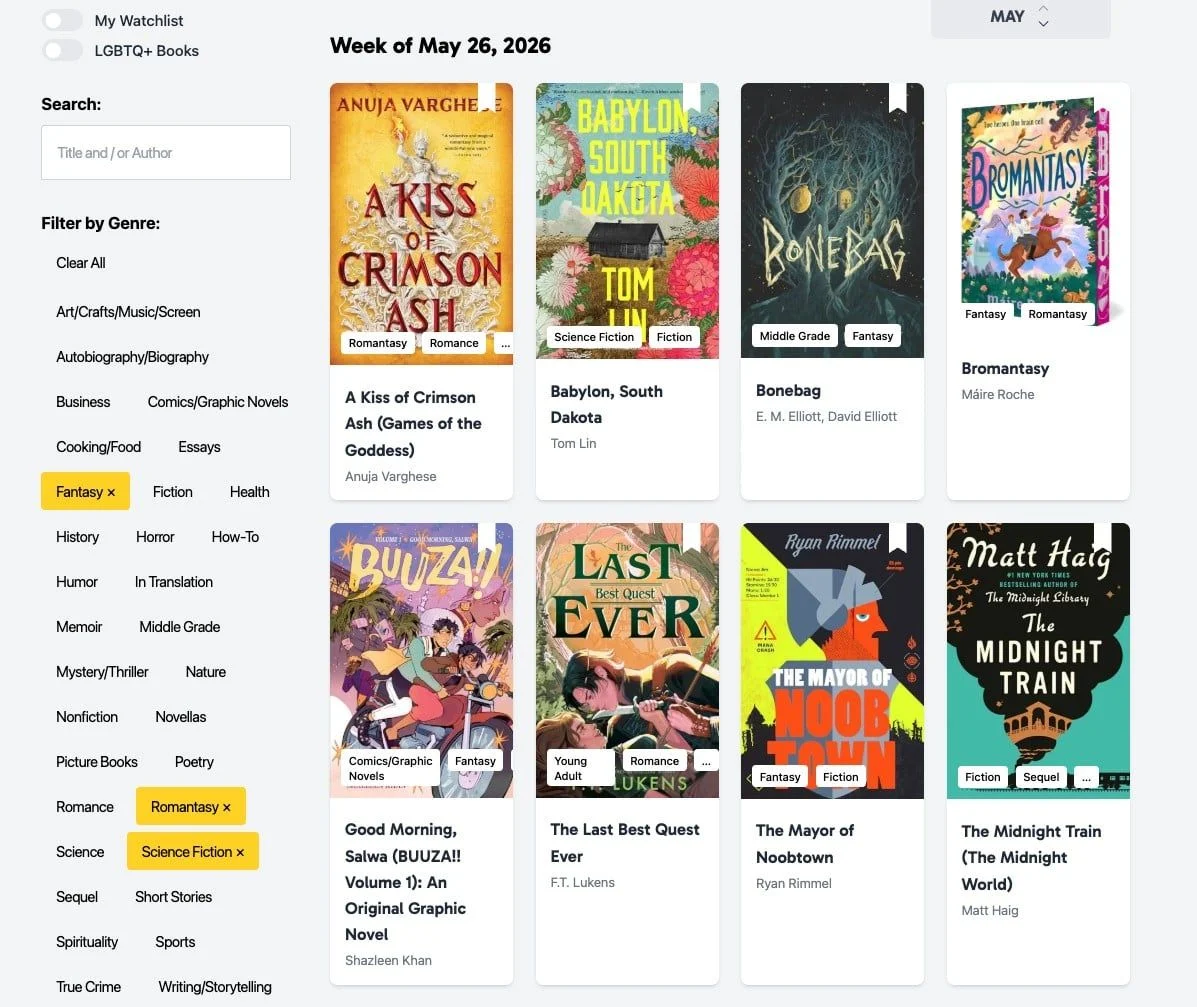
For the modern reader, the experience of keeping up with new literature has shifted from a leisurely hobby to an exercise in data management. Every month, thousands of new science fiction and fantasy (SFF) titles hit the shelves, competing for space in a "To Be Read" (TBR) pile that—for many enthusiasts—has grown into a permanent monument to literary aspiration. In an era where digital noise often drowns out quality, the burden of discovery has become increasingly difficult. Book Riot, a leader in literary commentary, has introduced a sophisticated solution: the New Release Index. By centralizing the discovery process, the platform aims to shift the power back to the reader, moving away from marketing-driven algorithms toward a curated, user-centric experience.
The State of Literary Overload: Main Facts
The primary challenge facing the modern bibliophile is the sheer volume of output. Traditional publishing models, combined with the rapid expansion of indie presses and self-publishing, have resulted in a market saturation that makes it nearly impossible for the average reader to filter through the noise. Often, the books that receive the most visibility are those backed by massive corporate marketing budgets, leaving exceptional, niche, or genre-defying works to languish in obscurity.
The New Release Index serves as a high-fidelity filter for this chaos. Rather than relying on static blog posts or scattered social media advertisements, the Index functions as a dynamic, searchable database. It allows users to browse upcoming releases organized by publication date and genre. The core value proposition is simple: it transforms the overwhelming "flood" of new books into a structured, manageable workflow, effectively eliminating the need for personal spreadsheets or fragmented catalogue reviews.
A Chronology of Discovery: From Manual Tracking to Digital Curation
Historically, readers relied on a combination of brick-and-mortar bookstore browsing and monthly "best of" lists published in literary magazines. As the industry migrated online, this process became fragmented. Readers found themselves cross-referencing Goodreads lists, publisher newsletters, and social media threads to keep track of release dates.
The Evolution of the Reading Workflow
- The Pre-Digital Era: Discovery was localized. Readers visited their neighborhood bookstore, where staff recommendations provided a human-centric curation layer.
- The Early Internet Era: The rise of online retail and community forums allowed for broader access but lacked central organization. The burden of tracking shifted entirely to the user.
- The Era of Algorithmic Suggestion: Retail giants introduced recommendation engines. While convenient, these systems were inherently biased toward high-volume sellers and paid placements, often creating a "feedback loop" of popular titles while ignoring the long tail of literature.
- The Current Phase (2026 and Beyond): The launch of the New Release Index marks a shift back toward curated, intentional discovery. By providing a clean interface that prioritizes chronological releases over algorithmic weight, it restores the agency of the reader.
Supporting Data: Why Curation Matters
The demand for a better discovery tool is backed by the current state of the publishing market. According to recent industry analytics, the SFF genre remains one of the most prolific and consistently growing sectors in fiction. However, the "discoverability gap"—the space between a high-quality book being published and the reader finding it—has widened.
Market studies suggest that:
- Retention Rates: Readers who utilize organized tracking tools are 40% more likely to complete their TBR lists.
- Genre Engagement: In the SFF space, niche sub-genres (such as solarpunk or hard sci-fi) suffer from a 60% lower discoverability rate than general fantasy when relying solely on mainstream retail algorithms.
- Efficiency Metrics: Users of the New Release Index report a significant reduction in the time spent "searching" for content, allowing more time for actual reading.
By providing a clean, filtered interface, the Index addresses the "choice paralysis" that plagues many consumers. When faced with too many options, human decision-making tends to default to the most familiar or heavily marketed items. The Index mitigates this by providing a standardized display format, where cover art and metadata are presented uniformly, allowing the work to speak for itself.
Official Responses and Strategic Philosophy
Book Riot’s strategic pivot toward the All Access model—where the New Release Index acts as a premium benefit—reflects a broader industry trend: the move toward subscription-based literary services.
"The goal," says a spokesperson for the platform, "is to democratize access to information. We aren’t just selling a list; we are selling the gift of time. By curating the data, we allow the reader to focus on the joy of discovery rather than the labor of searching."

This philosophy aligns with the growing "slow reading" movement, which encourages readers to engage more deeply with their selections. By offering a "Watchlist" feature, the Index encourages a deliberate approach to acquisition. Instead of "panic-buying" books due to a fleeting social media trend, users are encouraged to curate a list that truly aligns with their personal tastes.
The Implications: A New Era for Readers and Authors
The widespread adoption of tools like the New Release Index could have significant long-term implications for the publishing ecosystem.
For the Reader: Personalization vs. Manipulation
The most immediate implication is the shift away from algorithmic manipulation. Most digital marketplaces use algorithms designed to maximize profit per click. The New Release Index, by contrast, acts as a utility. It treats the reader as a customer of a service, rather than a data point in a marketing campaign. This fosters trust and encourages long-term engagement.
For the Author: The Rise of the Mid-List
Authors who lack the budget for major marketing campaigns often struggle to break through the noise. A platform like the Index, which emphasizes chronological release dates, gives these authors a fair chance. If their cover art and blurb are compelling, they appear on the same digital shelf as industry titans. This creates a more equitable landscape where quality can rise to the top, rather than just capital.
For the Industry: The Shift to Subscription Models
The integration of the Index into the "All Access" subscription model is a testament to the viability of premium content services. As ad-supported models become increasingly intrusive, readers are showing a willingness to pay for high-quality, ad-free, and organized literary tools. This could pave the way for more niche platforms that provide specific services—such as deep-dive genre archives or personalized reading logs—in exchange for a small monthly fee.
Conclusion: Reclaiming the TBR
The "TBR" pile is more than just a stack of books; it is a physical manifestation of a reader’s interests, dreams, and intellectual journey. The anxiety that comes with an unmanaged list is a symptom of a market that has prioritized volume over value.
By leveraging the New Release Index, readers are reclaiming their hobby from the machinery of marketing. Whether you are a dedicated fan of hard science fiction, a high fantasy devotee, or a reader looking to branch out into new, undiscovered sub-genres, the tool provides a bridge between the vast, chaotic world of publishing and the focused, quiet experience of reading.
As we look toward the future of literary engagement, the success of such platforms suggests that the most valuable commodity in the digital age is not information, but curation. In a world of infinite content, the ability to find exactly what you want—without the distraction of artificial noise—is perhaps the greatest luxury of all. With the New Release Index, Book Riot has provided a necessary compass for the modern reader, ensuring that the next great story is never more than a click away.











No comments yet. Be the first to join the conversation!