

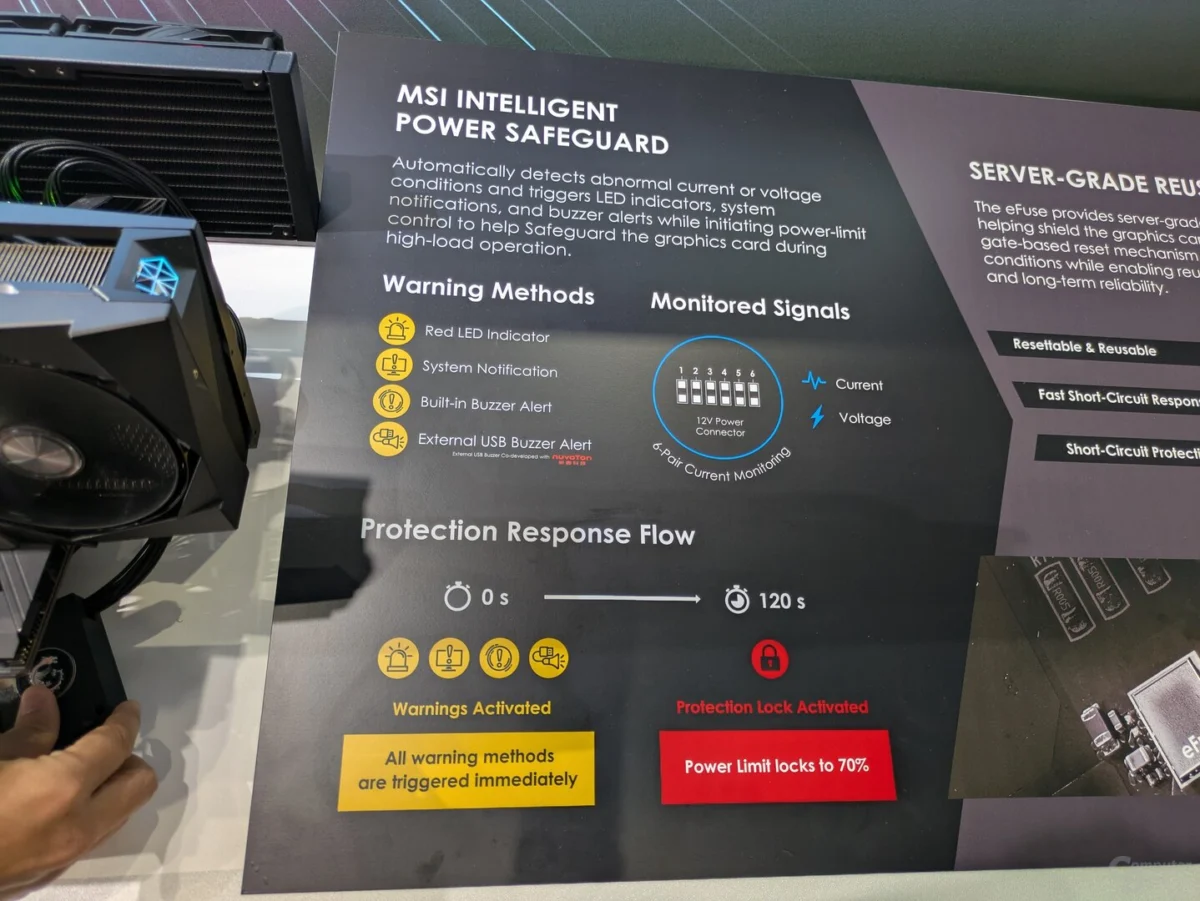
The persistent issue of the 12V-2×6 power connector has plagued the PC hardware community for years. As high-end GPUs continue to push the boundaries of power consumption, the physical connectors responsible for delivering that energy have become a focal point of anxiety for both enthusiasts and manufacturers. MSI, one of the industry’s leading graphics card vendors, is now shifting its strategy from reactive protection to proactive, on-board hardware intelligence. With its upcoming "MSI Intelligent Power Safeguard," the company aims to move the safety net directly onto the graphics card itself, potentially setting a new standard for GPU design.
The Persistent Challenge: Why the 12V-2×6 Connector Still Matters
To understand the necessity of MSI’s new initiative, one must first appreciate the evolution of the 12V-2×6 (and its predecessor, the 12VHPWR) standard. Designed to streamline cable management and deliver massive amounts of power through a single interface, the connector promised a cleaner aesthetic and simplified builds. However, reports of melting plugs, loose connections, and thermal runaways became a recurring theme in enthusiast forums and tech support queues.
Manufacturers initially scrambled to provide "band-aid" solutions. Third-party devices like the Thermal Grizzly WireView Pro II offered real-time monitoring and safety cut-offs for users concerned about their hardware’s longevity. Similarly, MSI introduced its "GPU Safeguard" for its power supply units, ensuring that the power source could intelligently manage the output to the GPU.
Yet, these are external fixes. They rely on the user to invest in extra hardware or rely on the PSU’s firmware to detect anomalies. MSI’s latest move represents a fundamental shift: the graphics card will no longer be a passive recipient of power but an active participant in its own safety.
Chronology of the 12V-2×6 Connector Crisis
The history of the 12VHPWR and its successor, the 12V-2×6, is marked by a series of high-profile incidents that forced the hand of the PCI-SIG (the governing body for the PCI Express standard).

- 2022: The Initial Rollout. With the launch of the NVIDIA GeForce RTX 4090, the industry saw the widespread adoption of the 12VHPWR connector. Almost immediately, anecdotal reports of melted connectors emerged.
- 2023: The Investigation Phase. Technical analysts and engineering firms performed deep-dive post-mortems on failed connectors. Findings pointed to a combination of user error—insufficiently seated cables—and the inherent physical limitations of the design when subjected to repeated stress or bending.
- 2024: The 12V-2×6 Standardization. In response, the industry solidified the 12V-2×6 specification. This update introduced shorter signal pins, ensuring that the card would not receive full power unless the connector was perfectly seated, theoretically mitigating the risk of thermal failure.
- Late 2024/Early 2025: The Shift to On-Board Logic. MSI’s announcement of the "Intelligent Power Safeguard" marks the current era of the saga: moving from physical safety standards to active, silicon-level monitoring.
Supporting Data: How "Intelligent Power Safeguard" Functions
MSI’s "Intelligent Power Safeguard" is designed to act as an on-board sentinel. Unlike previous external solutions that primarily monitor temperatures, MSI’s system focuses on the electrical fundamentals: voltage and current.
Technical Parameters of the Safeguard
The system operates by constantly monitoring the electrical load flowing through the 12V-2×6 interface. By tracking voltage stability and amperage, the card can detect anomalies—such as power spikes or inconsistent delivery that might precede a catastrophic connector failure—without requiring a thermal sensor at the plug itself.
The Warning Hierarchy
When the system identifies that current or voltage thresholds have been exceeded, it triggers a multi-stage alert process:
- Visual Notification: A bright, red LED indicator on the graphics card begins to blink, providing an immediate physical signal to the user that something is amiss.
- Auditory Feedback: The card emits a warning via an integrated buzzer. While often mistaken for a simple alert sound, this system is capable of delivering vocalized warnings, ensuring the user understands the severity of the situation.
- Automatic Performance Throttling: Perhaps the most critical component is the software-driven reaction. Upon detecting a dangerous electrical state, the system automatically reduces the GPU’s power limit to 70 percent. This act of "load shedding" significantly lowers the heat and current throughput, effectively preventing a total hardware meltdown.
The Role of Optional Software
While the core hardware protection is autonomous, MSI is developing an optional software suite. This tool serves two purposes:
- Logging: It provides a granular history of the electrical activity on each individual line of the 12V-2×6 connector, allowing for post-failure analysis or preventative troubleshooting.
- Alert Customization: Users who prefer a digital dashboard can receive notifications directly on their Windows desktop, supplementing the physical LED and audible buzzer.
Official Responses and Strategic Intent
MSI has been clear regarding the rollout of this technology. It is not an immediate update for all current-gen products, but rather a strategic investment for the future of their high-end graphics card lineup.

"We are building for the next generation of performance," an MSI representative noted. The company’s focus is on scalability. By integrating this intelligence directly into the GPU’s power delivery subsystem, they are creating a platform that can evolve with higher power-draw requirements expected in upcoming GPU generations.
The decision to exclude current, already-released models from this feature set is a pragmatic one. Retrofitting would require physical board revisions, which is not feasible for cards already in the retail channel. Instead, MSI is reserving the "Intelligent Power Safeguard" for future high-end releases, with strong hints that a potential "RTX 5000 Super" series or equivalent flagship launches will be the debut platform for this technology.
Implications: A New Standard for GPU Design?
The implications of MSI’s innovation extend far beyond a single product line. If "Intelligent Power Safeguard" proves effective in the field, it could force a paradigm shift in the graphics card market.
The Consumer Perspective
For the average consumer, the constant fear of a melted connector is a significant barrier to entry for high-end gaming. If a manufacturer can effectively "de-risk" the purchase of an expensive flagship GPU through intelligent, self-monitoring hardware, the brand loyalty toward that manufacturer will likely increase. Safety, once an afterthought, is becoming a key marketing differentiator.
The Engineering Perspective
Other manufacturers (ASUS, Gigabyte, EVGA/etc.) will undoubtedly be watching MSI’s implementation closely. If this feature becomes a "must-have" to compete at the high end, the industry will likely see a rapid adoption of on-board power management chips across all major AIB (Add-in Board) partners. This could eventually lead to a standardized, universal "smart-connector" protocol that communicates between the PSU and the GPU, creating a closed-loop safety system.

Potential Downsides and Future Risks
Despite the optimism, some risks remain.
- Software Complexity: Introducing more layers of software and firmware monitoring increases the attack surface for bugs. A false positive—where a card throttles itself during a mission-critical moment because of a sensor glitch—could be just as frustrating for a user as a hardware failure.
- Cost: Implementing these additional sensors and control logic adds to the bill of materials. Consumers should expect to pay a premium for "safeguarded" cards, which may further push the price of enthusiast-level GPUs into even higher territory.
Conclusion: The Road Ahead
MSI’s "Intelligent Power Safeguard" represents a mature, responsible response to a technical problem that has plagued the industry for too long. By prioritizing the health of the hardware through active, on-board monitoring, MSI is moving the conversation from "how do we fix the plug?" to "how do we build a smarter system?"
As we look toward the next cycle of graphics card launches—specifically the anticipation surrounding the next generation of NVIDIA and AMD architectures—it is clear that the standard of "protection" is changing. While we wait to see how these systems perform in real-world, long-term conditions, the message is clear: the age of the "dumb" power connector is coming to an end. In the future, your graphics card won’t just work harder; it will work smarter and safer, ensuring that your investment is protected from the very current that powers it.








No comments yet. Be the first to join the conversation!