Nana
Nana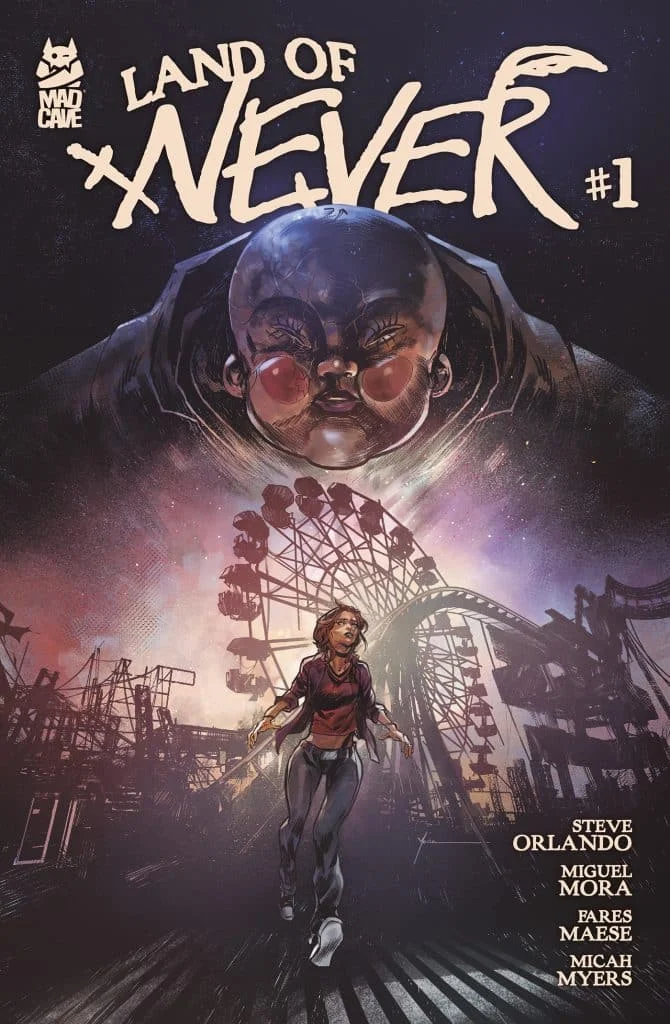
In the landscape of modern comic books, few creative endeavors are as challenging as reinterpreting a literary titan. J.M. Barrie’s Peter Pan has been cemented in the cultural zeitgeist as a whimsical, albeit melancholic, fable of eternal youth and innocence. However, writer Steve Orlando, in collaboration with artist Miguel Mora, has stripped away the pixie dust to reveal the underlying trauma inherent in the original text. Their latest project, Land of Never #1, published by Mad Cave Studios, reframes the legend of the boy who wouldn’t grow up through the lens of a gritty, psychological true-crime thriller.
The Premise: A Father’s Desperate Search
The narrative centers on Jim Hoke, a retired pathologist whose life was shattered six months prior when his daughter, Wendy, vanished from her bedroom. The only evidence left behind is a terrifying, fleeting memory: a hulking, unnatural silhouette lingering at her window. To the authorities and the public, Jim’s testimony is dismissed as the delirious ravings of a broken man.
With the case relegated to the status of a "cold file," Jim remains the lone crusader in a world that has moved on. Armed with little more than a withered Father’s Day card—a painful memento of a life that no longer exists—Jim begins a descent into the dark underbelly of a phenomenon known as "The Floating Man." This urban legend, whispered about in internet forums and local folklore, is linked to a string of child disappearances that mirrors Wendy’s abduction.
A Chronology of Grief and Mystery
To understand the gravity of Land of Never #1, one must examine the timeline of the Hoke tragedy.
- The Abduction: Six months ago, the normalcy of the Hoke household was permanently severed. The disappearance was sudden, quiet, and left no forensic trail for the police to follow.
- The Investigation: In the weeks following the event, the local police force exhausted its resources. Despite Jim’s background as a pathologist—a profession rooted in logic and evidence—he found himself unable to provide the objective proof required to keep the investigation open.
- The Spiral: As the months passed, the public’s sympathy waned, replaced by skepticism. Jim’s reputation and personal stability eroded, transforming him from a respected medical professional into a social pariah haunted by his own inability to save his daughter.
- The Awakening: Land of Never #1 picks up at this nadir. Jim begins connecting the dots between Wendy’s abduction and the "Floating Man," shifting the genre of his journey from a procedural investigation into something far more occult and sinister.
Supporting Data: Deconstructing the Myth
The brilliance of Orlando’s script lies in his willingness to confront the "twisted" reality of the Peter Pan myth. For decades, the Disneyfication of Barrie’s work has masked the core tension: the non-consensual removal of children from their homes.
Orlando posits a chilling question: what happens to the parents left behind? In traditional retellings, the "Land of Never" is a place of wonder. In this iteration, it is a site of abduction. The comic functions as a critique of how society sanitizes trauma. By framing the narrative as a true-crime story, Orlando highlights the psychological toll on those left in the wake of such inexplicable losses.
The visual storytelling, spearheaded by Miguel Mora, is instrumental in establishing this tone. Mora’s character design for the Floating Man is a masterpiece of horrific suggestion. The figure is not the playful, lithe youth of classic illustrations, but a massive, non-human presence that feels invasive and predatory. Conversely, Jim Hoke is drawn with a raw, visceral vulnerability. His physical decay mirrors his mental state, providing readers with an immediate, unspoken understanding of his history of personal failures long before the dialogue explicitly confirms them.
The art is further elevated by the color palette of Fares Maese, which utilizes deep, moody tones to underscore the encroaching darkness of the mystery. Micah Myers’ lettering acts as the final piece of the puzzle, guiding the reader through the frantic, fractured psyche of a father who is rapidly losing his grip on reality.
Official Responses and Creative Vision
The transition from folklore to horror has been met with enthusiasm from critics who appreciate the subversion of the genre. Mad Cave Studios, in providing the title for review, has signaled a clear intent to elevate their catalog with high-concept, genre-bending narratives.

Steve Orlando, a writer known for his ability to handle complex emotional arcs within high-stakes superhero and genre fiction, has stated in various interviews that the goal of this series is to explore the "emotional fallout" of events that defy explanation. The series is less concerned with the mechanics of a magical realm and more focused on the conspiracy of silence surrounding those who disappear into it. The "Floating Man" serves as an allegory for the dangers of the unknown—both the literal danger of kidnapping and the metaphorical danger of grief that can consume an entire life.
Implications: A New Era for Dark Retellings
The release of Land of Never #1 carries significant implications for the comic book industry. It suggests a growing appetite for "dark mythos"—a trend where classic, public-domain stories are retrofitted to satisfy the contemporary audience’s preference for psychological depth and horror.
1. The Deconstruction of Childhood
By challenging the wholesome nature of the Peter Pan archetype, the series forces the reader to confront the darker themes of abandonment and loss. It suggests that the "adventure" of youth is often bought at the expense of the stability of the family unit.
2. The True-Crime Influence
The integration of true-crime elements—internet myths, cold cases, and the skepticism of law enforcement—anchors the fantasy in a reality that feels uncomfortably close to home. This serves to ground the horror, making the threat of the Floating Man feel tangible rather than ethereal.
3. The Future of the Series
As the first issue concludes, it leaves the reader with more questions than answers. The narrative trajectory suggests that Jim Hoke is not merely a grieving father, but a man who may have to descend into a darkness he never believed possible to uncover the truth. The series promises to move beyond the simple "rescue mission" trope, potentially delving into a larger, more systemic conspiracy involving the entities that dwell in the shadows of our reality.
Conclusion: A Must-Read for Genre Fans
Land of Never #1 is a powerful, haunting, and expertly crafted debut. It succeeds not by destroying the legacy of Peter Pan, but by forcing us to look at it through the eyes of those whom the story traditionally forgets: the parents.
With a compelling script by Steve Orlando and evocative, chilling artwork from Miguel Mora, the series has set a high bar for its future installments. It is a work that demands reflection, challenging the reader to consider the human cost of the stories we tell ourselves. Whether one is a lifelong fan of Barrie’s work or a newcomer seeking a compelling psychological thriller, this series offers a fresh, necessary, and genuinely unsettling perspective.
For those who find the allure of the dark, the mystery of the unexplained, and the visceral sting of emotional drama, Land of Never is a mandatory addition to the reading list. It serves as a reminder that behind every "magical" legend, there may be a shadow that refuses to stay buried.

 Sagoh
Sagoh
 Ammar Sabilarrohman