

Over Memorial Day weekend, the city of Charlotte, North Carolina, transformed into the epicenter of the digital racing world. Hosting the inaugural 2026 SimRacing Expo, the event served as a high-octane showcase for the technological marvels currently defining the sim racing industry. Representing DualShockers, I spent the weekend navigating a floor teeming with innovation, where passion for motorsport meets cutting-edge engineering.
The event was more than just a trade show; it was a testament to the maturation of sim racing from a niche hobby into a sophisticated, multi-billion-dollar ecosystem. From accessible entry-level peripherals to $150,000 professional-grade motion platforms, the expo provided a holistic view of a community that is rapidly blurring the line between the virtual track and reality.
The State of the Industry: Accessibility and Immersion
The overarching theme of the 2026 expo was the democratization of high-fidelity racing. For years, the barrier to entry for sim racing was defined by exorbitant costs. However, the 2026 show floor was dominated by a shift toward inclusive hardware. Manufacturers are no longer just chasing the "pro-sumer" market; they are aggressively targeting families, console players, and the casual enthusiast who demands professional-grade feedback without the professional-grade price tag.
The following selection highlights ten pivotal products and developers that stood out. While this list is by no means exhaustive, these entries represent the most significant shifts in accessibility, performance, and technological integration witnessed throughout the weekend.
10. The GameSir and Trak Racer TR640 Force Feedback Controller
One of the most frequent topics of discussion among developers and peers at the show was the "accessibility gap." While a $50,000 rig offers the ultimate experience, it is an unreachable dream for most. The TR640 Force Feedback Controller, a collaborative triumph between Trak Racer and GameSir, addresses this directly.
Priced under $200, this controller is a game-changer. By utilizing a central dial as a direct-drive steering mechanism, it brings genuine force feedback to a handheld form factor. During my hands-on time, the fidelity of the feedback was staggering. It mirrors the familiar ergonomics of a PS5 DualSense but integrates a steering module that provides authentic resistance and surface texture. With a Q4 2026 launch window, this device is poised to become the standard entry point for console racers.
9. CSRS’ Kart Line: Fostering the Next Generation
Local Charlotte startup CSRS is redefining what it means to be a "family-friendly" racing brand. Their Kart line is uniquely designed for a demographic often overlooked by major manufacturers: children and teenagers.
By offering modular, scalable rigs that grow with the driver, CSRS has created a bridge between casual play and serious sim racing. Their entry-level models retail for roughly $100, while their premium units top out at $250. During my interview with their team, it became clear that their mission is rooted in community—making sure that every living room can house a sim rig, turning family game night into a competitive, educational experience.

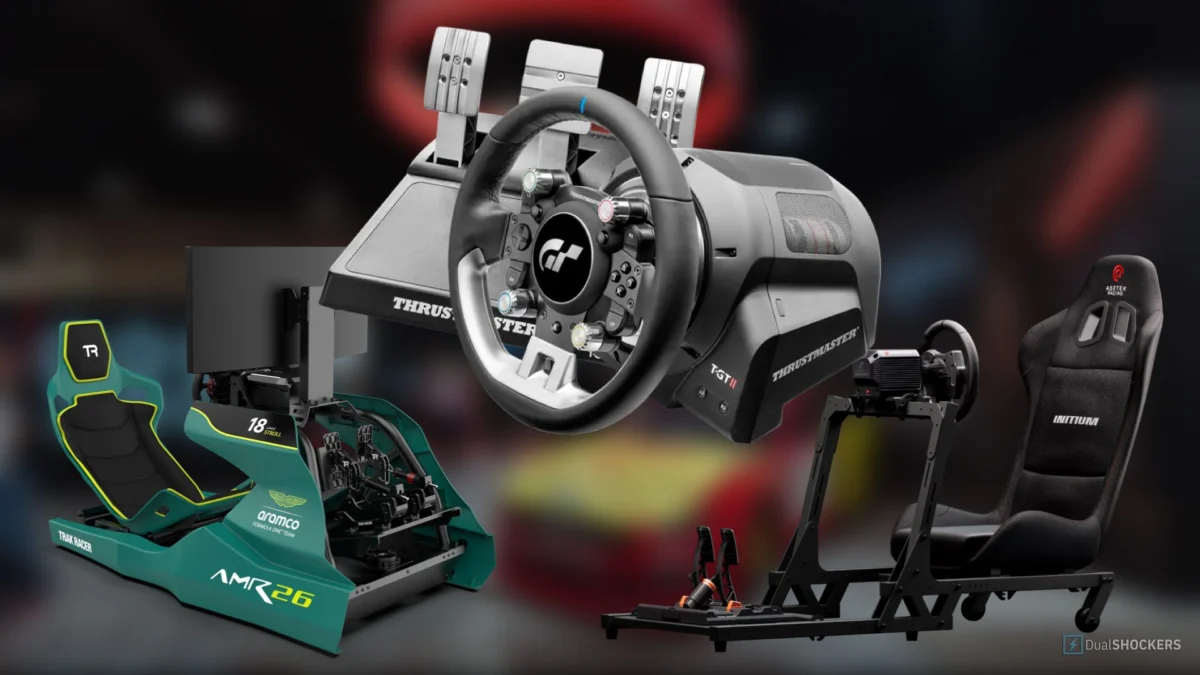
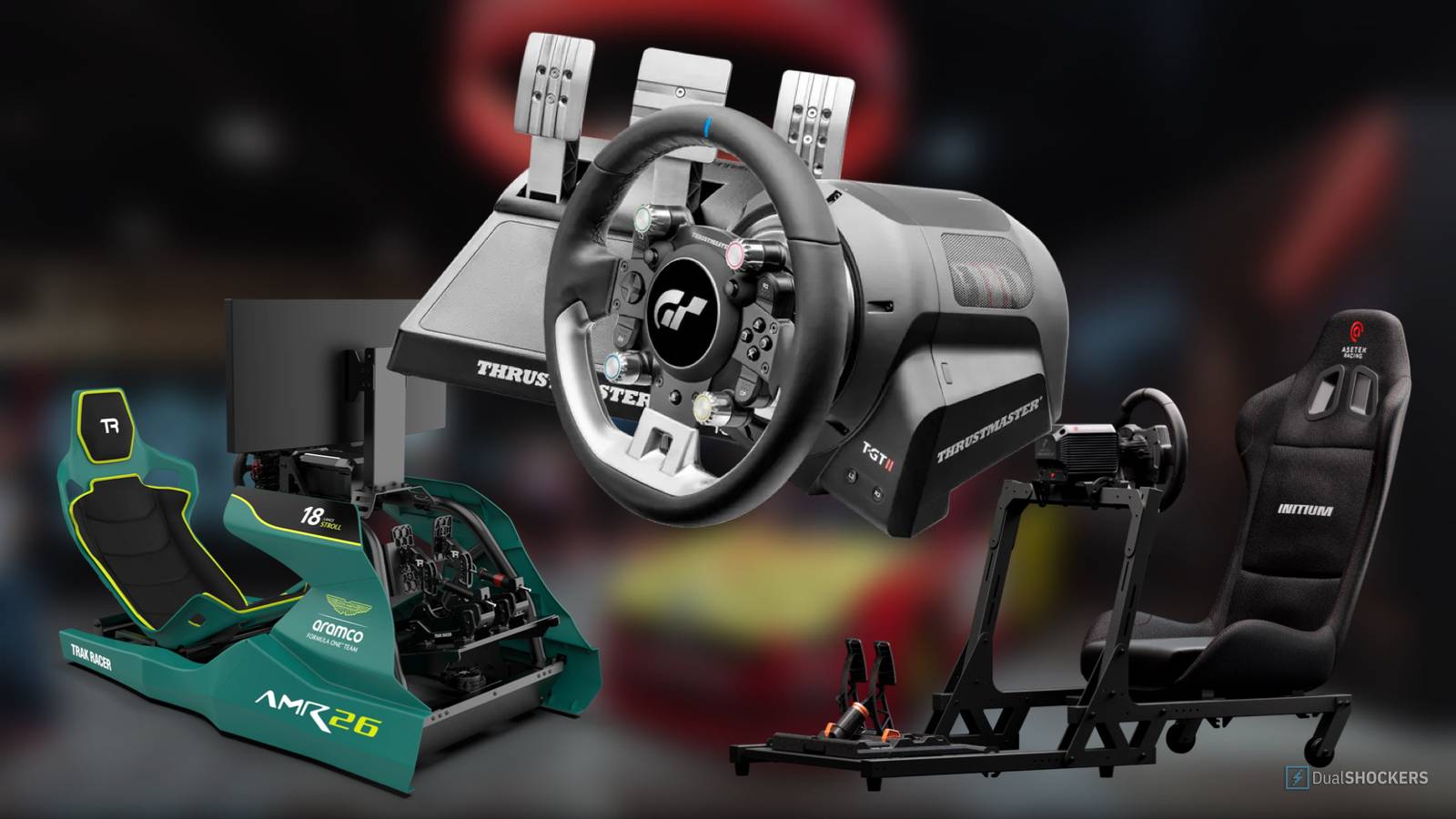
8. Thrustmaster’s GT Wheel Add-On
Console players often feel like second-class citizens in the world of high-end sim hardware, but Thrustmaster is actively changing that narrative. The GT Wheel Add-On, specifically engineered for Gran Turismo 7 via PSVR2, is a masterclass in peripheral design.
The wheel features native PlayStation button mapping, removing the configuration headache that often plagues PC-based wheels on console. In my testing, the desk-mount configuration provided a stable, responsive platform that felt remarkably close to full-rig performance. For the dedicated GT enthusiast, this is arguably the most ergonomic and functional wheel on the market, proving that console racing is receiving the premium attention it deserves.
7. Trak Racer’s Aston Martin Aramco AMR26 Cockpit
If you are looking for the intersection of aesthetic flair and performance, the Aston Martin Aramco AMR26 cockpit is unrivaled. While it lacks internal electronics, the chassis itself is a triumph of ergonomics. Trak Racer has engineered a reinforced pedal plate that eliminates the flex often experienced during high-intensity braking. For those looking to replicate the specific physical positioning of a modern Formula 1 car, this rig provides the most authentic chassis profile currently available.
6. Sensit’s Haptic Feedback Seats
Full-motion rigs are often physically exhausting and prohibitively expensive. Sensit’s haptic feedback seats provide an ingenious middle ground. By integrating nuanced vibration arrays into the seat frame, Sensit allows drivers to "feel" the track—every curb strike, every gear shift, and every instance of understeer. The ability to retrofit these haptic inserts into existing seats makes this one of the most cost-effective ways to increase immersion without the mechanical complexity of a full-motion platform.
5. Pimax’s Dream Air VR Headset
Virtual Reality is the final frontier of sim racing immersion, and the Pimax Dream Air has set a new benchmark. At a $2,000 price point, it is undeniably a premium product, but the return on investment is immediate. With 8K resolution and a lightweight chassis that virtually disappears on the user’s face, it provides a visual fidelity that surpasses anything else currently on the market. In my tests across multiple racing titles, the clarity allowed for precise apex hunting that would be impossible on a standard monitor setup.
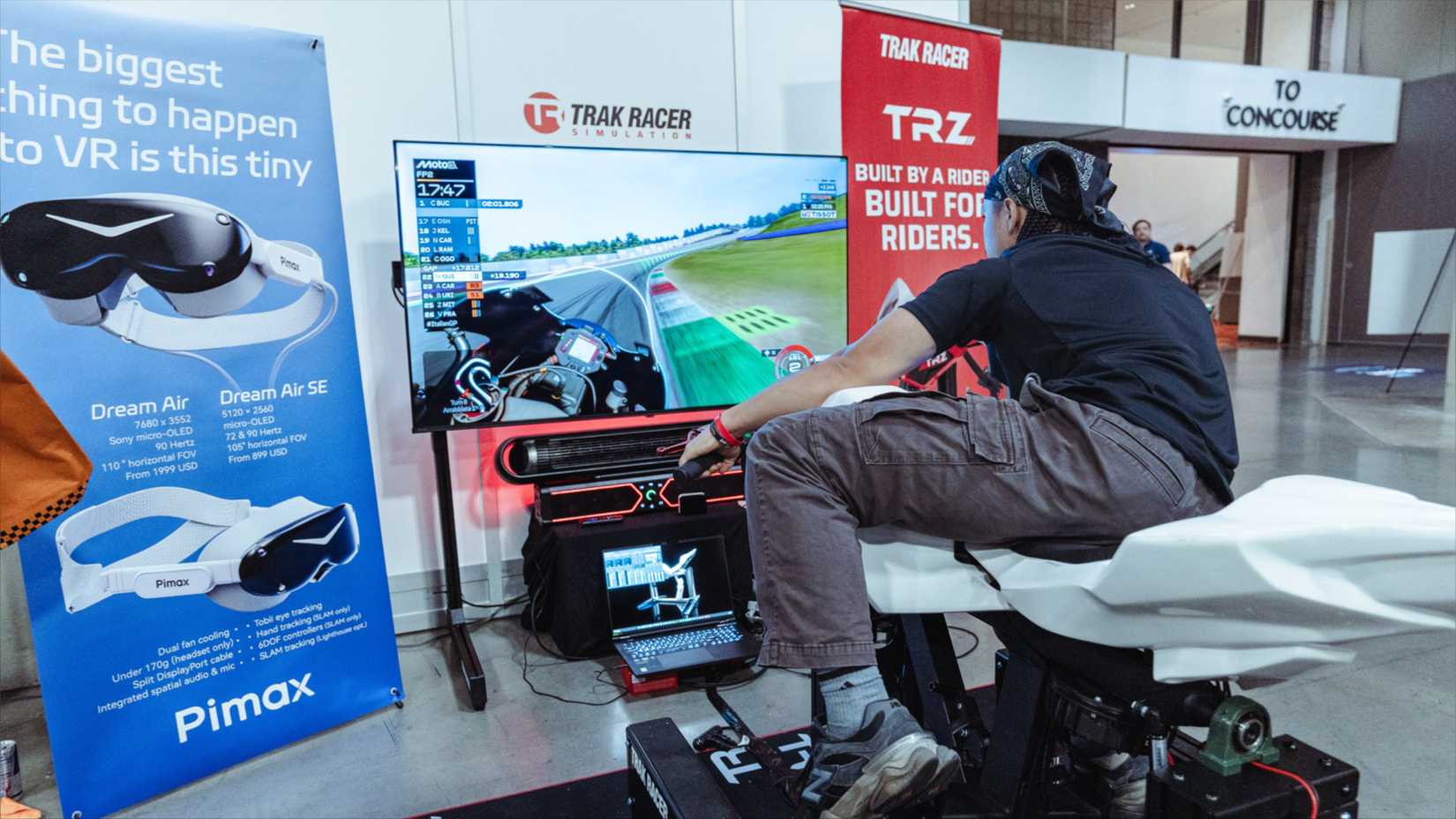
4. Trak Racer’s TRZ Motorbike Racing Simulator
The industry’s first home-use motorcycle simulator, the TRZ, was arguably the most talked-about reveal of the expo. Until now, motorbike simulation was relegated to arcade cabinets. The TRZ allows for the physical leaning motions required for motorcycle racing, bringing the visceral experience of MotoGP into the home. At $1,999, it represents a remarkable feat of mechanical engineering that remains accessible to the dedicated enthusiast.
3. The iRacing Ecosystem
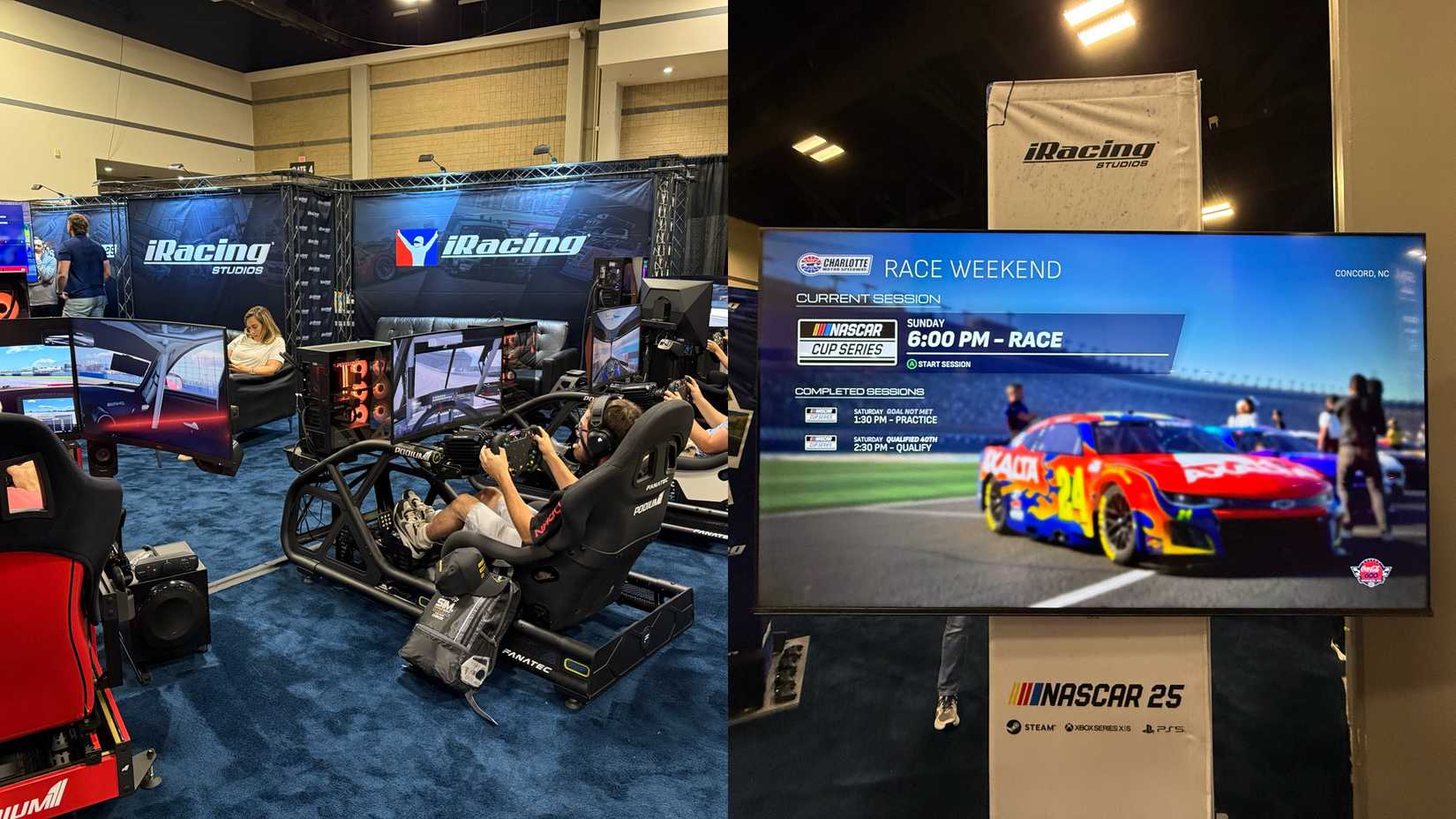
No conversation about sim racing is complete without mentioning iRacing. The expo served as a hub for their latest developments, including iRacing Arcade, NASCAR 25, and the upcoming NASCAR 26. My time with NASCAR 25 was particularly revelatory; the game manages to balance deep simulation with accessible gameplay loops that kept me glued to the rig for over an hour. Their commitment to multiplayer splitscreen functionality and their upcoming IndyCar title suggests a future where iRacing continues to set the standard for competitive online play.
2. Asetek’s Initium Line
Asetek has traditionally been synonymous with high-end, pro-level hardware. With their new Initium line, they are bringing that same pedigree to the entry-level market. A full cockpit, pedal, and wheel setup for roughly $1,000 is a disruptive price point. By collaborating with Xbox, Asetek is ensuring that their hardware is plug-and-play for the widest possible audience. It is a bold, consumer-first move that effectively makes pro-level racing accessible to the average gamer.
1. Simcraft’s Apex GT: Pushing the Boundaries
The crown jewel of the expo was undoubtedly the Simcraft Apex GT. While the $150,000 price tag puts it out of reach for the average consumer, it stands as a monument to what is possible. This is the closest any human can get to driving a real race car without being on a track.
Beyond its performance, the most compelling aspect of the Apex GT is its application in health and wellness. Studies have shown that the physical engagement required by the rig provides genuine cognitive and physical benefits, and the machine is now being considered for clinical rehabilitation environments. It is a powerful reminder that while sim racing is a sport, it is also a bridge to improved human performance.
Implications for the Future
The 2026 SimRacing Expo highlighted a clear trajectory for the industry: technology is becoming more refined, more accessible, and more beneficial to the user. We are moving away from the era of "janky" homemade setups toward an era of standardized, high-quality, and deeply immersive hardware.
As these manufacturers continue to lower the barrier to entry while simultaneously pushing the ceiling of performance, the line between "gamer" and "racer" will continue to dissolve. The innovations displayed in Charlotte prove that the future of motorsport isn’t just on the asphalt—it’s in our living rooms, and it has never been more exciting.












No comments yet. Be the first to join the conversation!