Nana Wu
For decades, the limiting factor of space exploration has been the "tyranny of the rocket equation." Every kilogram of payload sent toward Mars or the outer solar system requires a disproportionate amount of fuel just to lift that fuel off the surface of the Earth. To reach deeper into the cosmos, humanity has been tethered by the necessity of launching fully fueled craft. However, a recent technological milestone at NASA’s Marshall Space Flight Center suggests that the future of space travel may mirror the logistics of long-haul trucking: the "pit stop."
NASA has successfully tested a critical component known as a "cryocoupler," a sophisticated robotic interface designed to transfer cryogenic propellants—such as liquid hydrogen and liquid oxygen—between spacecraft in the vacuum of orbit. While the name sounds clinical, the implications are revolutionary. By enabling in-orbit refueling, space agencies could potentially reduce the size of launch vehicles, slash mission costs, and extend the operational lifespan of deep-space probes indefinitely.
The Engineering Challenge: Why Cold is Complicated
At its core, a cryocoupler acts as the high-tech, space-grade equivalent of a gas pump nozzle. However, transferring volatile fuels in space is an exercise in extreme physics. Cryogenic propellants must be kept at temperatures so low that they challenge the structural integrity of conventional materials.
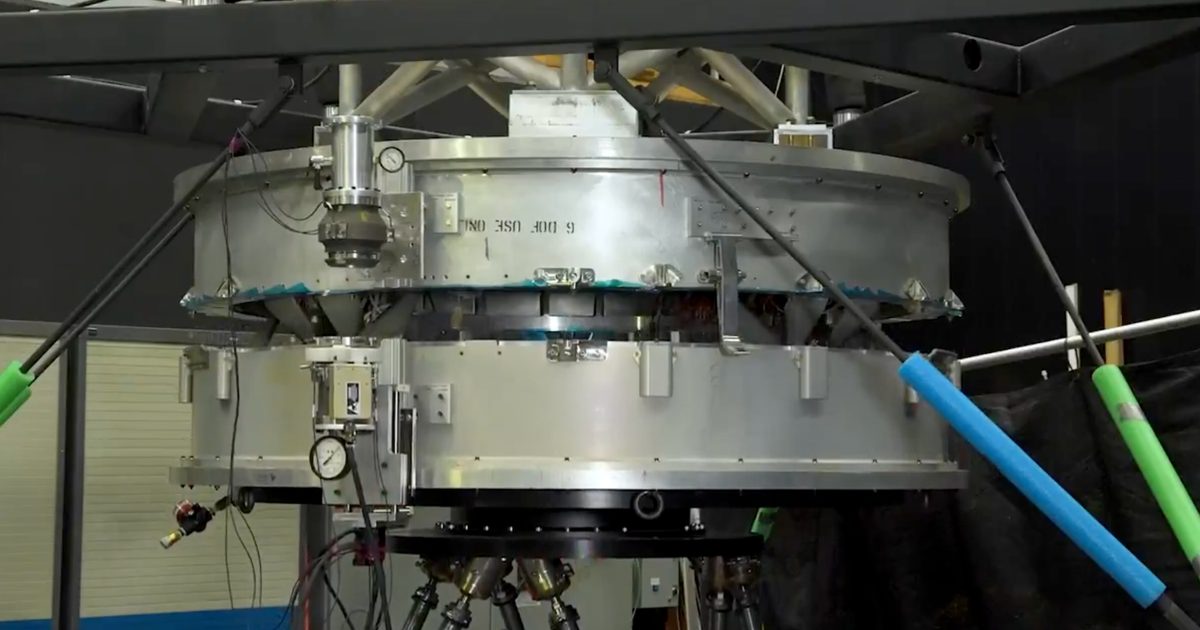
During the recent testing phase, NASA engineers utilized liquid nitrogen to simulate the behavior of rocket fuel, chilling the coupler to a staggering -321 degrees Fahrenheit. In the harsh, airless environment of orbit, these propellants tend to boil off or behave unpredictably. If a connection is not perfectly sealed, the loss of these precious, super-cooled fluids could result in catastrophic mission failure.
The L3Harris-developed coupler is designed to solve this by creating a hermetic, automated seal that can withstand the thermal contraction caused by extreme cold. Beyond the temperature constraints, the device must also account for the mechanical realities of docking. Spacecraft rarely approach one another with perfect alignment. The NASA team specifically tested the coupler’s ability to handle "off-axis" docking, ensuring that the connection remains secure even if the two vehicles are slightly misaligned during the approach.
Chronology of the Cryocoupler Development
The path to this recent test was not an overnight success; it is the culmination of years of iterative research into fluid management in microgravity.
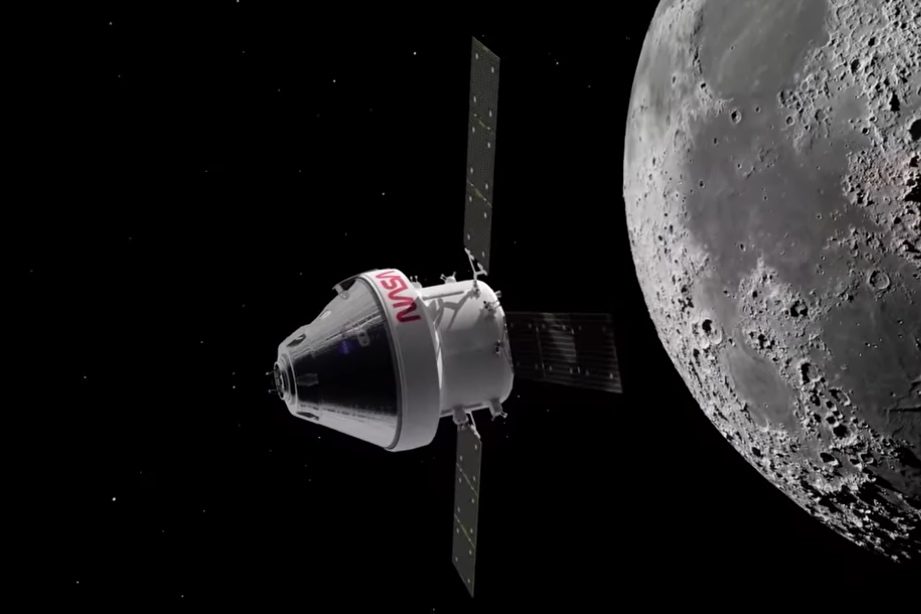
- Early Conceptualization (2018–2020): NASA identified "Cryogenic Fluid Management" (CFM) as a top-tier priority for the Artemis program and future Mars missions. Initial studies focused on how to store and transfer super-cooled liquids without them evaporating due to solar radiation.
- The L3Harris Partnership (2021–2023): NASA solicited private sector expertise to develop a hardware interface that could handle the unique stresses of space-based fluid transfer. L3Harris was tapped to design a coupler capable of multiple, repeatable connections without human intervention.
- Marshall Space Flight Center Integration (2024): The prototype was delivered to NASA’s Marshall Space Flight Center in Huntsville, Alabama. Engineers spent months constructing a test environment that simulated the thermal and mechanical stresses of space.
- The Breakthrough Test (2025–2026): In the most recent evaluation, the cryocoupler successfully executed automated docking sequences, demonstrating its ability to connect and disconnect while maintaining a leak-proof seal at cryogenic temperatures. This success marks the first time such a robust system has demonstrated these capabilities in a high-fidelity ground test.
Supporting Data: The Physics of "Top-Off" Missions
To understand why this is a turning point, one must look at the math of mass. Currently, a mission to Mars requires a massive "stack" of fuel—much of which is burned simply escaping Earth’s gravity well. If a spacecraft could launch with a smaller fuel load and "top off" its tanks at a propellant depot in low-Earth orbit (LEO) or lunar orbit, the design requirements for the initial launch vehicle become significantly lighter.
According to preliminary NASA mission modeling, in-orbit refueling could allow for:
- Increased Payload Capacity: By shifting the fuel weight to a secondary, dedicated tanker launch, the primary spacecraft can carry more scientific instruments, shielding, or life support systems.
- Extended Mission Life: Many satellites are currently retired simply because they run out of maneuvering fuel. An orbital "gas station" would allow these assets to be refueled and repositioned, effectively doubling or tripling their operational utility.
- Modular Deep-Space Architecture: Future Mars transfer vehicles could be assembled in pieces, with the cryocoupler acting as the "umbilical cord" that links the propulsion modules to the habitation modules.
Official Perspectives: The Road Ahead
Project manager Travis Belcher has been vocal about the difficulty of the task. "In-orbit cryogenic refueling between two spacecraft has yet to be done and remains one of the toughest engineering challenges in spaceflight," Belcher stated following the recent tests.

NASA’s strategy is not to rush a full-scale deployment but to validate the technology in stages. The current success is a "technology readiness level" (TRL) milestone. The agency is now looking toward future evaluations that will test the coupler under specific mission-profile conditions, such as long-term storage in orbit and the impact of the vacuum on long-term seal integrity.
From the perspective of the private sector, companies like SpaceX, Blue Origin, and L3Harris see this as a necessary infrastructure upgrade. If space is to become a "commercial" domain, the ability to refuel is as essential as the existence of gas stations on a highway. Without it, every trip to the moon or Mars remains a one-way, high-cost endeavor.
The Broader Implications for Humanity
The successful testing of the cryocoupler serves as a quiet but powerful signal that the space industry is moving beyond the "Apollo era" of expendable, one-off missions. We are entering an era of "logistics-based" space exploration.

If this technology can be successfully deployed, the potential for a sustainable human presence on the Moon—and eventually, a crewed mission to Mars—increases dramatically. Instead of building massive, single-launch "death stars" to carry every ounce of fuel needed for a round trip, we will see the rise of autonomous tankers. These tankers will deliver propellant to orbiting depots, effectively creating a supply chain in the void.
Furthermore, this technology could mitigate the space debris problem. By extending the life of existing satellites through refueling, we reduce the incentive to launch replacements, thereby managing the density of objects in LEO.
Conclusion
The cryocoupler may seem like a humble piece of hardware, but it is the "missing link" for the next century of space flight. By proving that we can reliably and automatically transfer liquid fuel in the extreme cold of the vacuum, NASA and its partners have moved one step closer to making the solar system accessible.

The tests in Huntsville are, for now, just simulations. However, the data gathered there provides the blueprint for a future where space travel is not defined by the limitations of a single rocket’s fuel tank, but by our ability to build a permanent, renewable infrastructure among the stars. The "gas station in the sky" is no longer just a sci-fi trope—it is a working prototype, waiting for its first flight.


 Ali Ikhwan
 Sagoh
Sagoh