By Matthew Wilson | Tech News Desk
The long-awaited arrival of the Steam Machine, a device designed to bridge the gap between the living room console experience and the expansive flexibility of the PC gaming ecosystem, has hit a minor but significant turbulence. As the first wave of units reaches the doorsteps of early adopters, reports of hardware malfunctions have begun to surface, drawing immediate, uncomfortable parallels to one of the most infamous chapters in gaming history: the Xbox 360’s “Red Ring of Death.”
While the vast majority of units are functioning as intended, a singular, high-profile report originating from the Steam Machine subreddit has ignited a broader conversation regarding the build quality, supply chain constraints, and long-term viability of Valve’s latest hardware gamble.
Main Facts: The "Red Light" Phenomenon
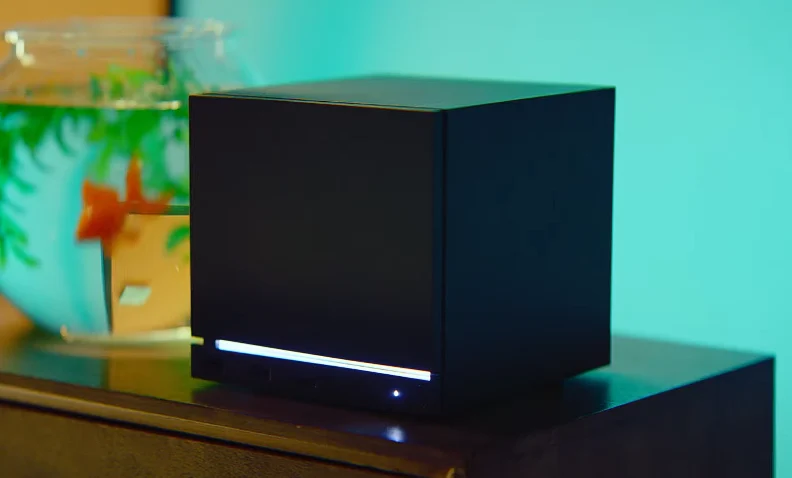
The core of the current controversy stems from a user report detailing a catastrophic system failure occurring shortly after unboxing. According to the user, the device functioned flawlessly during initial setup and configuration. However, upon attempting to initiate a mandatory Steam OS update, the system became unresponsive. Instead of the signature blue LED indicator signaling a healthy, active state, the console displayed a persistent red light.
According to preliminary diagnostics shared within the community, this red LED serves as a hardware error code, specifically denoting a GPU (Graphics Processing Unit) failure. Unlike a software crash, which can often be resolved via a hard reset or a firmware re-flash, a GPU hardware failure suggests a physical defect in the soldering or the silicon itself.
For the end-user, the implications are binary: the system is effectively a paperweight. There are currently no user-serviceable workarounds or software patches capable of rectifying a hardware-level GPU fault. Consequently, affected units must be returned to the manufacturer for professional repair or total replacement.
A Chronology of the Launch
The road to the Steam Machine’s launch has been paved with significant logistical hurdles, making this current hardware hiccup particularly sensitive for Valve.
- Initial Announcement & Vision: Valve first unveiled the concept of Steam Machines years ago, envisioning a modular, open-ecosystem console that would liberate PC gamers from the constraints of Windows.
- The Delay Phase: The project suffered from repeated delays. Initial iterations were hindered by difficulties in optimizing the Steam Controller and the refinement of the Linux-based SteamOS. During this period, Valve faced significant pressure from stakeholders to finalize a hardware partner strategy.
- Component Scarcity: Throughout the final quarters leading up to the launch, reports emerged regarding global semiconductor shortages and specific difficulties in sourcing high-performance mobile-grade GPUs suitable for the compact chassis of the Steam Machine.
- The Launch Window: After years of anticipation, the first units finally entered the supply chain earlier this month. The initial wave was characterized by limited availability, creating an environment where every unit is highly valued by its owner.
- The First Failure Report: One day ago, the aforementioned Reddit user logged their experience, marking the first documented case of a total system failure post-update.
Supporting Data: Why "Red" Matters
In the lexicon of gaming hardware, a "red light" carries immense psychological weight. The Xbox 360’s “Red Ring of Death” became a cultural touchstone for hardware failure, costing Microsoft over a billion dollars in warranty repairs and severely damaging its brand reputation for nearly a generation.

While it is statistically premature to compare a single isolated report to the systemic failure of the Xbox 360, the anxiety is palpable. The Steam Machine utilizes a tightly packed, small-form-factor design. Such designs are notorious for thermal management challenges. If the GPU failure is indeed linked to the update process, it implies that the spike in computational load during the update may have triggered a thermal event or exposed a weakness in the cooling architecture.
Furthermore, supply chain data suggests that Valve has not yet achieved the "economy of scale" required for seamless replacement logistics. Because the components are bespoke, a user returning a unit for a red-light failure cannot simply swap a graphics card as one would in a custom PC build. They are reliant on the availability of complete, pre-assembled replacement units, which remain in short supply.
Official Responses and Industry Context
At the time of this writing, Valve has not issued a formal, comprehensive statement regarding the specific nature of the reported GPU failure. However, sources close to the manufacturing partners indicate that a dedicated QA team is investigating whether the issue is a "dead on arrival" (DOA) manufacturing defect or a firmware-induced voltage spike that occurred during the update process.
Industry analysts suggest that Valve’s strategy of relying on third-party manufacturers to produce Steam Machines creates a "fragmented quality control" risk. Unlike Sony or Nintendo, who exercise total control over their hardware assembly, Valve’s reliance on multiple partners means that quality assurance standards may vary between production lines.
"The challenge for Valve isn’t just the software; it’s the physical integrity of a thousand different potential configurations," notes a senior hardware analyst. "When you provide the OS and a third party provides the motherboard and GPU cooling solution, the lines of accountability become blurred."
The Broader Implications
The ripple effects of this failure extend beyond the frustration of a single user.
1. Consumer Confidence
The immediate aftermath of a high-profile hardware failure is a chilling effect on potential buyers. For a product attempting to establish a new category, optics are everything. If the narrative shifts from "The future of PC gaming" to "A console with a high failure rate," the long-term adoption of the Steam Machine could be stifled before it truly begins.
2. The Repairability Paradox
One of the Steam Machine’s core selling points was its supposed openness. Unlike a locked-down console, users were told they would have more control. However, if the hardware is fragile or relies on proprietary, hard-to-source components, the "open" promise is undermined by the reality of restricted repairability.
3. Logistical Bottlenecks
If this issue proves to be a systemic design flaw rather than an isolated manufacturing defect, the cost to Valve and its partners will be astronomical. Recalls, or even a sustained influx of warranty claims, could cripple a rollout that is already struggling with component shortages. The time required to ship, diagnose, and replace units could lead to a backlog, leaving early adopters without the hardware they waited years to receive.
4. Software/Hardware Synergy
The fact that the failure occurred during a system update is particularly concerning. It suggests that the interplay between the SteamOS kernel and the underlying hardware drivers may not be fully optimized. If a software command can "brick" the hardware, it points to a lack of failsafes in the system’s firmware—an issue that must be addressed immediately with an over-the-air (OTA) update to prevent further incidents.
Final Thoughts: A Critical Juncture
Hardware failures are, as history has shown, an inevitable reality of consumer electronics. No mass-produced device is immune to the occasional "lemon." However, the timing of this failure is critical. Valve is currently in a "prove it" phase, demonstrating to a skeptical PC gaming community that a console-like experience doesn’t require sacrificing the power and openness of the desktop.
The “Red Light” may currently be an isolated incident, but in the digital age, a single Reddit post can shape the narrative of an entire product launch. If Valve acts swiftly—transparently acknowledging the issue, providing clear diagnostic paths, and ensuring a streamlined replacement process for affected units—they can mitigate the damage.
For now, the eyes of the industry remain fixed on this developing story. We hope that this is merely a temporary speed bump on the road to a successful launch. But for the early adopter currently staring at a red light where there should be a home screen, the future of the Steam Machine feels significantly less bright.
Stay tuned to KitGuru for ongoing coverage as we track the official response to these hardware reports and analyze the long-term performance of the Steam Machine in real-world environments.