

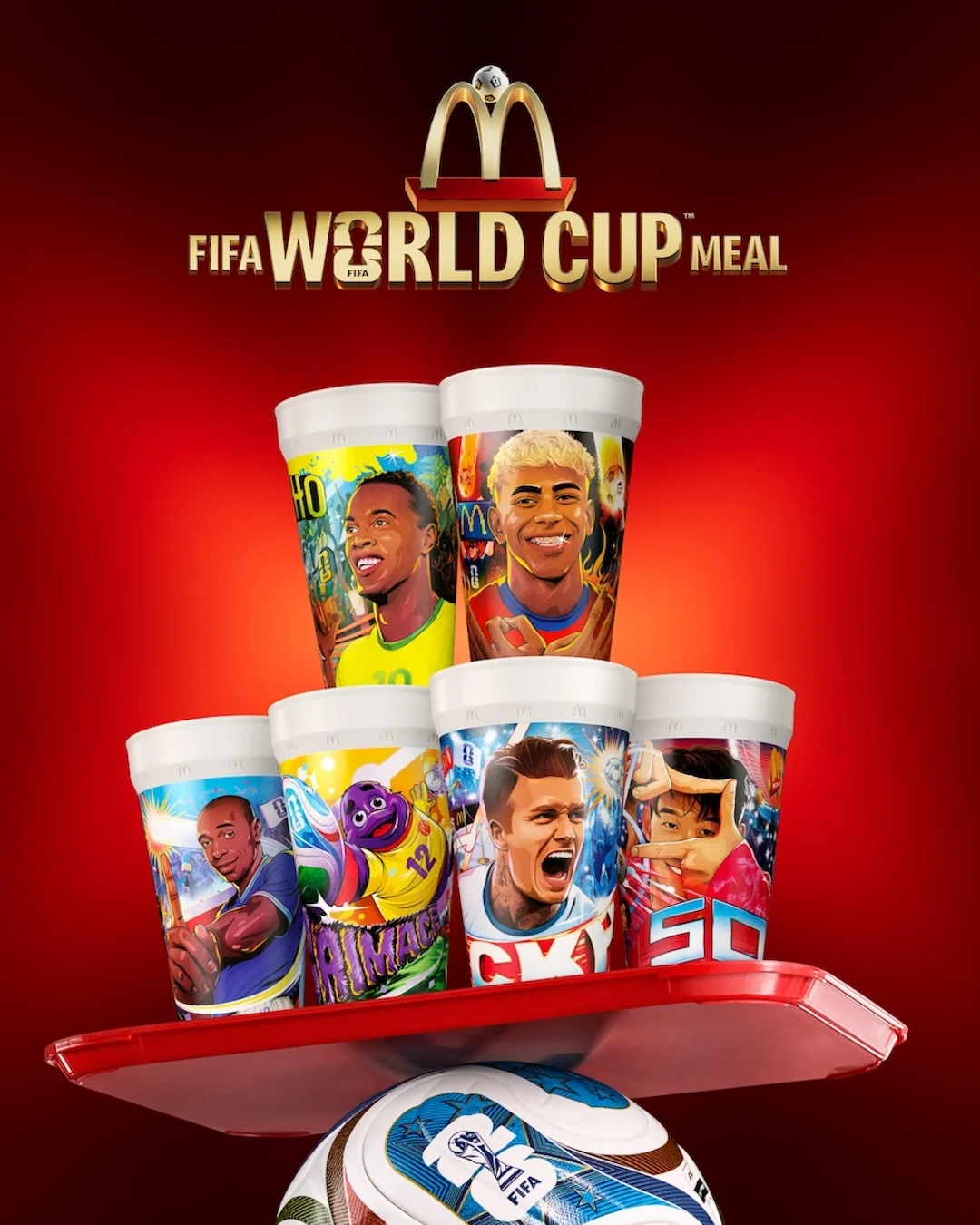
As the global sporting community sets its sights on the 2026 FIFA World Cup, the marketing machinery surrounding the event is shifting into high gear. Leading the charge is McDonald’s, the quick-service restaurant (QSR) giant that has been a cornerstone sponsor of the tournament since 1994. In a move designed to bridge the gap between legendary athletic prowess and mass-market consumer culture, the brand has launched its most extensive and star-studded campaign to date.
By assembling an unprecedented lineup of soccer royalty—including David Beckham, Thierry Henry, Ronaldinho Gaúcho, Son Heung-min, and Lamine Yamal—McDonald’s is not merely promoting a meal; it is positioning itself as the central "common ground" for the world’s most-watched sporting event.
Main Facts: The "World Cup 26 Meal" Ecosystem
The centerpiece of this massive marketing push is the introduction of the FIFA World Cup 26 Meal, a global offering designed to drive foot traffic and consumer engagement across more than 100 markets. The rollout begins in select regions on Thursday, June 4, with full global availability expected by Tuesday, June 9.
Beyond the menu items, the campaign is anchored by a 60-second television and digital spot. The creative direction utilizes a nostalgic-to-modern transition, opening with archival footage of the featured soccer legends during their career peaks, before cutting to contemporary, lighthearted scenes of these icons interacting with iconic McDonald’s mascots, such as Grimace and the Hamburglar.
The Collectible Cup Strategy
A critical component of the promotion is the release of nine unique, commemorative cups. To tailor the campaign to the North American host nations, McDonald’s has curated specific regional collectibles:
- Mexico: Featuring star forward Santiago Giménez.
- United States: Celebrating national team icon Christian Pulisic.
- Canada: Highlighting defender Alphonso Davies.
While these local markets will emphasize their specific heroes, the U.S. market has been granted access to the full collection of nine, signaling the brand’s intent to maximize consumer participation in the host country of the tournament final.
Chronology: A Three-Decade Partnership
To understand the scale of the 2026 campaign, one must look at the historical trajectory of the McDonald’s-FIFA partnership. Since 1994, McDonald’s has utilized the World Cup as a primary vehicle for brand relevance.

- 1994–2002: Foundation Building. During this era, McDonald’s focused on the "Player Escort" program, cementing its role as a family-friendly brand that provides children with unique access to the pitch.
- 2006–2014: Global Digital Integration. As social media began to transform advertising, McDonald’s shifted from static promotions to interactive contests, using the World Cup to test new digital engagement models.
- 2018–2022: The Influencer Pivot. The brand began experimenting with high-profile brand ambassadors, moving away from purely product-led advertising toward narrative-driven, personality-focused spots.
- 2026: The "All-Star" Convergence. The current campaign represents a maturation of all previous strategies. By merging the archival history of legends like Beckham and Ronaldinho with the current brilliance of Yamal and Son, McDonald’s is bridging generational divides. This timeline reflects a conscious shift from being a "tournament sponsor" to becoming a "tournament experience provider."
Supporting Data: Why This Campaign Matters
The effectiveness of this campaign is rooted in data-driven consumer insights. According to industry tracking, the men’s World Cup is the largest single-sport event on the planet, with viewership figures consistently topping the 5-billion mark globally.
Demographic Reach
The inclusion of diverse talent is a strategic move to capture fragmented global markets:
- David Beckham & Thierry Henry: Represent the European legacy market.
- Ronaldinho Gaúcho: Captures the passionate South American fanbase.
- Son Heung-min: Acts as a massive driver for the Asian market, particularly in South Korea and the wider Pacific region.
- Lamine Yamal: Represents the next generation of global superstars, ensuring the brand remains relevant to Gen Z and Alpha demographics.
The "Squishmallow" Factor
In addition to the adult-oriented meal, McDonald’s is tapping into the "collectible craze" by partnering with Squishmallows for the FIFA World Cup 26 Happy Meal. With 23 different plushies wearing tournament-inspired jerseys, the brand is leveraging the high-velocity social media demand for Squishmallow collectibles to drive repeat visits from families. Market research indicates that "kidult" collecting (adults buying items marketed to children) has seen a 15% year-over-year increase, a trend McDonald’s is clearly banking on to sustain long-term promotional engagement.
Official Responses and Strategic Vision
The brand’s leadership views this campaign as more than just a sales driver; it is a cultural project. In a formal statement regarding the campaign, David Beckham remarked, "Football is about much more than what happens on the pitch. Campaigns like this bring fans and families together and build the excitement in the lead up and during the FIFA World Cup tournament."
From the brand’s internal perspective, the goal is to position McDonald’s as the "third place" for fans—a neutral ground between the home and the stadium where the excitement of the tournament can be digested, debated, and celebrated. By integrating their mascots—Grimace and the Hamburglar—with global icons, McDonald’s is effectively blending its corporate identity with the "World Cup" brand, making the restaurant an inextricable part of the tournament’s visual landscape.
Implications: The Future of Sports Marketing
The 2026 McDonald’s campaign sets a new benchmark for QSR marketing. The implications for the industry are profound:
1. The Death of the "Single-Hero" Narrative
Historically, campaigns relied on one or two faces to carry a brand. McDonald’s has proven that a "roster" approach—combining retired legends with current stars—creates a more robust, cross-generational narrative. This reduces the risk of "star fatigue" and maximizes appeal across different age brackets.

2. Hyper-Localization Within Global Campaigns
The decision to feature Giménez, Pulisic, and Davies in their respective host nations, while maintaining a global template, shows a sophisticated understanding of regional pride. Brands can no longer afford to be "generic global"; they must be "locally resonant global."
3. The Gamification of Consumption
By incorporating collectible cups and a 23-item Squishmallow set, McDonald’s is utilizing a gamified strategy. This compels the consumer to return to the store not for the food, but for the "quest" of completing a collection. This creates a predictable and consistent revenue stream during the month-long tournament.
4. The Integration of Digital and Physical
The social media spot featuring Ronaldinho, where the text "ronald" is corrected to "Ronaldinho" after a display of skill, highlights the importance of short-form, platform-native content. This is not just a commercial; it is a "meme-ready" piece of content designed to be shared, analyzed, and replicated on platforms like TikTok and Instagram.
Conclusion: A Masterclass in Legacy Marketing
McDonald’s has effectively utilized the 2026 World Cup as a canvas to rewrite the rules of global brand engagement. By moving beyond traditional advertising and into the realm of cultural participation, the brand has ensured that for the duration of the tournament, the "Golden Arches" will be as much a part of the FIFA experience as the soccer ball itself.
As the tournament approaches, the success of this campaign will likely be measured not just in sales volume, but in "share of voice"—the ability of a brand to be present in the conversations that happen before, during, and after the whistle blows. With a strategy that balances nostalgia, current stardom, and collectible-driven urgency, McDonald’s has solidified its place as the definitive partner of the beautiful game.
For the millions of fans gathering in North America and around the world in 2026, the FIFA World Cup 26 Meal is not merely an option for dinner; it is an invitation to participate in a global phenomenon. Whether it is through the pursuit of a specific player’s cup or the collection of a tournament-ready plushie, McDonald’s has turned every restaurant into a stadium, proving that the most powerful team in soccer might just be the one wearing the red and yellow.












No comments yet. Be the first to join the conversation!