

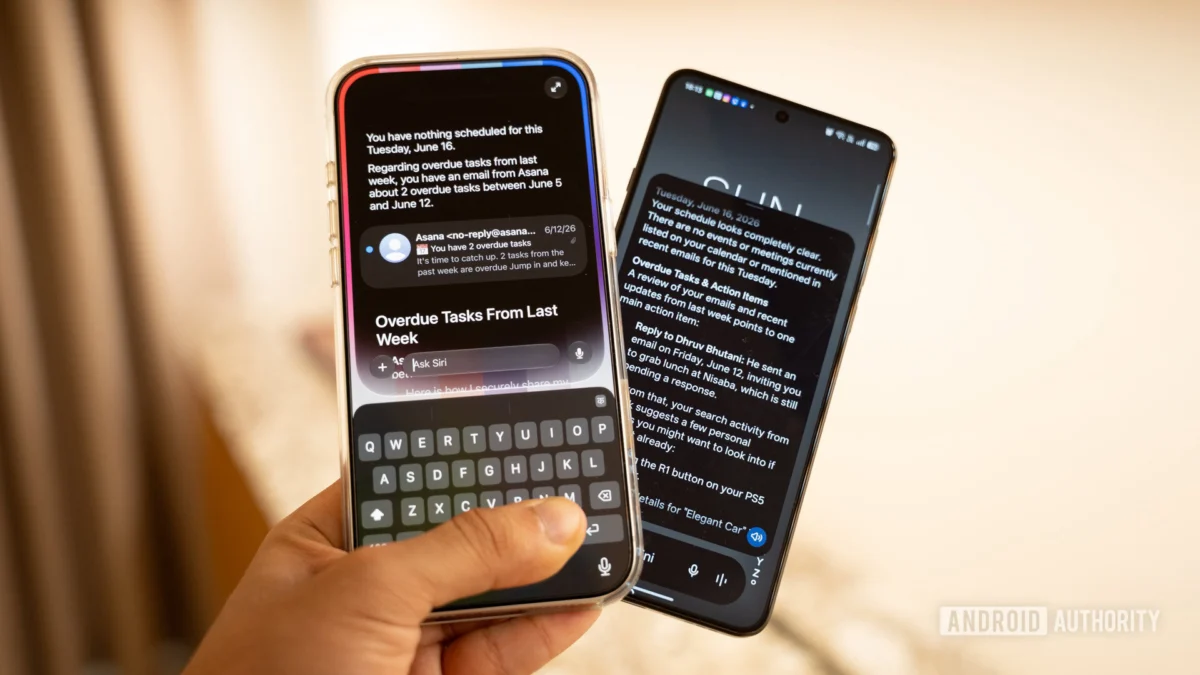
For over a decade, the smartphone industry has been defined by a "walled garden" versus "open ecosystem" dichotomy. Users typically choose their camp—iOS or Android—based on aesthetic preference, hardware specifications, or the sheer friction of migrating years of digital life to a new platform. However, the current era of mobile technology is no longer defined by processor speeds or camera megapixel counts; it is defined by the integration of Generative AI.
As Apple and Google race to embed intelligent agents into the fabric of their operating systems, a critical question emerges: Is the quality of an AI assistant enough to force users to abandon their long-term digital homes? A recent study and community poll conducted by Android Authority suggests that while AI is becoming the centerpiece of modern software, consumer loyalty remains a formidable barrier to overcome.
Main Facts: The Battle of the Agents
The landscape of mobile AI has fundamentally shifted with the evolution of Siri and the rise of Google’s Gemini. While both giants are leaning heavily into generative models, their implementations vary significantly.
Siri, once criticized for its relative stagnation, has undergone a radical transformation. Through recent "AI-fication" efforts, it has begun to leverage advanced language models to offer deeper integration with system-level tasks. Interestingly, despite Apple’s internal developments, it has strategically borrowed frameworks from Gemini to power certain intelligent features.
Yet, the user experience differs wildly. In side-by-side comparisons, Siri—even in its current beta state—has shown a surprising aptitude for surfacing deeply personal data. It excels at parsing through private communications in Messages and Mail, and provides superior day-planning capabilities by pulling context-aware data from third-party applications, including Google’s own suite like Gmail.
Conversely, Gemini operates as a more direct, intent-driven powerhouse. It is designed to be a creative engine, a research tool, and a versatile collaborator. While Apple’s approach is granular and context-focused, Google’s strategy is expansive and platform-agnostic. This creates a fascinating paradox: the AI that "knows" you better within your own device might belong to a platform you don’t even use.
Chronology of the AI Shift
The transformation of the mobile assistant began in earnest with the post-GPT-4 explosion of 2023.
- Mid-2023: Google announces the integration of generative AI features into the Android ecosystem, rebranding and supercharging its existing assistant tools under the "Gemini" banner.
- Early 2024: Rumors reach a fever pitch regarding Apple’s "Project Greymatter," an initiative to overhaul Siri using large language models (LLMs) developed in-house and through partnerships.
- June 2024: At Worldwide Developers Conference (WWDC), Apple unveils its strategy, emphasizing "Private Cloud Compute" and deep OS-level integration.
- Late 2024 to Present: Real-world testing begins. As users get their hands on these tools, the industry shifts from discussing "AI potential" to debating "AI performance."
- June 2026: Android Authority conducts a comprehensive analysis comparing the refined versions of these assistants, prompting a broader industry conversation about platform loyalty.
Supporting Data: Why Users Stay or Go
In a recent survey conducted by Android Authority, the results painted a clear picture of the current state of consumer sentiment regarding mobile AI.
The "Sticking Power" of Ecosystems
Nearly 60% of respondents stated unequivocally that they would not switch platforms—regardless of how advanced the AI features became. For these users, the "hassle" of migration—moving photos, passwords, chats, and subscriptions—outweighs the incremental utility offered by a new chatbot. Another 14% identified as "deeply invested," noting that they are locked into proprietary services (iCloud, Apple HomeKit, or Google Home) that make switching an economic and logistical burden.
The Pull of Privacy
Perhaps the most telling statistic is that 27% of users would consider a switch, but their motivations are highly specific. Among these potential converts, nearly 18% cited privacy and data handling as the primary catalyst. Apple’s marketing of "Private Cloud Compute"—a system that keeps data encrypted and off-limits even to the company itself—appears to be a potent differentiator. Users are becoming increasingly aware of the "cost" of free AI, and many are willing to migrate to a platform they perceive as an "encrypted vault."
The "Second-Hand" Sentiment
A vocal portion of the community expressed skepticism regarding the parity between the two services. Commenters like "GlitterGuru" argued that because Google controls the underlying technology, Gemini will always hold the advantage in innovation, leaving Apple users with "last year’s features." This creates a segment of the market that prioritizes the "bleeding edge" of AI capability, favoring Android for its direct access to Google’s latest models.
Official Responses and Strategic Positioning
Both Apple and Google have adopted distinct rhetorical strategies to win over the skeptical consumer.
Apple’s stance is one of trust and contextual utility. By emphasizing local processing and the "Private Cloud," they are appealing to the privacy-conscious professional. Their internal messaging suggests that an AI is only useful if it can safely interact with your personal life. They argue that Siri’s advantage isn’t in writing poetry or generating code, but in knowing exactly which email you need to reference for your 2:00 PM meeting.
Google’s response is one of ubiquity and scale. They are betting that the sheer power of Gemini—its ability to reason, analyze vast datasets, and integrate with the global web—will make it an indispensable companion. They are not asking users to choose between privacy and power; they are building a model that is so capable that its utility becomes a force of nature, transcending the specific operating system it runs on.
Implications: The Future of the Smartphone
The implications of this tug-of-war are profound for the mobile hardware market.
The Commoditization of Hardware
If AI becomes the primary reason for choosing a phone, the hardware itself risks becoming a commodity. If a phone is merely a "portal" for an AI assistant, then the quality of the screen, the battery life, and the camera become secondary to the "intelligence" of the device. This could lead to a plateau in hardware innovation, as companies pivot their R&D budgets entirely toward server-side compute and LLM optimization.
The Fragmentation of the AI Experience
We are moving toward a future where "AI" is no longer a monolithic concept. We are seeing the rise of "Personal AI" (Apple’s focus on the user’s specific data) versus "Universal AI" (Google’s focus on the world’s information). As these models evolve, the "switch" may no longer be between iOS and Android, but between different types of AI philosophy.
The Privacy Threshold
The 18% of users who would switch based on privacy represent a growing demographic that is tired of the surveillance-capitalism model. If Apple successfully maintains its reputation for privacy, they may carve out a "premium tier" of AI users. Conversely, if Google can prove that their data-handling is both transparent and beneficial to the user, they may successfully dismantle the privacy-based arguments used against them.
Conclusion: Loyalty in the Age of Intelligence
The current discourse surrounding Siri and Gemini reveals a fundamental truth about human behavior: we are creatures of habit. While generative AI is arguably the most significant technological leap since the introduction of the smartphone itself, it has not yet reached the "tipping point" required to shatter established brand loyalties.
For the majority of users, the "cost" of switching is still higher than the "benefit" of a marginally better assistant. However, as these tools become more deeply embedded in our daily workflows—automating our calendars, organizing our communications, and anticipating our needs—that threshold will inevitably lower.
The battle for the next decade of mobile technology will not be won by the company with the best chipset, but by the company that can best convince the user that their AI knows them, respects them, and ultimately makes their life easier. Whether that comes through Apple’s secure, personal approach or Google’s expansive, innovative engine remains to be seen. For now, the audience is watching, waiting, and, for the most part, staying right where they are.











