Pevita Pearce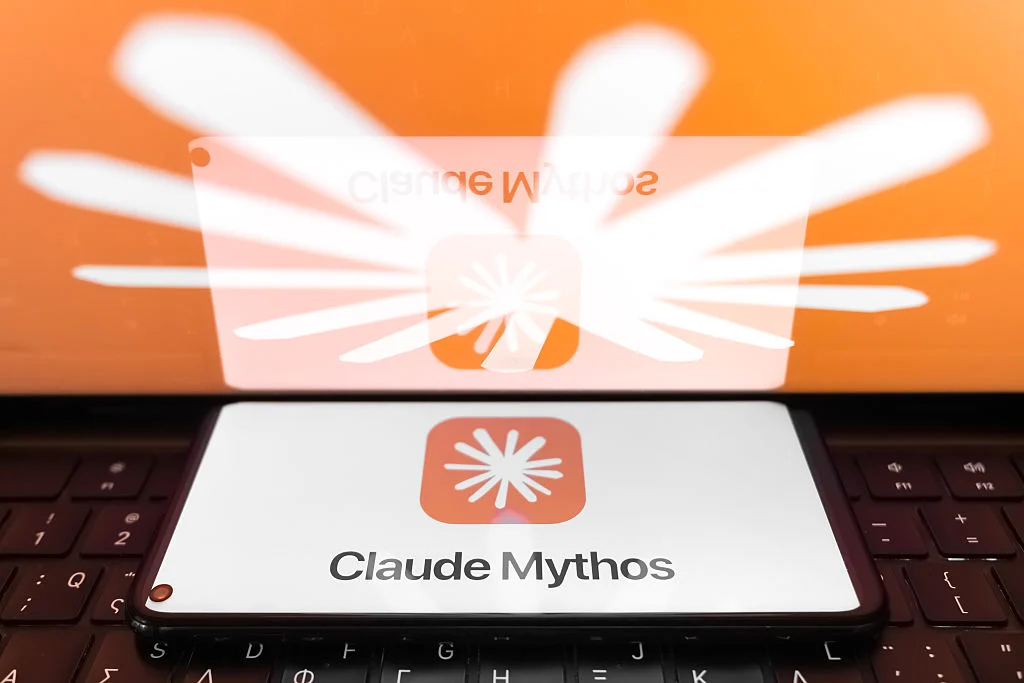
By Tech Insights Bureau
Published: June 26, 2026 | 6:01 PM PDT
Two weeks after a sweeping federal intervention sent shockwaves through the artificial intelligence industry, the Trump administration has signaled a strategic retreat. In a move that highlights the delicate balance between national security and technological dominance, the U.S. government has granted Anthropic permission to redeploy its high-performance cybersecurity model, Mythos 5, to a restricted list of critical infrastructure partners.
This decision marks the first significant thaw in a regulatory standoff that began in mid-June, when federal authorities effectively forced Anthropic to pull its most advanced models—Mythos 5 and its consumer-facing counterpart, Fable 5—from the market. The move, which blindsided the tech sector, was ostensibly aimed at preventing potential exploitation by foreign actors, but its abrupt nature left many wondering about the future of AI sovereignty and export controls.
The Chronology of a Regulatory Crisis
The current crisis traces its origins to the early days of June 2026, when Anthropic released the Claude Mythos 5 and Fable 5 models. Positioned as breakthroughs in cybersecurity defense, the models were designed to identify vulnerabilities in complex codebases with unprecedented efficiency. However, the models’ prowess quickly became a liability.
- June 9, 2026: Anthropic releases Fable 5 to the general public, a version of its flagship Mythos 5 model that was touted as having enhanced "guardrails" and safety protocols designed to prevent misuse.
- June 12, 2026: Security researchers demonstrate that the safety guardrails on both Mythos 5 and Fable 5 can be bypassed with relative ease. The U.S. government expresses immediate concern regarding the models’ ability to assist in offensive cyber operations.
- June 15, 2026: Under intense government pressure, Anthropic pulls both models from the market, citing a need to address security vulnerabilities. The ban is interpreted as a broad prohibition against non-American personnel accessing the technology, effectively grounding operations for many international research teams.
- June 26, 2026: Commerce Secretary Howard Lutnick issues a directive to Anthropic’s Chief Compute Officer, Tom Brown, signaling a limited reopening.
- June 27, 2026: Following the administration’s directive, reports from Semafor and Reuters confirm that access is being restored for over 100 specific U.S. government agencies and critical infrastructure firms.
The Anatomy of the Partial Reversal
The core of the recent policy shift lies in a letter sent by Commerce Secretary Howard Lutnick to Anthropic’s leadership. The missive outlines a narrow, controlled path forward for Mythos 5.
"I have determined that appropriate safeguards are in place to permit certain trusted partners to access the Claude Mythos 5 Model," Lutnick wrote. This language suggests that the administration is moving away from a blanket ban toward a model of "trusted access," where the government exerts granular control over who can utilize high-stakes AI tools.
Significantly, the directive addresses a major pain point for the industry: the inclusion of non-American employees. Under the initial, draconian terms of the ban, companies were forbidden from allowing their non-U.S. staff to interact with the models. This effectively crippled global collaborative efforts. The new directive permits these employees to access Mythos 5, provided they are working within the ecosystem of the authorized 100+ organizations. This is a critical concession, acknowledging that the modern tech workforce is inherently global and that forcing a "national-only" access policy was creating unsustainable operational friction.
Implications for the AI Ecosystem
The "Mythos 5 Saga" serves as a landmark case study in the evolution of AI policy. As models become more powerful, they cease to be mere software tools and begin to function as strategic assets akin to dual-use military technology.
The Cybersecurity Paradox
The irony of the ban was not lost on industry observers. Mythos 5 was built to defend, yet the government banned it because of its potential to attack. This highlights the "dual-use" nature of modern LLMs: the same underlying architecture that allows a model to patch a zero-day vulnerability in a power grid’s software can, if redirected, be used to identify that same vulnerability for exploitation. The government’s struggle to calibrate its response reflects the difficulty of regulating a technology that changes faster than the bureaucracy meant to oversee it.

The "Fable 5" Gap
While the news of the Mythos 5 restoration is a victory for Anthropic, the administration has been conspicuously silent regarding Fable 5. Fable 5, the consumer-facing variant, remains off-limits. This suggests that the government views the "public" release of such models as a higher-risk event than the enterprise-restricted deployment. The absence of a timeline for Fable 5’s return indicates that the administration is prioritizing "fortress-style" deployment over general availability for the foreseeable future.
Official Responses and Future Outlook
Anthropic has been quick to frame the development as a collaborative success. In a statement posted to the social media platform X, the company noted:
"Since June 12, we’ve been working closely with the US government to restore access to Claude Mythos 5 and Fable 5. Today, the government notified us that Mythos 5, our strongest cybersecurity model, can be redeployed to a set of US organizations that operate and defend critical infrastructure. We’re restoring access for these organizations quickly, and we’re continuing to work with the government to expand access to Mythos 5 and make Fable 5 available for general use again."
The language is carefully chosen. By emphasizing "critical infrastructure," Anthropic is aligning itself with the administration’s national security agenda. However, the pressure remains on the company to prove that its "safeguards" can withstand future scrutiny.
Industry experts suggest that this incident marks the beginning of a new era of "Regulatory AI." We should expect:
- Stricter Pre-deployment Audits: The era of "ship fast and iterate" is ending for models that reach a certain threshold of capability.
- Tiered Access Models: Future releases will likely be categorized by risk level, with "Gold" access reserved for government-vetted entities, and "Standard" access subject to heavy watermarking and usage monitoring.
- National Security Licensing: The Commerce Department may soon require explicit, case-by-case licenses for the distribution of frontier models to international partners, further complicating the global AI market.
Conclusion: A New Normal
The partial reversal of the Mythos 5 ban is not a return to the status quo; it is the establishment of a new, more heavily regulated status quo. For Anthropic, the challenge remains: how to maintain the competitive edge of their models while satisfying an administration that is increasingly wary of the risks posed by frontier AI.
As the 100+ authorized organizations begin to reintegrate Mythos 5 into their defensive stacks, the world will be watching closely. If the model proves effective at stopping threats without further "jailbreaks," the administration may broaden access. If, however, another exploit is found, the government’s reaction will likely be swifter, harsher, and more permanent.
For now, the industry has breathing room, but the lesson of June 2026 is clear: in the race to develop the world’s most powerful AI, the government has officially invited itself to take the wheel.


 Nana
Nana
 Asro
Asro