

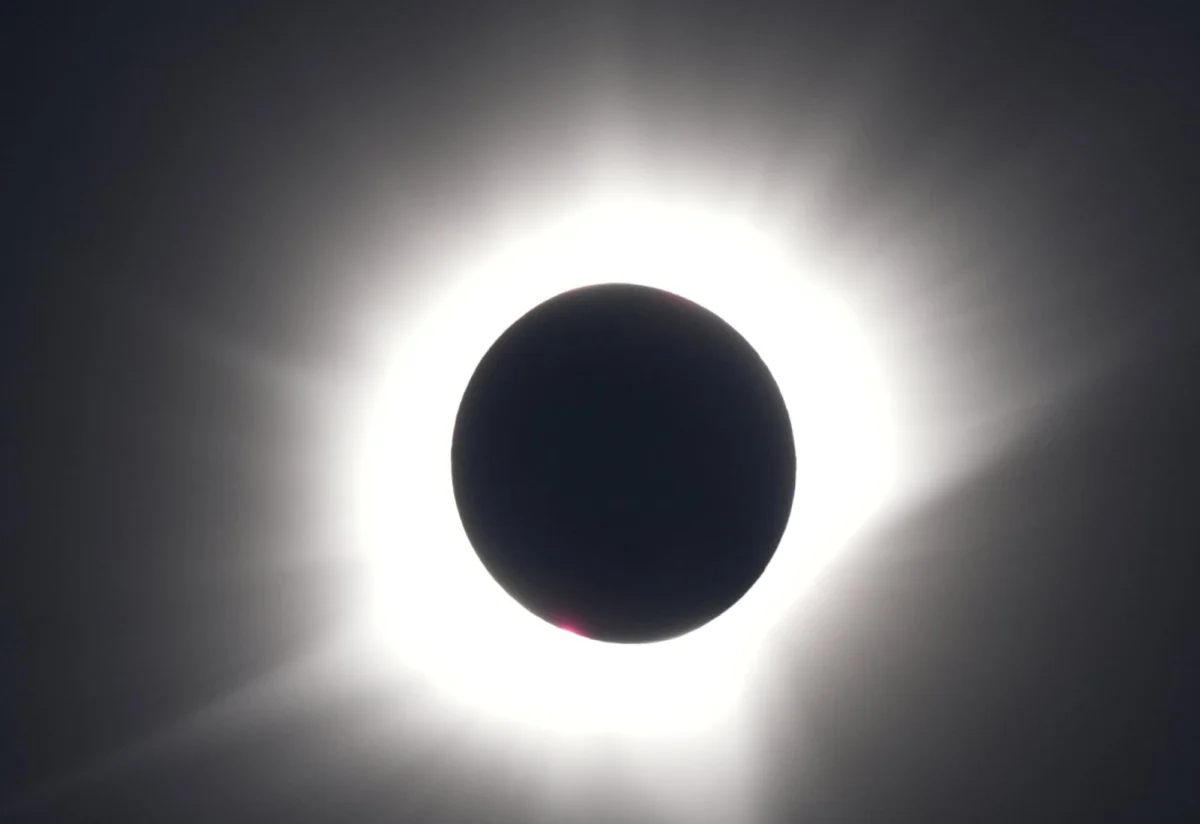
For the first time in 27 years, the rhythmic dance of celestial mechanics brought mainland Europe to a standstill. As the moon slipped perfectly between the Earth and the sun, it cast a profound, haunting shadow across the continent, blotting out solar rays and plunging regions into an ethereal, midday twilight. For members of Gen Alpha and the younger cohort of Gen Z, this was more than just an astronomical event; it was their inaugural encounter with a total solar eclipse—a transformative experience that bridges the gap between scientific observation and primal wonder.
The Chronology of Totality: A Path Across the Continent
The spectacle began its main act in the North Atlantic, with the shadow first making landfall in Iceland. At approximately 1:49 p.m. ET, the moon fully obscured the sun, marking the onset of totality. The silence that reportedly fell over the landscape was broken only by the awe of onlookers as the sun’s corona—the delicate, pearlescent outer atmosphere usually hidden by the star’s blinding glare—revealed itself in a halo of ghostly light.
Following its path of totality, the shadow swept majestically across the ocean toward the Iberian Peninsula. By 2:30 p.m. ET, observers in Spain experienced the zenith of the event. As the moon’s dark disk aligned with the solar center, the sudden drop in temperature and the shift in light quality transformed the landscape into a surreal, monochrome dreamscape. For the millions situated outside the direct path of totality, the experience was still profound; regions across Greenland, northern Russia, and parts of Portugal witnessed a partial eclipse, where the sun was reduced to a brilliant, thin crescent, casting unique shadows through the foliage of trees and across the urban landscape.

Scientific Significance and Atmospheric Insight
While the public marveled at the visual grandeur, the scientific community seized the opportunity to gather invaluable data. NASA’s live broadcast served as a central hub for this intellectual pursuit, with experts explaining that total solar eclipses are uniquely valuable for studying the sun’s corona and the Earth’s ionosphere.
The rarity of this event over Europe is not merely a matter of celestial coincidence but also one of geography. A significant portion of the eclipse’s path is dictated by the vast expanses of the Atlantic Ocean, which often swallows the shadow of such alignments. Scientists emphasize that observing how the sudden loss of solar radiation affects temperature, wind patterns, and animal behavior provides a rare "natural experiment" that helps refine our models of Earth’s atmosphere.
A Sky Full of Wonder: Beyond the Eclipse
The eclipse was merely the centerpiece of a day defined by rare astronomical harmony. Astrologers and amateur astronomers noted that the event coincided with a remarkable planetary configuration, featuring the alignment of six planets. This convergence, coupled with the onset of a new moon phase and reports of a late-night meteor shower, created a sense of cosmic synchronicity that captured the public imagination.

The convergence of these events has sparked widespread discussion on social media platforms, with enthusiasts describing the day as a "cosmic reset." While science provides the explanation, the human experience remains rooted in a sense of luck and fortune, with many observers expressing gratitude for witnessing such a cluster of celestial phenomena in a single 24-hour window.
The Scramble for Safety: The Great Glasses Shortage
The eclipse served as a sharp reminder of the importance of solar safety. Because staring at the sun—even during an eclipse—can cause permanent retinal damage, the demand for ISO-certified eclipse glasses reached a fever pitch. This prompted a logistical challenge that saw local libraries, schools, and science centers overwhelmed by requests for free eyewear.
The situation highlighted a burgeoning debate: should access to protective equipment during major astronomical events be considered a public utility? As online retailers faced stock depletion and the secondary market saw prices for simple cardboard-framed glasses skyrocket, many turned to social media to call for government-issued safety measures. The "wild west" of the eclipse glasses market underscored the need for better planning for future astronomical events, suggesting that as public interest in space exploration grows, so too must our infrastructure for safe public engagement.

The "Eclipse Hype" Phenomenon
In an era of viral content and real-time social media updates, the question has arisen: why does it feel like there is an eclipse every other month? While true total solar eclipses are indeed rare, the globalization of information has changed how we perceive these events. The ability to watch a feed from Spain while sitting in a home office in the United States, or to read real-time reports from across the globe, creates a sense of "constant celestial activity."
However, experts caution that this digital saturation should not diminish the actual rarity of the event. Total solar eclipses occur roughly every 18 months somewhere on Earth, but the likelihood of one passing over a specific populated area remains exceptionally low. The current "hype" is a reflection of a society that is becoming increasingly connected to the cosmos, facilitated by technology that makes the vastness of space feel more accessible than ever before.
DIY Celestial Engagement: The Ingenuity of the Observer
For those located in areas where the eclipse was not visible, or where cloud cover obscured the view, the spirit of inquiry remained undiminished. The digital age has birthed a new trend of "DIY celestial events." From using colanders to project the crescent shape of the eclipsed sun onto sidewalks to constructing sophisticated pinhole cameras, the public demonstrated a creative, hands-on approach to participating in the event.

These grassroots efforts are critical. They democratize science, turning what could be an abstract event into a tangible, participatory experience. Even for those thousands of miles from the path of totality, the act of creating a projection and understanding the physics behind it fosters a deeper appreciation for the mechanics of our solar system.
Implications for Future Generations
The legacy of this 2024 eclipse will likely be felt in the career choices of the next generation. For the Gen Alpha students who watched the sky darken in the middle of the afternoon, the event serves as an early catalyst for an interest in STEM (Science, Technology, Engineering, and Mathematics). History has shown that high-profile astronomical events lead to spikes in university enrollment in physics and astronomy.
Furthermore, the event has highlighted the necessity of global cooperation. As the shadow traversed borders, the data collected was shared among international agencies, reinforcing the reality that our atmosphere—and the celestial bodies that influence it—knows no political boundaries.

Conclusion
As the moon finally moved past the sun and daylight returned to the streets of Europe, the lingering sentiment was one of profound connection. The event was a testament to the human desire to understand our place in the universe. Whether through the lens of a telescope, the safety of eclipse glasses, or the simple, shared experience of looking upward, the people of Europe were reminded that we are all travelers on a planet suspended in a vast, predictable, and occasionally awe-inspiring solar system.
As the sun sets on this historic day, the anticipation for the next great alignment begins. Until then, the memories of this afternoon—a momentary darkness that brought millions together—will serve as a beacon for the next generation of stargazers.










