Rifan Muazin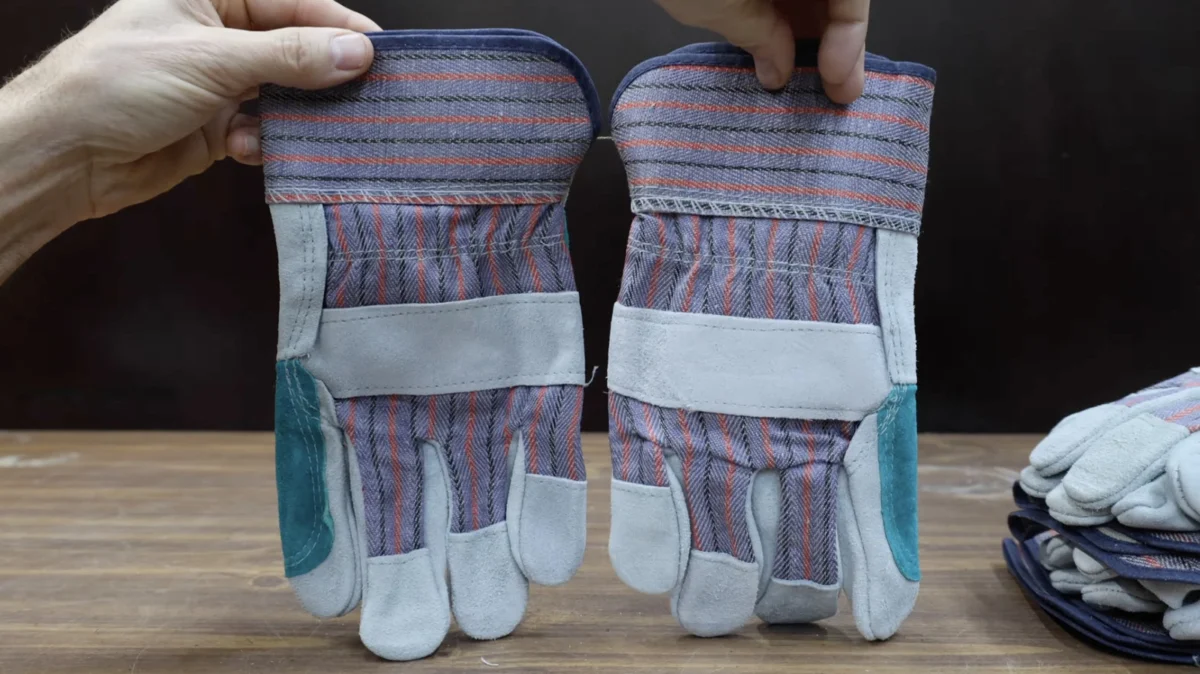
When walking down the aisles of a hardware store, the consumer mindset is often governed by a simple, unwritten rule: you get what you pay for. We instinctively reach for the $30, high-tech, branding-heavy work gloves, assuming that a higher price tag equates to superior safety, longevity, and build quality. After all, when you are handling power tools, sharp materials, or heavy machinery, the risk of injury is high, and the desire to save a few dollars rarely feels worth the potential medical bills.
However, recent rigorous testing conducted by the popular YouTube channel Project Farm has challenged this conventional wisdom. In a comprehensive side-by-side comparison of various work gloves—ranging from budget-friendly $3 options to premium pairs costing ten times as much—the results were not only surprising but potentially disruptive to the hardware market.
Main Facts: The $3 Contender That Toppled Giants
The subject of this performance revelation is a pair of suede work gloves manufactured by G&F. At a price point that barely covers the cost of a cup of coffee, these gloves seem, at first glance, to be little more than entry-level protection. They feature a basic suede construction, a reinforced index finger, and a 2.5-inch rubberized safety cuff designed to protect the wrist.
Despite their unassuming aesthetic, these gloves demonstrated an exceptional capacity for durability and impact resistance. In a landscape where brand name and marketing often dictate price, the G&F gloves proved that material science and structural design—rather than advertising budgets—are the true drivers of quality. The testing protocols utilized by Project Farm provide a data-driven look at how these gloves perform under conditions that would typically lead to the rapid degradation of inferior equipment.
Chronology of the Testing Protocol
To understand the scope of this performance, one must look at the methodology employed during the stress tests. The evaluation was not subjective; it was a systematic, empirical breakdown of material failure points.
The Durability Phase
The initial phase of testing focused on abrasive wear. Each glove was subjected to a fixed downward load against 180-grit sandpaper. The test measured how many cycles of friction the glove could withstand before the material wore through. The G&F gloves held up for 61 passes, a figure that significantly outperformed many of its more expensive counterparts. This longevity is largely attributed to the reinforced cowhide palm, which provides a high-density barrier against friction.
The Impact Resistance Test
Safety in the workshop is as much about impact as it is about abrasion. Using a custom-built rig, the testing team dropped a heavy striker onto a wooden dowel protected by the glove. The goal was to measure the amount of force transferred through the material. The G&F glove allowed only 0.59 mm of displacement—the best result in the entire lineup. To provide context, the runner-up, a Cestus-branded glove, sustained 1.15 mm of displacement, nearly doubling the damage of the lower-cost competitor.
Puncture and Cut Resistance
The final stage of the testing cycle involved puncture and cut resistance. By applying a focused, high-pressure point to the reinforced index finger, the testers determined the failure threshold of the material. The G&F gloves held steady against 8.95 pounds of force before the material breached. Similarly, when subjected to a timed electric knife, the gloves showed remarkable resilience, suggesting that the "budget" designation does not necessitate "disposable" quality.
Supporting Data: Understanding Material Science
The success of the G&F glove is not an accident of manufacturing; it is a testament to the efficient use of materials. By utilizing cowhide leather in the palm and double-reinforcing the high-wear zones, the designers addressed the most common failure points of work gloves.
The back of the glove is constructed from plain, breathable cotton. While this choice might seem like a cost-cutting measure, it serves a functional purpose: airflow. Many premium gloves, while durable, are constructed from synthetic materials that can cause perspiration and discomfort over extended periods of use. The G&F design opts for a utilitarian approach—leather where you need protection, cotton where you need breathability.
The Competitive Landscape
In the video comparison, the G&F gloves were pitted against products from Toolant ($20) and WZ ($10). The performance gap between the G&F and these mid-tier competitors was negligible, and in some cases, the $3 glove was objectively superior. This mirrors a growing trend in the industrial supply sector, similar to how Harbor Freight’s "Icon" line has begun to out-compete established professional brands like Mechanix Wear in both price and performance. The data suggests that for the average homeowner or weekend warrior, the "brand premium" is an unnecessary expense.
The Trade-offs: Where the Budget Choice Falters
No product is perfect, and the G&F gloves do come with specific drawbacks that prospective buyers should acknowledge. The primary complaint identified in the testing is ergonomic comfort. Because of the heavy-duty leather and reinforced construction, these gloves are inherently stiffer than their high-end competitors.
In a "push-pull" meter test designed to measure the force required to flex the fingers, the G&F gloves required approximately 5.9 pounds of resistance. This was among the highest in the group, indicating that the gloves may cause hand fatigue during long, repetitive tasks. Furthermore, the sizing runs notably snug. Users accustomed to a relaxed fit may find the G&F gloves restrictive, and it is highly recommended that consumers order a size larger than they typically wear to maintain dexterity and comfort.
Official Responses and Supply Chain Transparency
While the performance metrics are clear, the administrative side of the G&F brand presents a "muddy" picture. A point of confusion for many consumers is the origin of the product. The promotional materials for the gloves on Amazon state "Made in the USA" alongside the word "Imported."
In the modern global supply chain, this often indicates that while the raw materials or initial assembly may occur internationally, specific finishing processes or quality control steps may take place in the United States. However, this lack of clarity is a common issue in the hardware sector, where labels are often ambiguous. Despite this, the physical performance of the gloves remains consistent, regardless of the geographic location of the factory.
Pricing and Availability
The economics of these gloves are perhaps the most compelling argument for their adoption. While they are available for roughly $13.64 for a five-pack on Amazon (equating to approximately $2.73 per pair), bulk purchasing offers even greater value. Specialized retailers, such as Work Gloves Depot, offer tiered pricing. Purchasing two or more packs drops the price to $10.91 per pack, and ordering a dozen units brings the cost down to $10.64 per pack. At these rates, the gloves become an almost disposable commodity, yet they possess the structural integrity of gloves priced at five to ten times as much.
Implications for the Consumer
The implications of this data extend far beyond a single brand of work gloves. They serve as a case study in the "illusion of value." For decades, consumers have been conditioned to believe that price is a direct indicator of safety. When it comes to personal protective equipment (PPE), this belief is dangerous, not because it leads us to buy cheap, but because it creates a false sense of security in expensive gear that may not actually outperform cheaper, more utilitarian alternatives.
The Verdict on Value
For the professional contractor, specialized gloves with high-dexterity features and touchscreen compatibility may still be worth the premium. However, for the average consumer, the G&F test results provide a roadmap for smarter spending. By prioritizing material density and structural reinforcement over brand name, consumers can achieve equal, if not better, levels of protection while keeping their wallets significantly heavier.
As the hardware market continues to evolve, the gap between "pro-grade" and "consumer-grade" is narrowing. Companies that focus on transparent, high-performance manufacturing—even at low price points—are increasingly finding their way into the tool belts of serious hobbyists and professionals alike. The G&F glove is not just a bargain; it is a signal to the industry that performance, when measured objectively, does not always come with a premium price tag.
In conclusion, while the G&F gloves may not offer the ergonomic luxury of higher-end brands, their durability, impact resistance, and cost-efficiency make them a formidable choice. Before your next hardware store run, it might be worth reconsidering the "you get what you pay for" adage—sometimes, you get much, much more.


 Suro Senen
 Reynand Wu