

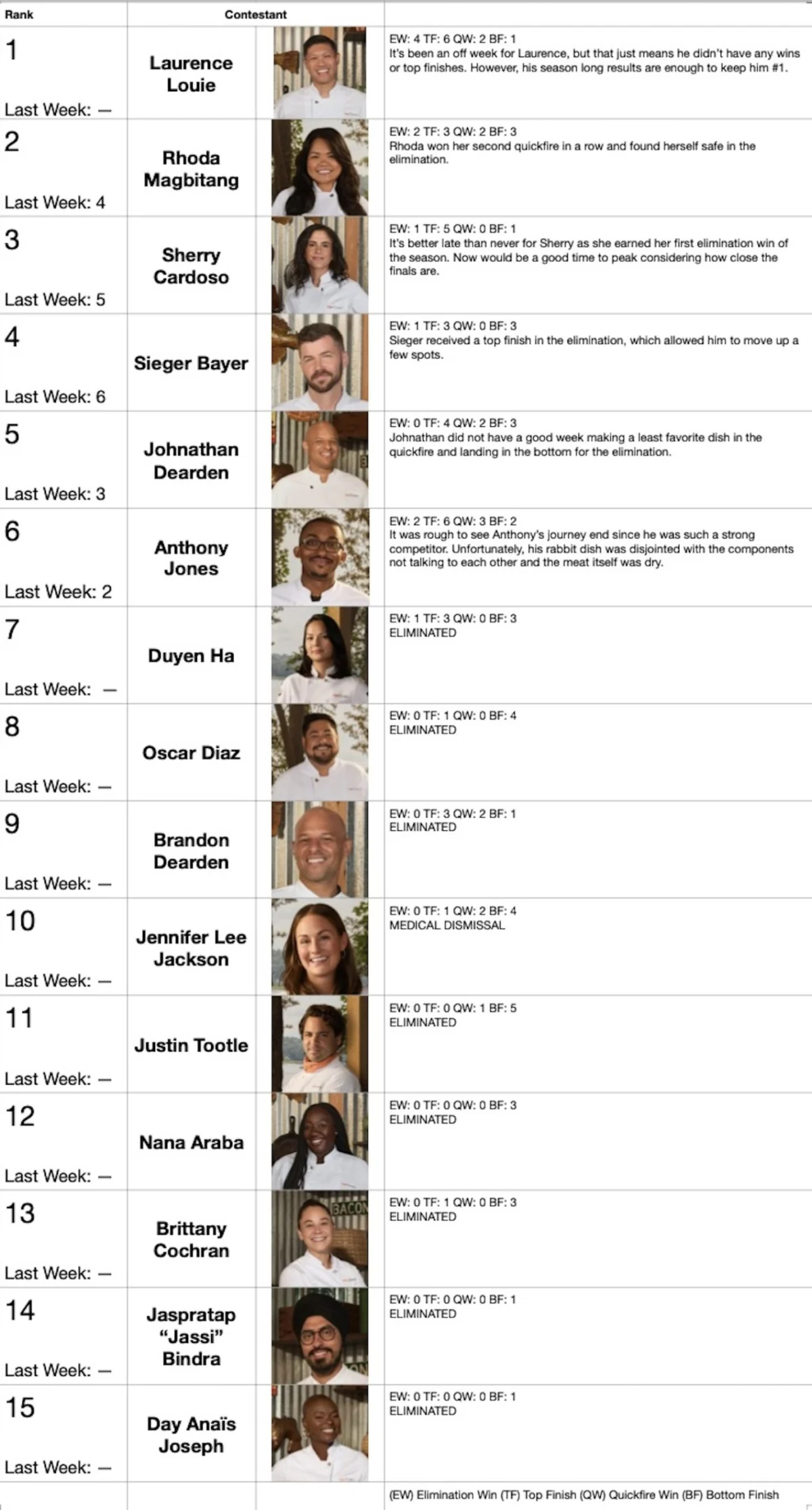
The culinary gauntlet of Top Chef Season 23 has reached its most critical juncture. With only a handful of episodes remaining, the competition has distilled down to the final five chefs—a group that represents the absolute zenith of technical skill, creative adaptability, and mental fortitude displayed throughout this grueling season. As the margin for error effectively vanishes, the pressure mounting in the kitchen is palpable, turning each Quickfire and Elimination challenge into a potential career-defining moment.
In the most recent installment, titled “Down the Rabbit Hole,” the show pushed its remaining contenders to their limits, demanding a blend of rapid-fire improvisation and the kind of refined, Michelin-caliber execution that defines the Top Chef legacy.
The Quickfire: A Lesson in Chaos and Crowd-Sourced Strategy
The episode began with an unconventional twist that highlighted the show’s willingness to embrace modern digital interaction. Set against the scenic backdrop of Unity Park, the Quickfire challenge was dictated entirely by the show’s social media audience. This "fan-powered" approach injected a layer of unpredictability that even the most seasoned competitors found unnerving.
The challenge parameters were revealed in stages, forcing the chefs to pivot their strategies on the fly. The primary ingredient—fresh, seasonal peaches—provided a sweet, delicate foundation, but the logistics were intentionally obstructive. With a strict $50 budget and a mere 20-minute shopping window at the Swamp Rabbit Cafe and Grocery, the chefs were forced to make high-stakes procurement decisions without knowing what obstacles lay ahead.

The true chaos, however, arrived with the “poll-driven” twist. Fans voted for a 30-minute cook time, but the real disruptor was the station-swap mandate. Halfway through the cooking process, the chefs were forced to abandon their own dishes and move to the station of the chef to their right. They were then required to either salvage their colleague’s partially prepared dish or discard it and start from scratch. This forced a sudden shift from individual artistry to crisis management, testing the chefs’ ability to decipher a peer’s palate and technical logic under extreme duress.
The Elimination: The Michelin-Level Rabbit Challenge
Following the frantic energy of the Quickfire, the Elimination challenge shifted gears toward the high-end, sophisticated gastronomy expected of a semi-final round. The brief was deceptively simple but technically daunting: create a Michelin-worthy dish featuring rabbit as the star protein.
The logistics were rigorous. Competitors were given a $400 shopping budget—a significant increase from the Quickfire—with a crucial advantage granted to Laurence Louie. As the winner of the previous week’s elimination, Louie was awarded a $100 bonus, providing him with a higher ceiling for ingredient quality and variety. The chefs had 30 minutes to shop and were tasked with serving 24 guests, including a panel of mystery diners.
The inclusion of anonymous mystery diners transformed the service into a high-pressure, objective test of flavor profiles. Unlike a traditional judging panel, where chefs can often gauge the reactions of the judges, the mystery diners provided a blind, unfiltered assessment of the food. For the remaining five, this was a clear signal that the competition had moved past "personality" and into the realm of pure culinary excellence.

Chronology of the Final Five: A Season in Review
To understand how we arrived at this elite group, one must look at the trajectory of the season. The early weeks were defined by sheer volume—a crowded field of talented chefs finding their footing. As the season progressed, the producers ramped up the difficulty, shifting from standard regional challenges to concept-heavy themes that rewarded those who could articulate a culinary "voice."
- Weeks 1–4: The "Survival Phase." Here, the focus was on technical fundamentals. Chefs who couldn’t balance acidity, seasoning, or protein temperatures were quickly weeded out.
- Weeks 5–8: The "Concept Phase." The challenges required the chefs to tell stories through their food. Those who relied on safe, middle-of-the-road cooking began to struggle against those who took calculated risks with fusion and avant-garde techniques.
- Weeks 9–11: The "Endurance Phase." The current stage of the competition. The physical exhaustion of a months-long production cycle is now visible. The mental weight of the finale is causing even the most confident chefs to second-guess their plating and flavor profiles.
Supporting Data: The Power Rankings Analysis
As we look at the current power rankings, the separation between the top and the bottom of the final five is razor-thin. While Laurence Louie holds a perceived advantage due to his consistent winning record, the volatility of the "Down the Rabbit Hole" challenge proved that momentum can be halted in an instant.
- Consistency vs. Brilliance: Some chefs in the final five have survived by being consistently "good," never hitting the bottom but rarely winning the top. Others have swung for the fences, resulting in both wins and close calls.
- The "Mystery Diner" Factor: The data from this week’s service suggests that the judges are placing an increasing premium on "the diner’s experience." Technical perfection is no longer enough; the dish must evoke a response.
- Ingredient Management: The budget constraints, while often overlooked by casual viewers, remain a significant metric of skill. The ability to source high-quality components within a fixed budget is a hallmark of a professional chef who understands food cost—a critical component of the eventual grand prize.
Official Responses and Behind-the-Scenes Perspectives
Producers of Top Chef have noted that Season 23 was specifically designed to test the limits of modern culinary adaptability. "We didn’t want to just test how well they cook," a production source remarked. "We wanted to test how they think when the environment changes. A chef who can handle a perfect kitchen is common. A chef who can handle a chaotic, social-media-driven, station-swapping environment is a Top Chef."
The chefs themselves have been vocal about the mental toll. During interviews, several contestants noted that the anonymity of the mystery diners was the most stressful element of the season. "You can’t talk your way out of a bad dish when you don’t know who is eating it," one contestant noted. "It forces you to be honest with your ingredients."

Implications: The Path to the Finale
What does this mean for the road ahead? With five chefs remaining, the competition is likely to move into "location" challenges or a specialized finale set in a culinary capital. The implications are clear:
- Technical Versatility: The chefs can no longer hide behind their comfort zones. If a chef is known for pasta, they will likely be forced to prove their mettle with raw preparations or pastry.
- Psychological Durability: The final episodes will focus on the mental game. As the group narrows to the final three, the sense of camaraderie will likely dissolve into a more cutthroat atmosphere.
- The Legacy of Season 23: This season will be remembered for its integration of technology and audience participation. By involving the fans in the Quickfire challenges, the show has created a new standard for how television competitions engage with their viewers.
As the remaining five chefs prepare for the next round, the question remains: who has the temperament to remain calm while the culinary world watches? With the finish line in sight, the only thing more volatile than the kitchen temperatures will be the nerves of the competitors.
Top Chef continues to prove that it is not merely a cooking show, but a rigorous evaluation of the modern culinary professional. As we count down the days to the season finale, the fans remain engaged, the stakes remain high, and the mystery of who will walk away with the title is more compelling than ever.
New episodes of Top Chef air every Monday on Bravo. Whether you are rooting for the technical genius of Laurence Louie or the raw, creative energy of his fellow competitors, one thing is certain: the remaining weeks will be nothing short of a masterclass in high-pressure cooking.











No comments yet. Be the first to join the conversation!