

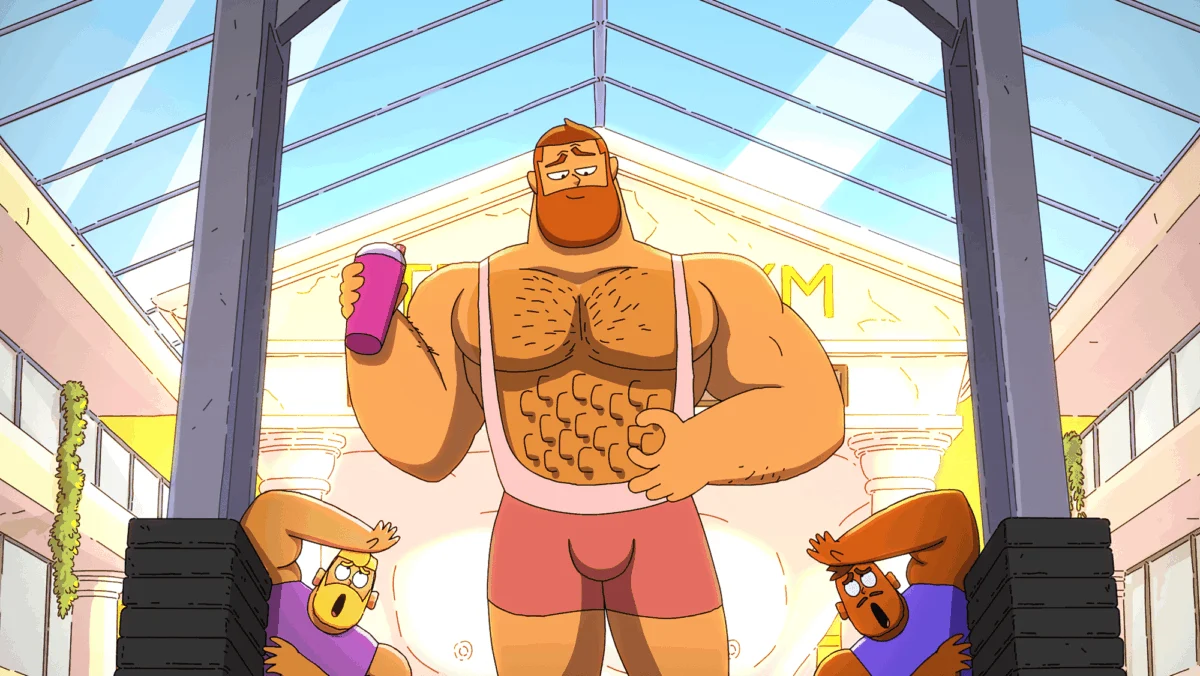
At the 2026 Cannes Film Festival, few films sparked as much conversation—or as many raised eyebrows—as the raunchy, neon-soaked animated debut Jim Queen. Directed by Nicolas Athané and Marco Nguyen, the film serves as a daring, if polarizing, piece of satire that reimagines the AIDS crisis through a surreal, modern, and decidedly queer lens. In this version of Paris, the threat is not a virus that kills, but a pathogen that “straightens” its victims, transforming the city’s vibrant gay nightlife into a landscape of suburban banality and newfound interests in traditional marriage and soccer.
While the film is currently seeking U.S. distribution, its premiere at Cannes has already cemented its status as a niche, must-see experience for those fluent in the specific dialects and subcultures of modern gay life.
The Premise: An Allegory of Identity and Loss
Jim Queen centers on Jim Parfait (voiced by Alex Ramírez), a sex-positive, Instagram-famous influencer who acts as the primary focal point of the city’s gay scene. Living a life of extreme aesthetic discipline—sustained by a diet of two kilograms of protein daily and the inevitable emotional toll of maintaining a “24-pack of abs”—Jim is the king of the Temple Gym and the PowerBoyz warehouse.
However, the equilibrium of his world is shattered by the arrival of “heterosis.” Much like the lesions that signaled the onset of the HIV/AIDS crisis in 1980s Paris, the symptoms of heterosis are immediate and devastating. For Jim, the sudden collapse of his perfectly sculpted physique is a social death sentence. As the disease spreads through the city’s sex clubs and gyms, it strips away the defining markers of the gay male community, replacing them with a dull, heteronormative "cure" that sees infected men suddenly finding joy in church weddings and the minutiae of professional sports.

A Chronology of the "Heterosis" Crisis
The film unfolds as a fast-paced, episodic journey through a collapsing social structure:
- The Initial Outbreak: The disease begins in the hidden corners of Paris’s gay underground, quickly infecting influencers and regulars at iconic, hyper-masculine hotspots.
- The Social Erosion: As the virus takes hold, the city’s sexual hierarchies begin to dissolve. The "cool" gay community is replaced by individuals who appear to have undergone a lobotomy of their own culture.
- The Quest for the Cure: Jim, now divested of his influence and his physical beauty, discovers that a nefarious figure, Dr. Ragoult, possesses a supposed remedy called “chloroqueer.”
- The Intersection of Worlds: The plot thickens with the introduction of Lucien (Jérémy Gillet), a pure-hearted, closeted twink who is the son of the city’s draconian Prime Minister, Christine Bayer. Lucien, who has spent his life in an ivory tower, becomes the focal point of the medical conspiracy, as his biology is deemed essential for the production of the cure.
- The Climax: Through a series of body-horror sequences and comedic interventions—most notably from a drag queen named Glamydia—Jim and Lucien must navigate a gauntlet of societal expectations to decide if their identity is worth saving, or if they are simply products of the culture they inhabit.
Supporting Data: Examining the Queer Cultural Landscape
The brilliance of Jim Queen, according to proponents, lies in its unflinching portrayal of the "gay food chain." Athané and Nguyen, alongside co-writer Simon Balteaux, have constructed a world that serves as a mirror for contemporary gay hubs like West Hollywood or Hell’s Kitchen.
The film is packed with "I Spy" elements for the initiated: the obsession with status, the prevalence of steroid and drug use, the performative nature of social media, and the rigid stratification between the "gym gods" and the "twinks." While the film is not a scholarly critique—it makes no attempt to be a Foucaultian text—it functions as a biting satire of the very community it depicts.
The aesthetic, produced by the European studio Bobbypills, utilizes a retro 2D animation style that feels deliberately disconnected from the hyper-modern, digital-obsessed lives of its characters. This choice creates a "clash of eras" that highlights the timelessness of the pressures exerted upon gay men to conform, whether to the demands of the scene or the demands of society.

Official Responses and Critical Reception
The critical response to Jim Queen has been, predictably, mixed. While the film has been praised for its boldness, many critics have pointed out that its satire can feel "basic" or overly familiar to those who live within the queer community.
"The potshots will feel familiar and even basic to anyone who’s lived them or lives them every day," noted one attendee at the Cannes screening. "But in a world where gay representation is still a relative rarity in mainstream animation, the satire isn’t unwelcome. It’s just not very insightful."
The film currently holds a "C+" grade from major critical outlets. The consensus suggests that while the film is a "divergent blast of entertainment," it struggles to bridge the gap between being a "scathing critique" and an "inside joke." The target audience is explicitly the queer community, and for many, that is exactly where the film’s utility lies. It is a work that acknowledges the internal struggles of a community—the shame, the shallowness, and the quest for belonging—without necessarily offering a path to resolution beyond a rather campy, "coming-out" style finale.
The Implications of "Chloroqueer" and Beyond
The central conflict of the film—the choice between a potentially horrifying medical procedure and the erasure of one’s identity—is a clear, if heavy-handed, metaphor for the history of "conversion" and the medicalization of queer bodies. The "chloroqueer" cure is presented as a nightmare of invasive, non-consensual body horror, suggesting that the pressure to conform to a "straight" existence is fundamentally an act of violence against the self.

The film’s ultimate message, however, is a surprisingly hopeful one. By elevating the power of the "prostate orgasm" to the status of a revolutionary, world-saving act, Athané and Nguyen embrace a radical, albeit comedic, form of queer joy. It is a rejection of the assimilationist, "soccer-loving" lifestyle that the disease promotes, in favor of a messy, authentic, and unapologetic expression of gay humanity.
Conclusion: A Niche Triumph?
Jim Queen is an unapologetic, colorful, and often abrasive piece of animation that asks difficult questions about what remains of a person when their external markers of identity are stripped away. Is Jim Parfait anything more than his abs and his follower count? Is Lucien anything more than the product of his mother’s political regime?
For international audiences, the film provides a fascinating, if sometimes opaque, window into the specific anxieties of the modern Parisian queer scene. While it may not reach the heights of cinematic masterpieces in terms of depth or narrative complexity, it succeeds as a provocative piece of cultural commentary. As the search for U.S. distribution continues, Jim Queen remains a significant, if flawed, milestone in queer animation—a testament to the fact that, even when faced with the threat of "heterosis," there is a defiant power in staying true to the things that make us who we are.
Whether it becomes a cult classic or remains a niche curio of the 2026 festival circuit will depend on its ability to find the audience that is already in on the joke. One thing is certain: for those who have spent their lives navigating the complex hierarchies of the scene, Jim Queen will be an impossible film to ignore.











No comments yet. Be the first to join the conversation!