

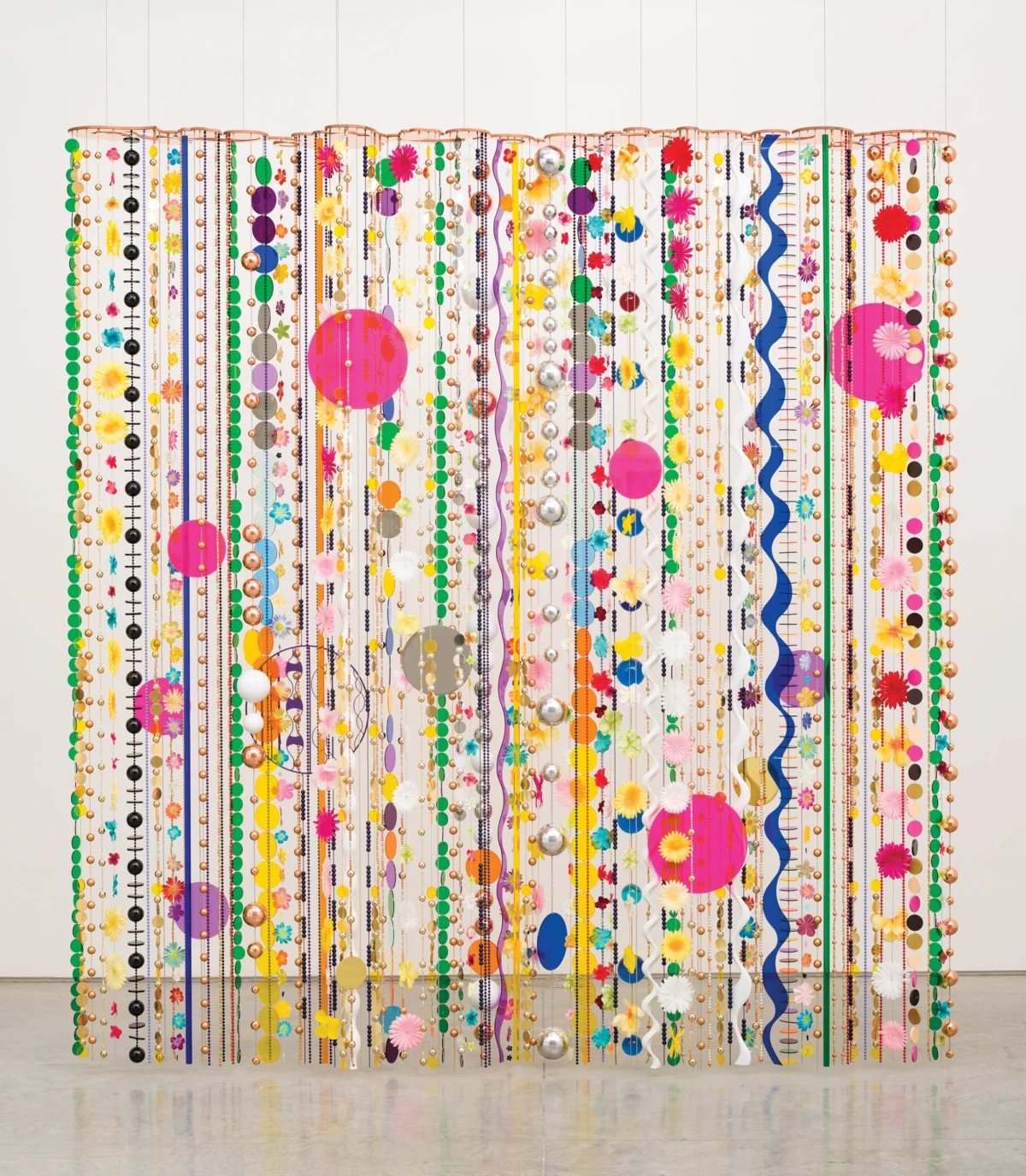
In the landscape of contemporary art, color is rarely just a decorative choice; it is a structural element, a psychological catalyst, and a language unto itself. This April, Monacelli Press is set to release Rainbow Dreams: Color and Light in Contemporary Art, a sweeping, 200-plus-piece survey that interrogates the ways in which modern creators utilize the visible spectrum to redefine our perception of space and emotion.
The volume acts as more than just a coffee-table collection; it is a comprehensive archive of how pigment, light, and materiality intersect in the 21st century. From the ethereal, diaphanous architecture of Do Ho Suh to the iridescent, mirror-like surfaces of Kimsooja, the book documents a generation of artists who have moved beyond the canvas to engage directly with the viewer’s physical environment.

Main Facts: The Anatomy of a Vibrant Survey
Rainbow Dreams is curated to offer a broad spectrum—both literal and figurative—of artistic practices. The book compiles more than 200 works, spanning large-scale installations, intricate sculptures, evocative paintings, and conceptual photography.
The publication itself is designed to mirror its subject matter. Bound in a smooth, high-fidelity gradient that bleeds to the very edges of the pages, the book serves as a tactile object of art. Its physical design is an intentional nod to the content within: a celebration of the visceral impact of color. By bridging the gap between theoretical art history and accessible visual storytelling, the book captures the "possibilities of pigment" in ways that few anthologies have attempted before.

The selection of artists included in the volume reads like a "who’s who" of contemporary influence. Readers will find familiar names previously highlighted by Colossal, including:
- Nina Chanel Abney, known for her bold, graphic, and highly charged social commentary.
- Nick Cave, whose iconic Soundsuits bridge the gap between fashion, performance, and textile sculpture.
- DRIFT, the duo celebrated for their robotic, light-based kinetic installations.
- Katharina Grosse, who famously uses industrial spray-paint techniques to engulf entire architectural structures in chromatic chaos.
Chronology: The Evolution of Color in Contemporary Practice
While the book focuses on contemporary works, the trajectory of color-based art has a distinct arc that informs these pages.

The Early 21st Century: The Rise of Immersion
The early 2000s saw a shift toward "total environment" art. Artists began to move away from the white cube gallery space, instead creating works that engulfed the viewer. This era, heavily featured in the first section of Rainbow Dreams, highlights pioneers like Gabriel Dawe, whose Plexus series utilizes thousands of strands of thread to create the illusion of solid light—a physical, architectural rainbow that challenges the viewer’s sense of depth and perspective.
2010–2020: Materiality and Texture
During the middle of the last decade, the focus shifted toward materiality. Artists like Shoplifter (Hrafnhildur Arnardóttir) began exploring the psychological and tactile nature of color through synthetic hair, creating "Chromo Sapiens" installations that felt simultaneously alien and organic. This era also saw the rise of artists like Ian Davenport, who utilized gravity to manipulate paint, letting it "flood" or "pour" into vibrant, striped compositions that emphasize the fluid nature of color.

2020–Present: Light as Medium
The most recent period, as noted in the book, is defined by a fascination with the ephemeral. Sho Shibuya’s Sunrise from a small window project, which began in May 2020, captures the daily shift of light across the sky on the front page of the New York Times. This represents a pivot in contemporary art toward the intersection of news, time, and the atmospheric qualities of light.
Supporting Data: Why Color Resonates Today
The cultural significance of Rainbow Dreams lies in its ability to quantify the "emotional turn" in art. According to recent color psychology data often cited by curators, specific wavelengths are increasingly used in public art to combat urban alienation.

- The Psychological Impact: Research indicates that saturated, spectrum-based art installations can lower cortisol levels in public spaces, contributing to what urban planners call "chromatic restoration."
- The Technical Scale: The works featured in the book utilize a staggering array of materials. From the 2,000-square-foot textile installations of Lauren Halsey—which infuse the aesthetic of South Central Los Angeles with a vibrant, fringed visual history—to the precise light-refraction techniques of Kimsooja, the book provides data points on how art is moving toward high-intensity, site-specific saturation.
- Accessibility: Unlike the abstract expressionism of the mid-20th century, which often required a high degree of art-historical literacy to decode, the works in Rainbow Dreams are intuitively accessible. They rely on the human biological response to color, making the book a vital resource for both academics and casual art enthusiasts.
Official Responses and Curatorial Intent
In discussions surrounding the release, the publishers at Monacelli Press have emphasized that the book is intended to be a "playful object." The intent was to avoid the sterile, clinical tone often found in art surveys. By utilizing a gradient binding, the editors aimed to ensure that the book’s physical existence is a source of joy—a reflection of the "Rainbow Dreams" title.
"We wanted to create a volume that feels like it’s vibrating on the shelf," said a spokesperson for the editorial team. "The artists chosen are not just color theorists; they are practitioners who understand that color is a conduit for human connection. When you look at an installation by someone like Katharina Grosse or a textile piece by Lauren Halsey, you aren’t just looking at a color palette; you are looking at an invitation to experience space differently."

The curation process involved balancing established icons with emerging voices, ensuring that the dialogue between the "master" and the "novice" remains open. The result is a non-linear narrative where a photograph of a delicate Do Ho Suh installation sits comfortably alongside the high-energy, pop-inflected paintings of Nina Chanel Abney.
Implications: The Future of Chromatic Art
What does the publication of Rainbow Dreams suggest for the future of the art market and public art?

The Shift Toward Experiential Art
The primary implication of this survey is that the "object" of art is fading in favor of the "experience" of art. Collectors and museums are increasingly prioritizing installations that offer immersive, photo-worthy, and transformative environments. The artists featured in the book are those who have successfully navigated the transition from traditional galleries to social-media-literate, high-engagement exhibition spaces.
The Democratization of Color
The book also signals a departure from the "minimalist" aesthetic that dominated the 2010s. The "less is more" mantra is being replaced by a "maximalist" approach to the spectrum. As global anxieties rise, there is a clear trend toward art that provides comfort, wonder, and a sense of possibility. Rainbow Dreams acts as a roadmap for this shift, documenting a collective movement toward optimism.

A Global Conversation
Finally, the book highlights that color is a universal language. Whether it is Kimsooja’s work at the Leeum Museum of Art in Seoul or the intricate floral tapestries of Beatriz Milhazes in Brazil, the artists in this book hail from vastly different cultural backgrounds yet speak a common language of light and pigment. This global reach is essential in a fragmented world; it reminds us that while our stories may differ, our fundamental, biological response to the rainbow remains a shared, unifying experience.
Rainbow Dreams: Color and Light in Contemporary Art is scheduled for official release on April 8. Pre-orders are currently being accepted through the Colossal Shop, offering readers an early opportunity to secure a copy of what is poised to be one of the most visually stunning publications of the year. Whether you are an art historian looking to track the evolution of light-based media or a collector seeking a vibrant addition to your library, this book provides a vital, necessary, and undeniably beautiful look at the world of color.









No comments yet. Be the first to join the conversation!