

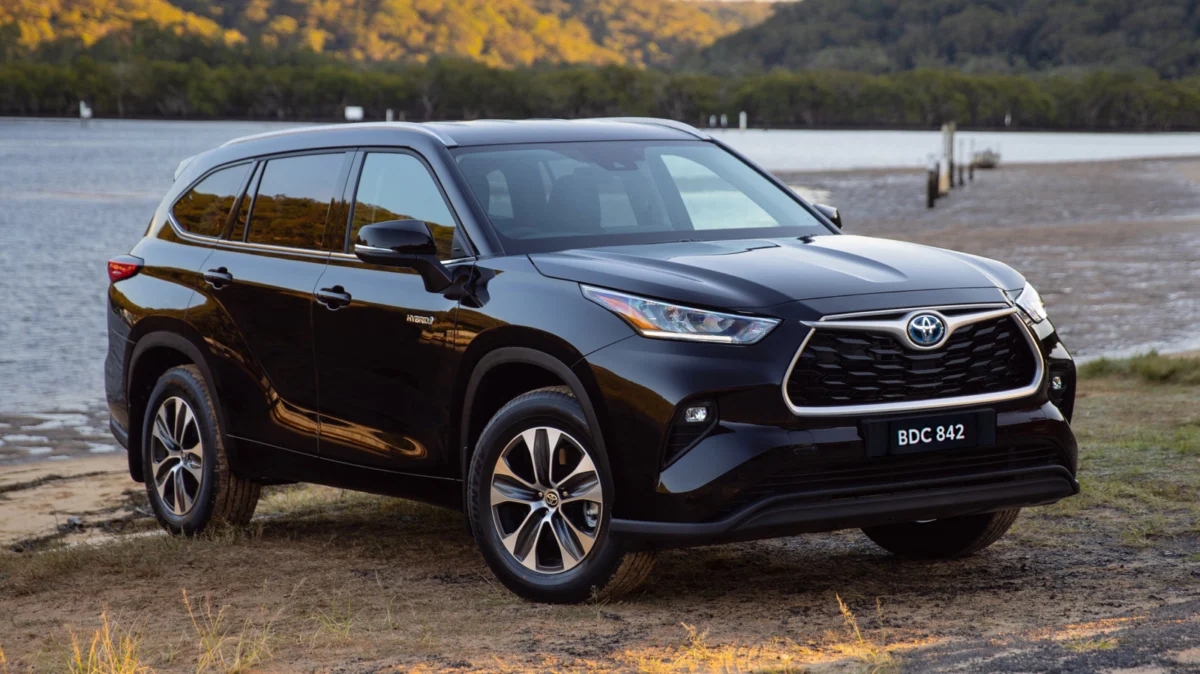
The automotive industry is built upon the pillars of branding and identity. For a manufacturer like Toyota, a model name is more than just a badge on a trunk lid; it is a promise of reliability, utility, and market positioning. However, as the automotive landscape becomes increasingly globalized, the simple act of naming a vehicle has evolved into a high-stakes geopolitical chess match.
The 2027 Toyota Highlander represents a watershed moment for the Japanese automaker. With a complete design overhaul and next-generation drivetrain technology, the vehicle seeks to reclaim the crown in the fiercely competitive three-row SUV segment. Yet, behind the sleek lines and modern engineering lies a convoluted history of trademark disputes and regional naming conventions that have turned the Highlander into one of the most geographically confused vehicles in the world.
The Weight of a Name: Why "Highlander" Matters
In the United States, the Highlander name is synonymous with the modern family SUV. Since its introduction, it has served as a bedrock of the Toyota lineup, commanding intense brand loyalty and significant sales volume. The moniker evokes the ruggedness of the Scottish Highlands, suggesting a vehicle capable of conquering both urban concrete and wilderness trails.
Despite the radical transformation of the 2027 model—which departs sharply from its predecessors—Toyota opted to maintain the Highlander nameplate. This decision highlights the immense "brand equity" the name carries with American consumers. However, outside the North American bubble, this marketing strategy creates a ripple effect of confusion, forcing Toyota to navigate a labyrinth of intellectual property laws and pre-existing local trademarks.
Chronology of a Trademark Conflict
The international branding strategy of the Highlander is a case study in why legal due diligence is as important as engine calibration in the automotive world.
1999–2003: The Australian Standoff
The most prominent hurdle in the Highlander’s global journey occurred in Australia. In 1999, Hyundai filed for the "Highlander" trademark in Australia, intending to use the name for the top-tier trim of its rugged Terracan SUV. When Toyota attempted to secure the same name for its new SUV in 2003, the application was summarily denied due to the pre-existing Hyundai filing.
Faced with a blocked path, Toyota pivoted to the name "Kluger"—a derivative of the German word klug, meaning wise or smart. The name had been used in Japan since the SUV’s 2000 debut as the "Kluger V." Consequently, for two decades, Australian consumers grew to know the vehicle not as the Highlander, but as the Kluger.
2007: The Japanese Retreat
Ironically, while Toyota was forced to use the Kluger name in Australia, the brand struggled to find traction with that same name in its home market of Japan. The Kluger V was often overshadowed by its internal sibling, the Harrier (known globally as the Lexus RX). By 2007, citing low sales volume and a lack of consumer interest, Toyota discontinued the Kluger in Japan, leaving a nearly two-decade void in the local market.
2024: The Unresolved Legal Battle
Even after twenty years, the animosity over the trademark remains. In 2024, Toyota attempted to reclaim the Highlander name for the Australian market, hoping to align its global branding. Once again, the application was denied. Hyundai’s continued use of "Highlander" for various trims meant that the legal landscape had not shifted in Toyota’s favor, forcing the company to maintain the status quo in the Oceanic region.
The Global Disconnect: Where Is the Highlander?
The current state of the Highlander/Kluger nomenclature is a fragmented map that highlights the challenges of global standardization.
The Return of the Highlander to Japan
In a surprising twist, the Highlander name has returned to Japan, with the first models slated to arrive at dealerships in August 2026. However, this is not a domestic product. The vehicles being imported into Japan are configured for the New Zealand market.
This presents a unique set of logistical and functional challenges. Because the Japanese-spec Highlanders are essentially New Zealand variants, Japanese owners are faced with significant hardware and software limitations. Crucial driver-assistance features, which rely on localized data, and large swaths of the infotainment system are largely incompatible with the Japanese infrastructure. This unorthodox launch serves as a reminder that brand identity sometimes takes precedence over local consumer convenience.
The Australian Exception
With the return of the Highlander to Japan, Australia stands alone as the final major market where the Kluger name remains the standard. Despite Toyota Australia explicitly stating in 2024 that they have "no plans to use the name ‘Highlander’ locally," the brand remains in a state of purgatory, tethered to a name chosen in haste two decades ago.
The Land Rover "What-If" Scenario
To understand how arbitrary these naming conventions can be, one must look at the late 1980s and early 1990s. Before Toyota or Hyundai ever laid claim to the name, Land Rover was deep in the development phase of the vehicles that would eventually become the Discovery and the Freelander.
Land Rover had actually trademarked "Highlander" in Australia well before Hyundai’s 1999 filing. Had the company proceeded, the entire history of the SUV segment might look different. However, when Land Rover attempted to secure the trademark in the United Kingdom, they discovered that Volvo Trucks already held the rights to the name.
The naming of the Freelander was, by many accounts, a matter of industrial geometry. Land Rover had already manufactured the metal recess molds for the vehicle’s rear badging. They needed a name that fit the exact physical dimensions of the "Highlander" badge. "Freelander" was selected as a phonetically similar alternative that fit the existing tooling. If Volvo had not owned the trademark in the UK, the Highlander might have been a British icon, and Toyota might have been forced to name its SUV the Kluger worldwide from the very start.
Implications for Future Automotive Branding
The saga of the Toyota Highlander illustrates the increasing difficulty of naming global products. As markets become more interconnected, the "trademark real estate" is becoming crowded.
- Legal Hurdles: Manufacturers are increasingly forced to perform exhaustive global trademark audits before settling on a name. The cost of a "bad" name—in terms of legal fees, re-badging, and marketing confusion—is astronomical.
- Brand Fragmentation: When a vehicle carries different names in different markets, the marketing message is diluted. A global digital campaign for the "Highlander" is rendered useless in Australia, requiring Toyota to maintain separate marketing infrastructures for the same vehicle.
- The Rise of Alphanumeric Naming: This is perhaps why brands like Mercedes-Benz, BMW, and even parts of the Lexus lineup have moved toward alphanumeric naming conventions (e.g., C-Class, X5, RX350). Numbers and letters are easier to trademark globally, transcend language barriers, and avoid the historical baggage of evocative, dictionary-based names.
Conclusion
The 2027 Toyota Highlander is an engineering marvel, a testament to Toyota’s ability to reinvent itself in the face of shifting market demands. Yet, its journey to the showroom floor is a reminder that the automotive industry is as much about the boardroom and the courtroom as it is about the test track.
Whether it is known as the Highlander in North America and Japan, or the Kluger in Australia, the vehicle remains a symbol of the struggle for identity in a globalized world. The name on the back may change depending on where you reside, but the underlying conflict—a clash of history, law, and corporate strategy—remains a constant. As we move further into the future of electric and autonomous vehicles, one has to wonder if the traditional "name" will survive at all, or if we are moving toward a future where our cars are identified by codes rather than the stories we try to weave into their metal.











