

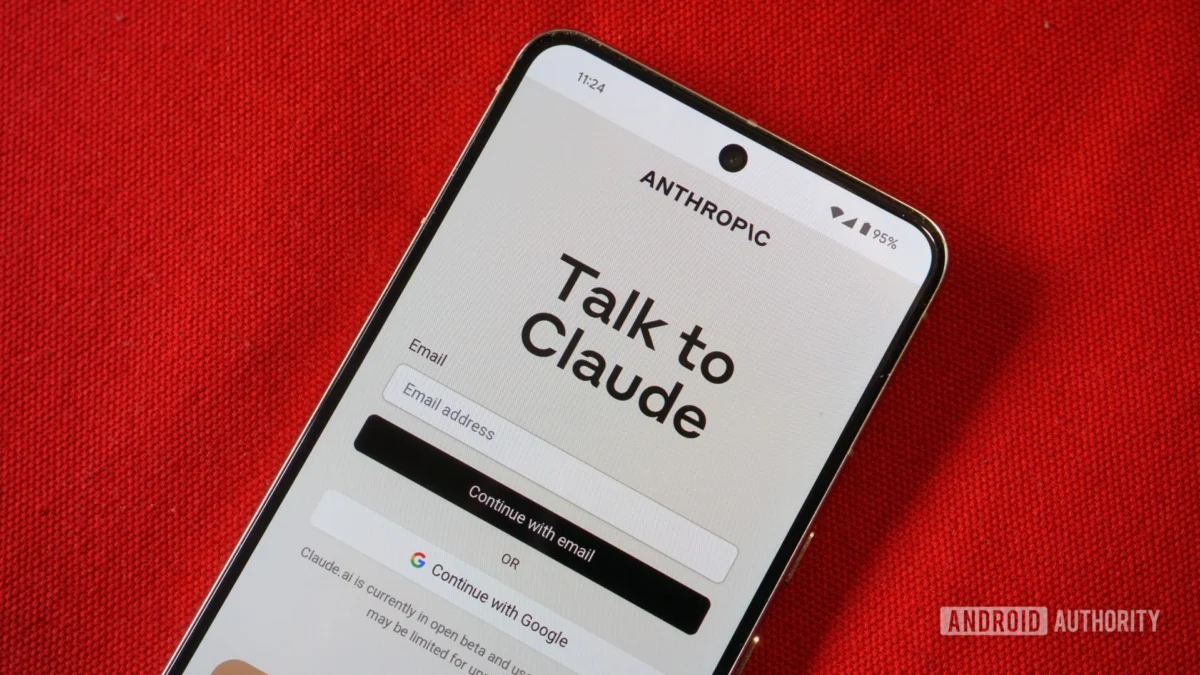
In the rapidly evolving landscape of artificial intelligence, we are witnessing a fundamental shift from chatbots that simply provide information to "AI agents" that perform actions. Companies like Anthropic have pushed the boundaries of what models like Claude can accomplish, moving toward a future where an AI might manage your schedule, process your invoices, or navigate complex web interfaces. However, this vision has long been hindered by a critical security bottleneck: the authentication wall.
For years, the prospect of granting an AI model access to one’s login credentials has been the third rail of cybersecurity—a move that most security-conscious users would flatly refuse. Today, that barrier is being dismantled. 1Password has officially launched a new integration for Claude, providing a sophisticated bridge that allows the AI to authenticate users on websites without ever "seeing" or storing the underlying credentials.
The Security Paradox: Balancing Capability with Privacy
The fundamental tension in modern AI development is the trade-off between autonomy and security. To be truly useful, an AI agent needs context. It needs to know who you are, what accounts you hold, and how to access them. Yet, giving an AI model, which operates in the cloud and utilizes massive neural networks, your passwords—even if they are encrypted—introduces a massive attack surface.
If an AI model were to "know" your password, it could theoretically be hallucinated, leaked, or exposed through a model-poisoning attack. For privacy-conscious users, the idea of an AI agent acting as a proxy for their digital identity has been a non-starter.
1Password’s new solution addresses this by essentially acting as a "secure hand-off" mechanism. Instead of the AI holding the keys to the kingdom, it acts as a polite visitor that requests entry, while 1Password acts as the digital doorman, verifying the identity and ensuring the "guest" never sees the passcode.
Chronology: The Path to Agentic Integration
The integration of password managers with generative AI is not a sudden development, but the culmination of months of rapid-fire innovation in the agentic AI space.
- Early 2024: Anthropic and other AI labs began demonstrating "computer use" capabilities, allowing models to control a cursor, click buttons, and type in text fields. These demos showcased the potential for AI to automate mundane tasks like filling out forms or checking dashboard statistics.
- Mid-2024: Security concerns reached a boiling point as AI researchers highlighted the risks of "prompt injection," where a malicious website could trick an AI agent into revealing its system instructions or stored credentials.
- Late 2024: 1Password began developing its "Agentic Mode" architecture, recognizing that the rise of browser-based AI agents was inevitable and that the standard autofill paradigms of the last decade were no longer sufficient.
- Current Status: 1Password for Claude is now available for Mac users, signaling the first major step toward a standardized protocol for AI authentication.
How the Mechanism Works: Biometric Gating
At the heart of this integration is a "Human-in-the-Loop" philosophy. When Claude reaches a login page—for instance, if you ask it to check your Stripe dashboard or redeem a credit on Audible—the workflow is as follows:
- The Request: Claude detects a login requirement and triggers an API call to the 1Password browser extension.
- The Verification: The 1Password interface surfaces to the user, identifying exactly which site is requesting access and which credential is being requested.
- The Human Gatekeeper: The user must provide biometric authentication (TouchID or password) to approve the request. This is the critical security layer; the AI cannot "self-authorize" the use of a credential.
- Injection: Once approved, 1Password injects the credentials directly into the DOM (Document Object Model) of the browser page. Crucially, these credentials never enter the AI’s memory, context window, or logs.
- Post-Fill Security: After the credentials are injected, 1Password monitors the state of the page. If the submission fails or if the session is completed, 1Password wipes the data, ensuring no remnants of the login attempt remain exposed.
Supporting Data: Why Authentication is the Primary Friction Point
User surveys consistently highlight that authentication is the single most frustrating aspect of modern web interaction. According to data from a recent poll conducted by Android Authority, nearly 800 users identified login-related friction as their primary annoyance in the current digital ecosystem.
This friction is precisely why users have been tempted to bypass security best practices, such as reusing passwords across multiple sites or storing passwords in plaintext documents. By removing the need for manual intervention during the login phase, 1Password isn’t just enabling AI—it is making secure habits more convenient than insecure ones.
The technical architecture is designed to prevent "credential leakage." By restricting the AI’s access to a single, time-limited interaction, 1Password ensures that even if the AI were compromised or tricked by a malicious actor, the damage would be limited to that specific session.
Official Responses and Strategic Vision
In a blog post detailing the integration, the 1Password engineering team emphasized that their goal is to provide a "zero-knowledge" environment for AI. "We believe that AI agents are the future of productivity," a company spokesperson noted. "However, the future cannot be built on top of compromised credentials. By keeping the AI strictly separated from the sensitive data, we allow for automation without sacrificing the integrity of the user’s vault."
Industry analysts have praised the move as a necessary evolution for the password management category. "For a long time, the password manager was a passive vault," says cybersecurity analyst Mark Henderson. "1Password is transforming it into an active security layer. By creating an ‘Agentic Mode’ that works not just for Claude, but potentially for other browser agents, they are positioning themselves as the standard-bearer for AI identity verification."
Implications for the Future of AI Agents
The implications of this technology extend far beyond the convenience of logging in.
1. The Death of Manual Data Entry
We are approaching a point where "the web" will no longer be something humans browse, but something humans direct. Instead of clicking through five menus to check a report, you will simply ask an agent to do it. With 1Password handling the authentication, the "chore" of navigating login screens becomes a seamless background process.
2. Standardizing AI Security Protocols
The industry is currently in a "Wild West" phase regarding AI agent security. By introducing a formal, biometrically gated protocol, 1Password is effectively proposing a standard that other AI developers will likely have to adopt. If Anthropic, OpenAI, and Google want their agents to be trusted, they will need to implement similar "human-in-the-loop" handshakes.
3. The Question of "Agentic Intent"
While 1Password has solved the authentication problem, it has not solved the intent problem. If you authorize an agent to log into your banking dashboard, you are trusting that the agent will only perform the specific tasks you requested. The security of the "credential" is now safe, but the security of the "account actions" remains a secondary challenge.
As we move forward, we will likely see a new category of "agent-aware" security software that monitors not just who is logging in, but what the AI is attempting to do once it is inside the account.
Conclusion: A Measured Step Forward
The integration of 1Password with Claude represents a maturation of the AI agent ecosystem. By acknowledging that users will never feel comfortable giving AI direct access to their passwords, 1Password has created a model that is both highly functional and deeply secure.
For the average user, this means the dream of a truly capable personal assistant is one step closer to reality. While we must remain vigilant about the broader implications of allowing AI to operate within our private accounts, the technical safeguards provided by this integration represent the most responsible path forward. We are no longer just browsing the web; we are delegating it—and for the first time, we can do so without handing over the keys to our digital lives.











