Lina Irawan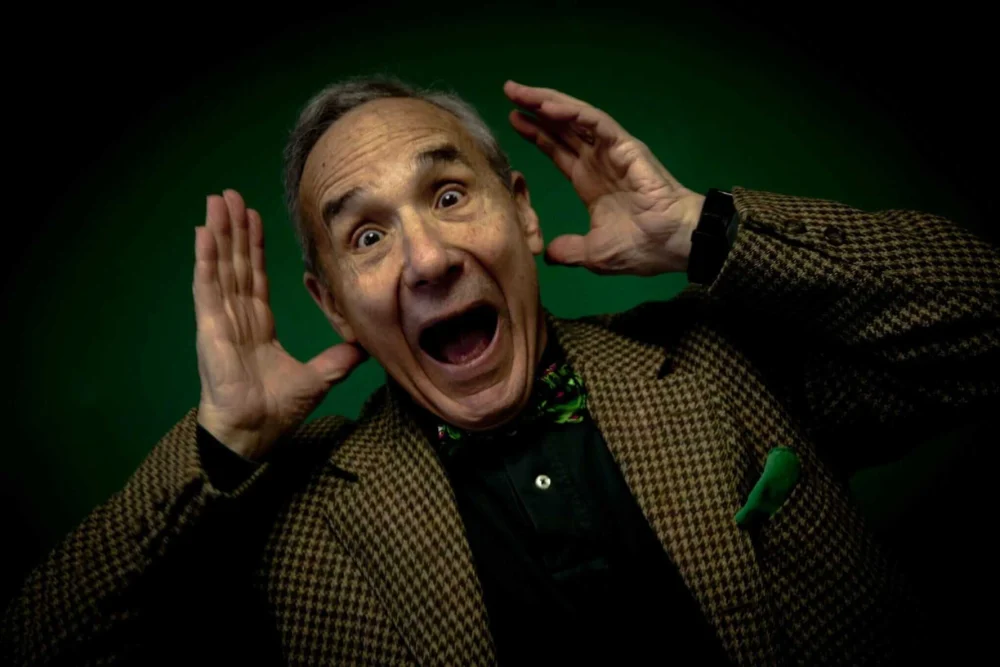
In the high-gloss, algorithm-driven landscape of modern Hollywood, where corporate consolidation has turned the film industry into a risk-averse machine, one small office in Long Island, New York, remains a bastion of pure, unfiltered chaos. Inside, Lloyd Kaufman—the 80-year-old co-founder and the restless heart of Troma Entertainment—is a study in contradictions.
On a recent video call, Kaufman is a whirlwind of activity, his hands perpetually occupied: one clutching a compact vape pen, the other a massive can of sugar-free energy drink. He is fielding calls from across time zones and barking instructions to a rotating cast of young assistants bustling in and out of the office. For any other octogenarian, the pace might be grueling. For Kaufman, it is simply a Tuesday at the helm of the longest-running independent film studio in cinematic history.
A Legacy Forged in Grime and Glitter
Founded in 1974 by Kaufman and his creative partner Michael Herz, Troma Entertainment rose to prominence by embracing the aesthetic of the "B-movie" and supercharging it with nihilistic wit, grotesque practical effects, and a punk-rock ethos. While the major studios were busy refining the blockbuster formula, Troma was busy defining the cult classic.
Last week, that half-century of provocation was formally recognized when Kaufman was honored with a Raindance Icon Award. The producer, characteristically tied to his desk, sent his daughter to London to accept the honor on his behalf. Reflecting on the accolade with a dry, self-deprecating wit, Kaufman quipped, "Roger Corman is dead, Tobe Hooper is dead—who else can they give awards to? I’m the last one left!"
Chronology of an Independent Empire
To understand the trajectory of Troma is to understand the evolution of independent film distribution. The company did not just make movies; they engineered a subculture.
- 1974: Lloyd Kaufman and Michael Herz establish Troma Entertainment, setting the stage for decades of low-budget, high-concept filmmaking.
- 1984: The release of The Toxic Avenger marks a turning point for the studio, establishing the Troma "brand"—a blend of gore, farce, and social satire that would become a cult phenomenon.
- The 1990s and Beyond: Troma becomes a talent incubator, identifying and nurturing voices like James Gunn, Oliver Stone, Billy Bob Thornton, Samuel L. Jackson, and Kevin Costner long before they became household names.
- The Digital Transition: Foreshadowing the industry’s shift toward home media, Kaufman and Herz pushed early into the VHS and DVD markets, often distributing titles long before the technology had achieved widespread consumer saturation.
- The Present Day: The studio continues to evolve, maintaining its independence through "Troma Now," their dedicated streaming platform, and ongoing production cycles that reject the constraints of major studio oversight.
The Fan-Fuelled Engine
When asked about the secret to Troma’s longevity, Kaufman is quick to deflect credit away from himself. "Troma is a fan-fuelled company," he notes. "The only reason we’re still in business, other than Michael Herz running the company, is because our fans from the very beginning have always been very young and quick adapters."
This adaptability is perhaps best exemplified by their early adoption of new media. Kaufman recalls a pivotal moment when David Schultz, now CEO of Vitagraph, pushed the studio to invest in DVD production. "We were way out front," Kaufman says. "We had two or three good years. We got into video cassette very early, before anybody else, at least with the kind of movies we were making. The Toxic Avenger was a seminal movie of that era."

This forward-thinking mindset extended to the digital age. About twenty years ago, following the advice of his daughter, Kaufman began exploring the potential of the internet. The result was "Troma Now," a streaming service that, while modest in size, has proven remarkably resilient. "For once in 53 years, we have a somewhat predictable six months ahead of us," he admits. "We know we can meet the payroll and keep doing what we do on the distribution end."
The State of the Industry: A "Frightened" Mainstream
Kaufman’s view of the modern Hollywood establishment is, as one might expect, scathing. He perceives a profound disconnect between the "suits" in the boardroom and the reality of the creative process.
"The mainstream is frightened," he says. "From what I’ve seen anecdotally, they don’t last long. All the suits walk around in cars they don’t own, in big empty houses, huffing and puffing at restaurants that don’t have phone numbers."
However, rather than despairing for the future of cinema, Kaufman sees the current climate as an unprecedented opportunity for the "scrappy." He points to the democratization of filmmaking technology as a great equalizer. "The bright side is that one can make a movie for $2,000 and it can be terrific," he says, citing the work of Sean Baker (Take Out, Tangerine) as a prime example of someone who bridges the gap between raw, independent passion and critical acclaim. "The point is: if people can read and write, they can make something."
Marvel, Mythology, and the Troma Universe
Perhaps the most surprising aspect of Kaufman’s legacy is his deep, historical connection to the comic book genre. Long before the Marvel Cinematic Universe dominated global box offices, Kaufman was drawing inspiration from the pages of Stan Lee’s creations.
"I went to Yale University and majored in Chinese Studies," he recalls. "The one thing I got out of Yale, other than learning the rich kids had drugs, is Marvel Comics." He notes that the late Stan Lee was a significant supporter of Troma, even writing the forward to one of Kaufman’s books. In that text, Lee famously compared the impact of The Toxic Avenger to the introduction of Spider-Man, noting that both characters "put a new face" on their respective mediums.
"The Troma Universe has very much, I think, birthed the Marvel Cinematic Universe," Kaufman asserts. With mentees like James Gunn—who famously co-wrote Troma’s Tromeo and Juliet—now steering the ship at DC Studios, the DNA of Troma’s anarchic spirit is undeniably woven into the fabric of modern superhero cinema.

Future Projects and Final Reflections
Despite his long tenure, Kaufman shows no sign of slowing down. He is currently in the final stages of directing The Power of Positive Murder, a "very loose" adaptation of Dostoevsky’s Crime and Punishment.
"The idea is more about a young Gen X man in America who has been going along believing in the American dream, who went to college, and now what can you do?" Kaufman explains with a laugh. "You’ve got to murder your landlord. It’s a rather nihilistic film, and just to make sure it doesn’t make money, we shot it in black and white."
As the conversation draws to a close, the legendary producer offers one final, characteristic piece of wisdom. When asked about his own talent, he remains humble, almost dismissive, but quickly pivots to the philosophy that has kept Troma alive for over five decades.
"I don’t know if I have any real talent," he says. "But what we do have is a talent for recognizing talent. That has served us well, and also listening to young people as opposed to the ones we’re supposed to be listening to. That’s good advice, I think."
In a world of pre-packaged entertainment and focus-grouped content, Lloyd Kaufman remains an outlier—a man who still believes that if you have enough energy, a bit of grit, and the courage to ignore the rules, you can change the world, one toxic, low-budget masterpiece at a time.

 Layla Zulfa
 Sagoh
Sagoh