
 Pevita Pearce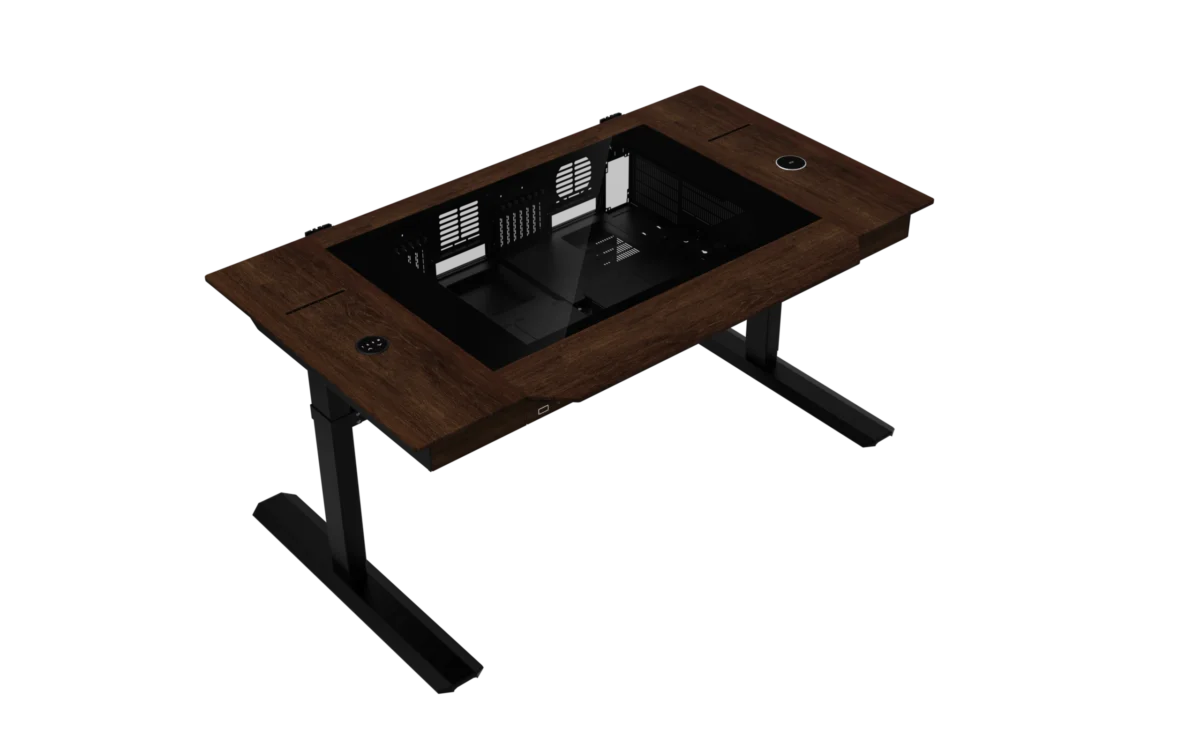
In the evolving landscape of enthusiast PC hardware, the line between furniture and high-performance computing chassis continues to blur. Lian Li, a manufacturer long synonymous with premium aluminum craftsmanship and innovative case design, has officially expanded its “desk-as-a-chassis” lineup. The company has introduced a striking new variant of its DK07 motorized standing desk, featuring a sophisticated dark walnut finish.
Priced at $1,399.99, this latest iteration is designed to serve as the centerpiece for the ultimate workstation or gaming setup. By integrating a full-featured PC chassis directly into the desk surface, Lian Li is targeting a specific segment of the market: power users who demand both aesthetic elegance and uncompromising hardware support. The desk is available for purchase starting today through major global retailers, including Amazon, Newegg, Caseking, Overclockers UK, and SCAN.
Main Facts: A Convergence of Utility and Luxury
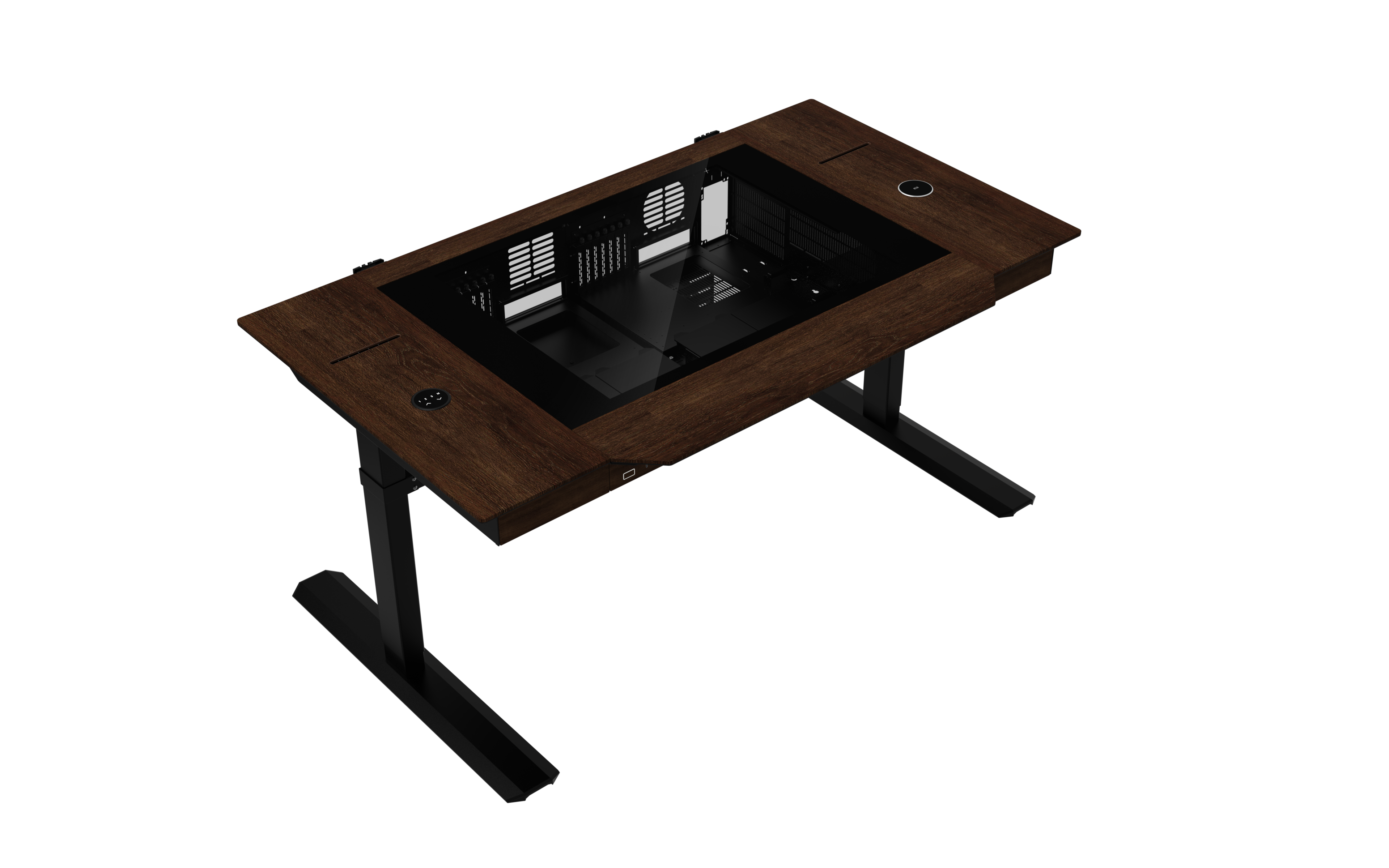
At its core, the Lian Li DK07 is a masterclass in space management. The desk functions as a fully motorized standing workstation that transitions seamlessly from a sitting to a standing position, addressing the ergonomic requirements of modern professionals and creators. However, its primary differentiator is its internal architecture. The tabletop surface features a tempered glass panel that reveals an expansive internal bay capable of housing either one or two complete E-ATX PC systems.
This integration eliminates the need for bulky floor-standing towers, effectively turning the desk into the PC itself. The build quality is commensurate with its price point, featuring high-grade materials and a refined dark walnut wood finish that allows the desk to blend into professional office environments just as easily as it anchors a high-end gaming room.
The Evolution of the DK Series: A Chronological Perspective
The concept of the “desk PC” is not new, but Lian Li has been its most persistent champion. The original DK series garnered a cult following for its daring approach to hardware integration. Since the initial launch of the current-generation DK07 architecture back in 2024, the product line has undergone iterative refinements to address user feedback regarding thermal management, cable routing, and material finishes.
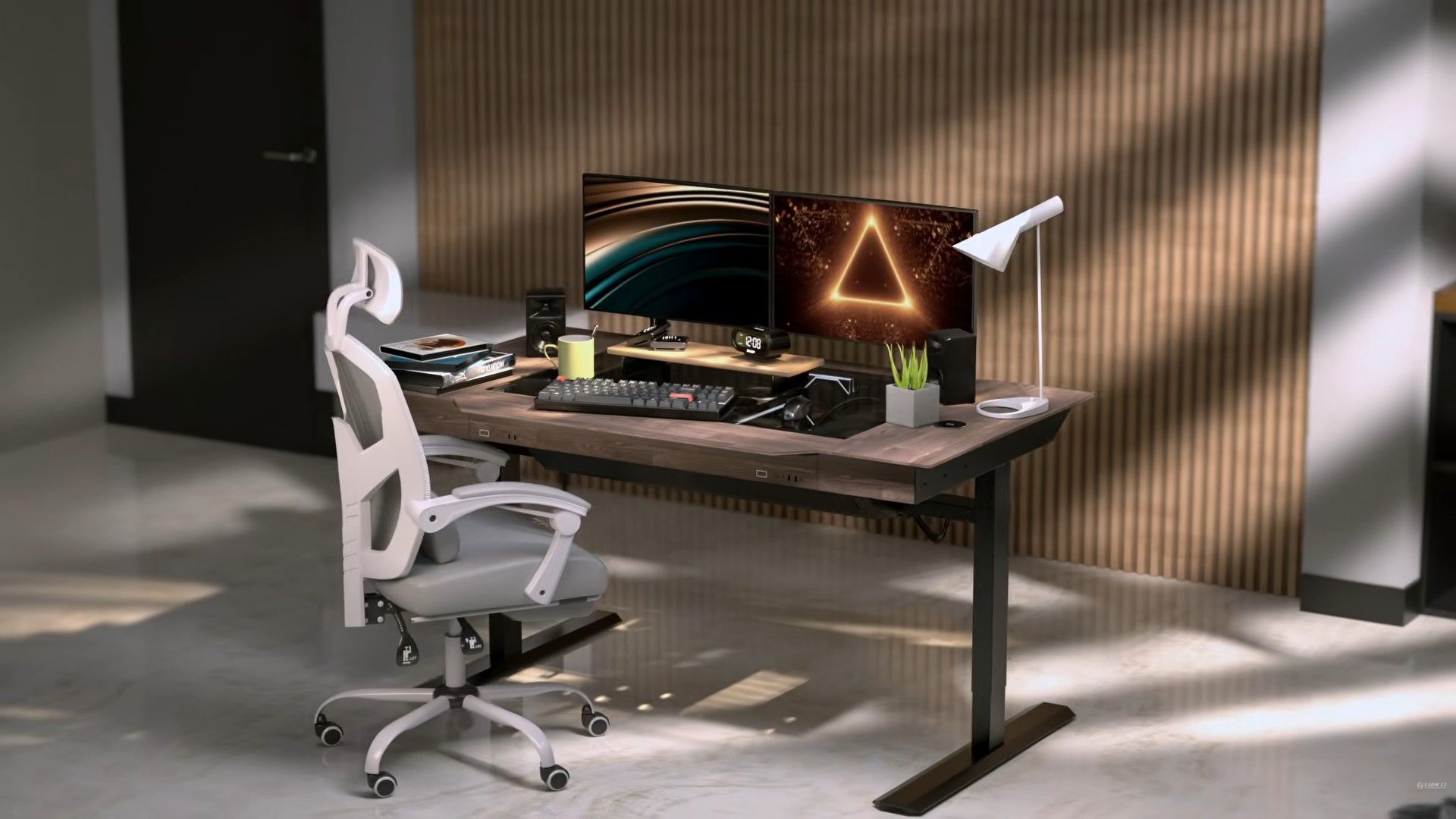
The introduction of the dark walnut wood variant marks a shift in the brand’s strategy. While previous models leaned heavily into the "cybernetic" aesthetic—emphasizing cold steel, aluminum, and RGB lighting—the new wood finish represents a pivot toward a more timeless, sophisticated design language. This shift acknowledges that the target demographic for such a high-end investment often desires a desk that serves as a piece of furniture first, and a powerhouse PC second.
Technical Specifications: Supporting the Enthusiast’s Vision
For those looking to move their hardware into the DK07, the technical specifications are nothing short of massive. The internal chassis is engineered for extreme flexibility, supporting both horizontal and vertical GPU orientations. Users can accommodate graphics cards up to 383mm in length, ensuring compatibility with the latest high-wattage, oversized cooling solutions.
Storage and Power Management
The storage capabilities are equally impressive. In a single-system configuration, the desk can accommodate up to 10 x 3.5-inch HDDs and 6 x 2.5-inch SSDs, making it an ideal candidate for professional workstations or home media servers. For power, the unit supports up to two full-size 220mm PSUs, ensuring that even a dual-system setup—perhaps one machine for rendering and one for gaming—receives adequate, stable power.
Cooling and Thermal Architecture
Thermal management in a desk-based chassis is notoriously difficult, yet Lian Li has employed a modular approach.
- Single System Setup: Supports a massive 480mm radiator or up to four 360mm radiators, with capacity for 17 x 120mm fans.
- Dual System Setup: Supports up to two 360mm radiators and 12 x 120mm fans.
The airflow design utilizes the depth of the desk to create a tunnel of cool air, exhausting heat through the rear and sides, which helps keep the tempered glass surface from becoming a heat trap.
Connectivity and Ergonomics
Each system within the desk benefits from its own dedicated front-panel I/O. This includes:
- Dual USB 3.1 Type-C ports per system.
- Dual USB 3.0 Type-A ports per system.
- Individual power and reset buttons.
- Dedicated mic/audio jacks.
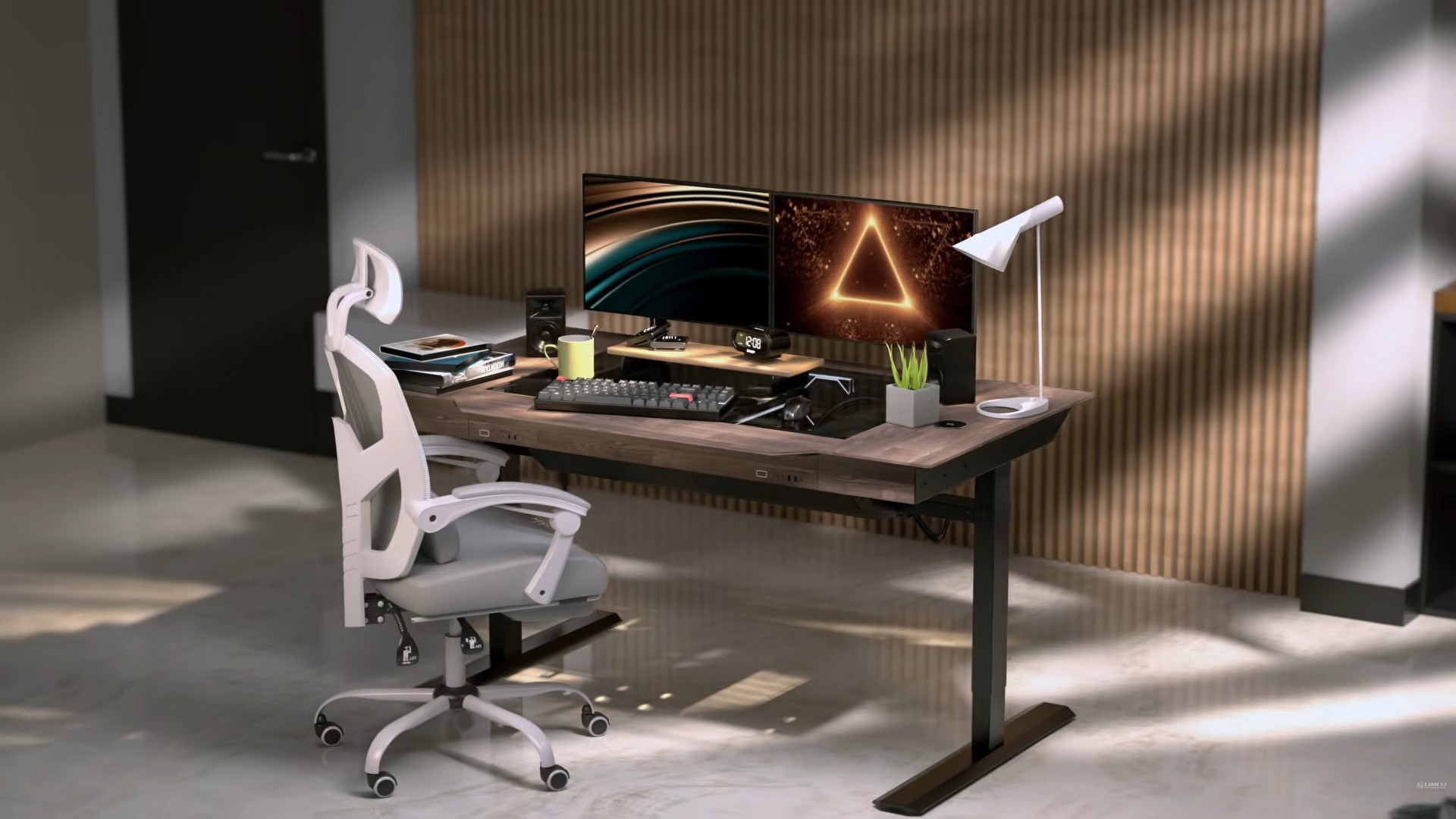
Beyond the hardware, Lian Li has integrated practical amenities such as a built-in wireless charging pad for mobile devices, two integrated drawers for peripheral storage, and a robust internal cable management system. Dual cable pass-through holes and a rear cable tray ensure that the desk remains clutter-free, even when managing the massive amount of wiring required for two PCs.
Official Positioning: Who is the DK07 For?
Lian Li has positioned the DK07 not as a mass-market product, but as an “enthusiast-grade solution.” The company’s messaging emphasizes the efficiency of space. By consolidating the PC and the workspace, the user saves significant square footage, while the tempered glass top transforms the internal components into a static, "museum-style" display.
The $1,399.99 price tag, while significant, is viewed by the manufacturer as a value proposition when analyzed against the cost of independent components. A high-quality, motorized standing desk of this size often commands a premium price on its own. When combined with the cost of two high-end, feature-rich PC chassis, the DK07 begins to look like a rational investment for those who were already planning a top-tier build.
Implications for the PC Hardware Market
The release of this new variant suggests a broader trend in the PC industry: the "lifestyle-ification" of hardware. As users spend more time at their desks, the aesthetic and ergonomic integration of technology has become a priority.
The Decline of the "Tower"
The DK07 challenges the traditional form factor of the PC. As components have become larger and more power-hungry, the standard mid-tower case has become the focal point of a room. By moving the PC into the furniture, Lian Li is effectively removing the "visual noise" associated with traditional desktop setups.
Future-Proofing and Modularity
The decision to retain the original internal design while updating the exterior finish suggests that Lian Li is confident in the longevity of the DK07’s architecture. The chassis is modular enough to accommodate current and future GPU and motherboard form factors, including the long-term support for E-ATX standards. This is a critical factor for buyers who are dropping $1,400 on a desk; they expect the desk to outlive at least three or four generations of internal PC hardware.
Niche vs. Mainstream
While it is unlikely that desks-as-PCs will replace the traditional tower for the average user, the DK07 signals a maturing market. Manufacturers are realizing that enthusiasts are willing to pay for a premium "desk experience" that combines build quality, ergonomics, and hardware capacity. Whether this leads to more affordable "entry-level" desk PCs in the future remains to be seen, but for now, the DK07 stands as a benchmark for what is possible when furniture design meets extreme PC engineering.
Conclusion
Lian Li’s update to the DK07 with the dark walnut finish is more than just a fresh coat of paint; it is a reaffirmation of the company’s commitment to the intersection of luxury furniture and high-performance computing. For the enthusiast who wants to hide the clutter of cables and chassis, while simultaneously showcasing their hardware, this desk offers a rare, all-in-one solution.
While it remains a niche product, its existence proves that for a certain segment of the market, the desktop is no longer just a place to put a computer—it is the computer. With its massive cooling support, dual-system flexibility, and elegant new finish, the DK07 is poised to remain the gold standard for luxury workstation setups throughout 2024 and beyond.


 Reynand Wu




