Evan Lee Salim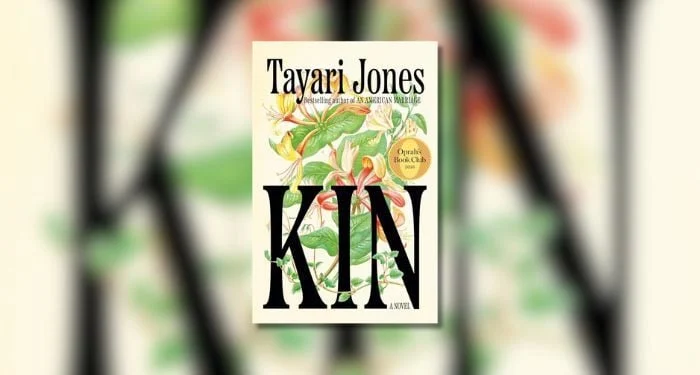
In the landscape of 2026 literature, few titles have managed to achieve the immediate, thunderous acclaim that has greeted Tayari Jones’s latest novel, Kin. Since its release, the book has not only dominated bestseller lists but has secured a prestigious spot as an Oprah’s Book Club pick, cementing its status as the most significant literary conversation starter of the year.
For readers and critics alike, Kin is not merely a page-turner; it is a profound exploration of identity, sisterhood, and the enduring tension between personal ambition and historical weight. As we pass the midpoint of 2026, it is already clear that Kin is a mandatory inclusion for any "Best Books of the Year" list, marking another milestone in the illustrious career of one of contemporary literature’s most vital voices.
The Evolution of an Authorial Powerhouse
Tayari Jones is no stranger to the pinnacle of literary success. While Kin has catapulted her back into the cultural zeitgeist, her trajectory has been one of consistent, meticulous excellence. Long before she became a household name, Jones was honing her craft as a graduate student, developing the keen eye for domestic drama and societal critique that would later define her work.
Her 2018 novel, An American Marriage, served as a watershed moment in her career. That work, which was also an Oprah’s Book Club selection, showcased her ability to weave intimate, heart-wrenching narratives within the framework of systemic injustice. An American Marriage dealt with the catastrophic intersection of mass incarceration and marital loyalty; with Kin, Jones shifts her lens to the formative years of two women, proving that her range extends across decades and emotional registers with equal facility.
A Chronology of Bond and Betrayal
At the heart of Kin lies the relationship between Vernice and Annie, two young women whose lives are inextricably linked from infancy. The narrative unfolds through alternating perspectives, meticulously tracing the evolution of their friendship from their shared beginnings as motherless children raised by extended family—an aunt and a grandmother, respectively.
The Formative Years
The early chapters of the novel offer a nostalgic, yet biting, look at their childhood. Jones masterfully captures the sensory details of their upbringing in the rural South, grounding the reader in a time and place where the bonds of kinship were both a sanctuary and a constraint. The girls are "cradle friends," a term that suggests a connection deeper than biology.
The Diverging Paths
The narrative tension peaks when a singular, life-altering decision made by Annie creates a permanent rift in their friendship. This "sliding doors" moment acts as the engine for the remainder of the book. As they mature, their paths diverge sharply:
- Vernice’s Path: She moves toward academic achievement, attempting to navigate the upper echelons of African American society. Her journey is defined by the pressures of intellectual performance and the desire for social mobility.
- Annie’s Path: She leans into the working-class experience, driven by the heart’s desire and a search for autonomy.
Their stories unfold against the backdrop of the emerging Civil Rights Movement, providing a macro-historical context that mirrors their micro-personal struggles.
Supporting Data: Thematic Depth and Cultural Resonance
The brilliance of Kin lies in its duality. It is a story of profound humor and levity, yet it is simultaneously a rigorous investigation of the American experience for Black women in the mid-20th century.
The "Double Consciousness" of Mobility
Jones utilizes the setting of the mid-century South to highlight the "new generation" of Black Americans who were finally gaining access to forms of upward mobility previously denied to their ancestors. However, this access is portrayed not as a panacea, but as a treacherous navigation of white-dominated systems.
Academic success for Vernice does not equate to safety; rather, it introduces new, sophisticated forms of alienation. Conversely, Annie’s pursuit of personal fulfillment in the working class brings her face-to-face with the raw, systemic violence of the era. The novel forces the reader to confront the reality that for Black women during this period, "freedom" was a relative term, constantly mitigated by the oppressive norms of the time.

The Queer Experience
A significant and frequently lauded aspect of the novel is its exploration of the queer Black female experience. By centering this narrative within a period of high historical tension, Jones expands the canon of Southern literature. She portrays the marginalization of her characters not as a secondary subplot, but as an integral component of their struggle for self-actualization.
Official Responses and Critical Reception
The critical consensus on Kin has been overwhelmingly positive, with reviewers praising Jones’s "expert storytelling" and her ability to handle complex socio-political themes without sacrificing the emotional core of her characters.
Oprah Winfrey’s decision to include Kin in her book club was a major catalyst for its commercial success. In discussions surrounding the pick, the focus has remained on the novel’s universality: the feeling of being "tethered" to one’s beginnings, no matter how far one travels or how much one changes.
"Jones has achieved something remarkable," noted one prominent literary critic. "She has written a novel that feels like a classic of the mid-20th century while maintaining a contemporary sharpness that speaks directly to the anxieties of 2026."
Implications: The Legacy of Kin
The success of Kin carries significant implications for the publishing industry and the broader cultural landscape.
The Demand for Nuanced Intersectionality
Kin proves that readers are hungry for stories that refuse to simplify the experience of Black womanhood. By exploring the divergence of two women from the same small town and similar circumstances, Jones effectively dismantles the "monolith" myth. The book serves as a template for future authors who wish to weave history, identity, and personal narrative into a singular, cohesive work of art.
Impact on Southern Literature
For decades, the Southern novel has been dominated by certain tropes. Kin subverts these expectations by centering the voices of those who were traditionally relegated to the periphery. By placing the Civil Rights Movement not as the sole focus, but as a volatile atmosphere in which personal lives are lived, Jones has elevated the genre, proving that the personal is always, inextricably, political.
Why It Matters Now
As we navigate our own period of societal division in 2026, Kin provides a mirror to the past that illuminates the present. The novel’s central theme—that we are defined as much by those we leave behind as those we keep with us—resonates with a modern audience grappling with its own search for community and belonging.
Conclusion: A Must-Read for the Modern Era
Kin is a masterclass in narrative tension and character development. Through Vernice and Annie, Tayari Jones invites us to reflect on the gravity of our choices and the enduring power of the bonds we forge in our youth.
If you are looking for a book that challenges your intellect while simultaneously breaking your heart, Kin is the definitive choice for your 2026 reading list. It is a story that lingers long after the final page is turned, a testament to Jones’s position as one of the most essential writers of our time. Whether you are a long-time admirer of her work or a newcomer to her prose, Kin is an experience you cannot afford to miss.
As we look ahead to the remainder of the year, one thing remains certain: Kin will remain the benchmark against which all other fiction is measured.

 Layla Zulfa
 Ali Ikhwan