Nana
Nana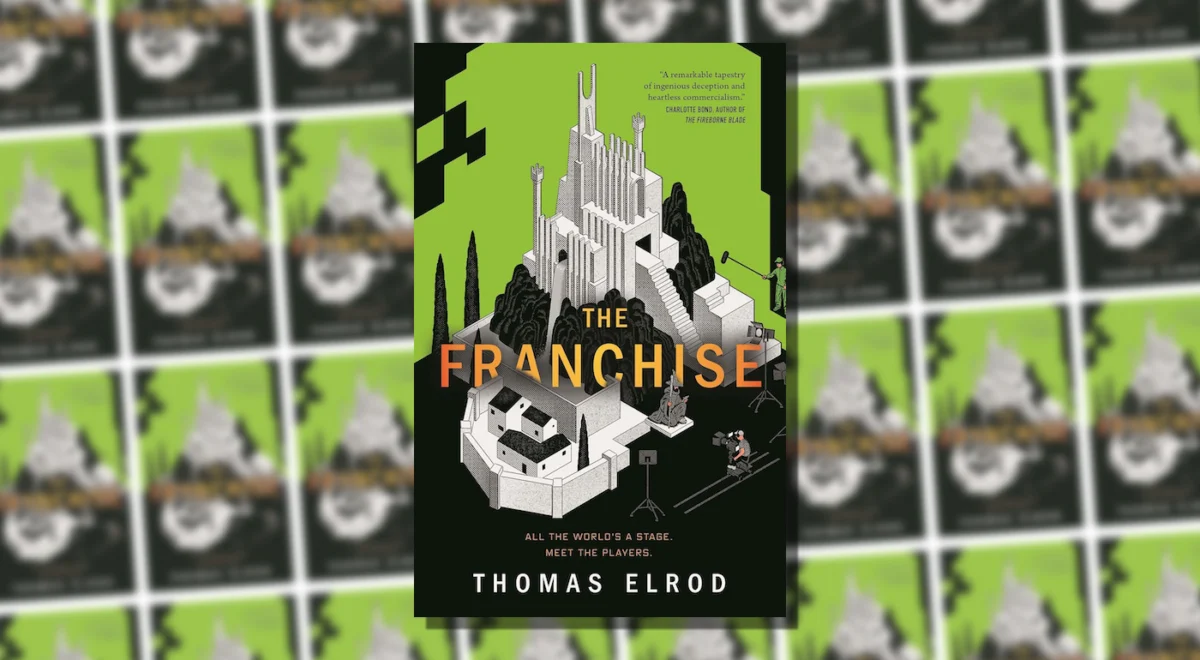
With a sudden, sharp crackle of electricity and the frantic flickering of an LED interface, your sense of self dissolves. The memories that defined your life—your first love, your failures, the specific way you take your coffee—are sequestered into a dormant lobe of your brain. In their place, you are handed a scythe, a name like "Peasant Extra #3," and a twenty-acre plot of land in the sprawling, simulated world of Malicarn. You have no idea how to farm, yet the muscle memory is already beginning to twitch in your hands. You aren’t just acting; you are being manufactured. Congratulations. Welcome to The Franchise.
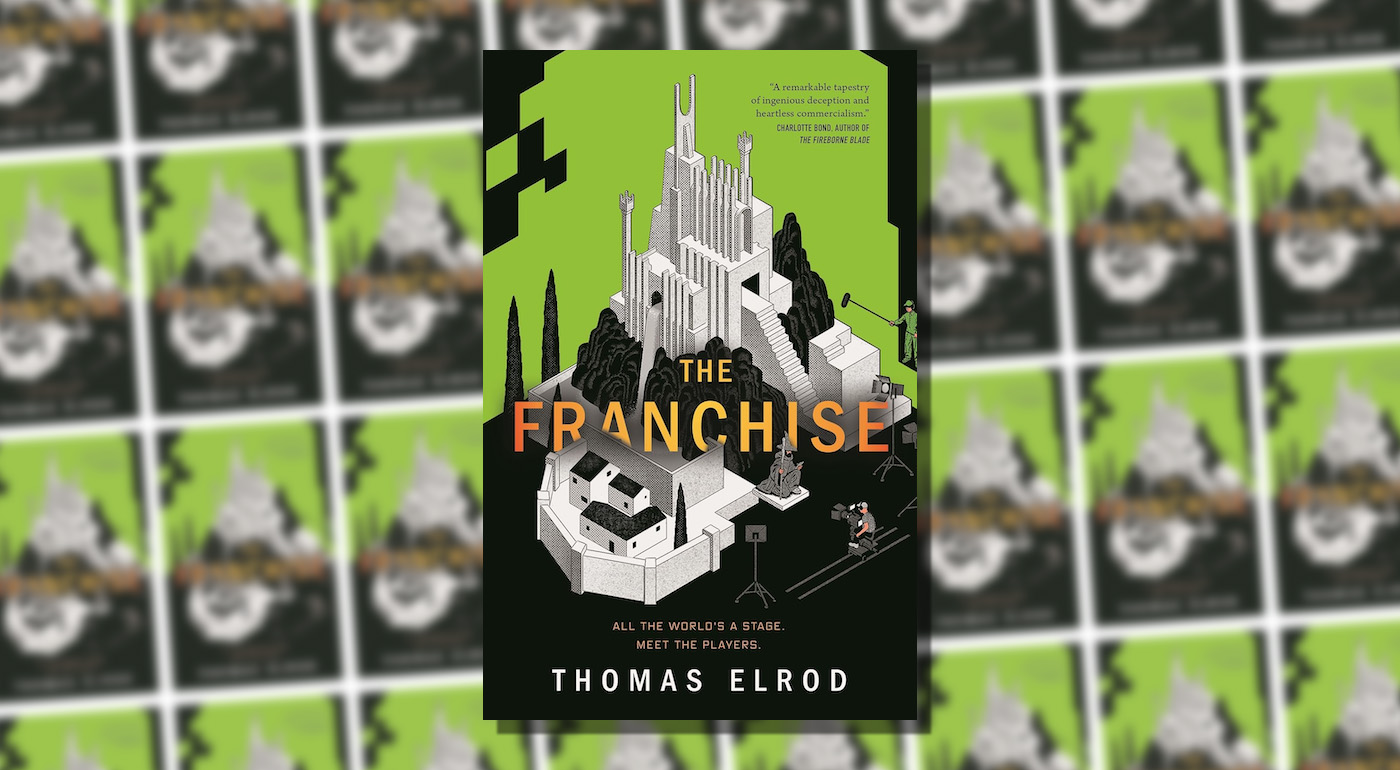
Thomas Elrod’s latest novel, The Franchise, is more than a satirical jab at the entertainment industry; it is a haunting meditation on the commodification of identity. Set in a 2060 where intellectual property has moved from the screen to the cellular level, the book explores the terrifying logical conclusion of our modern obsession with "shared universes."
The Genesis of Malicarn: From Page to Prison
The history of Malicarn is a microcosm of twentieth-century literary success. Created in the 1960s by the French writer Jean-Danton Souard, the series emerged during the heightened anxiety of the Cuban Missile Crisis. The fatalistic, lyrical prose of Souard’s work resonated with a public gripped by the fear of nuclear annihilation. His world—a realm thrown into chaotic flux by the sudden, violent re-emergence of magic—became a global phenomenon.
For decades, Souard maintained a draconian hold on his creation, shielding it from the encroaching "vultures" of Hollywood and toy manufacturers. However, upon his death, his son Daniel proved significantly more malleable. The legacy of Malicarn was swiftly liquidated: a big-budget cinematic universe followed, then video games, merchandise, and the ubiquitous foam swords of a multi-billion-dollar empire. By 2040, the franchise had crossed the final frontier. It stopped being a story and started being a location.
A Chronology of Immersion
The "Malicarn" experience is not a virtual reality simulation; it is a physical, geopolitical reality. The Portuguese island of Madeira has been largely leased to the studio, serving as a permanent, year-round set for the project.
The ambition behind this transformation was spearheaded by two figures: the charismatic visionary Jules Walker and the laconic, brilliant neuroscientist Lilly Kaminsky. Their goal was to move beyond method acting. Through the use of proprietary neuroscanners, they perfected the art of personality uploading. Actors are no longer tasked with "becoming" their roles; their brains are effectively overwritten, keeping them in character for months at a time. Every emotion—the genuine terror of a skirmish, the authentic ache of unrequited love, the crushing weight of simulated guilt—is, for the actor, entirely real.
"The grandest and most immersive form of storytelling," Jules Walker famously called it. But as the narrative of The Franchise makes clear, when you prioritize the immersion of the audience over the humanity of the participant, the story inevitably begins to fracture.
The Human Cost: A Cast of Thousands
Elrod masterfully structures his narrative across a dozen disparate perspectives, jumping through time to show the erosion of the self. We see Buck Douglas, a struggling mason who finds himself flirting with revolutionary ideals, and Queen Hannah I, a seventeen-year-old monarch stifled by the machinations of her regents. By the book’s present-day of 2060, these characters represent the first generation born into the Malicarn, human beings who possess no context for a world outside the script.
Contrast this with the "Professional Actors," such as Glenn Mackey and Brian Doyle. Known within the fiction as the wizard Gregorian and the Captain of the Guard, Kreek, they are among the few whose brains remain their own. They are the "guides," tasked with nudging the narrative toward the most commercially viable plot points.
The technical architecture behind this is chilling. Readers are given a front-row seat as Kaminsky and Walker "pry brains apart," injecting specific traumas or griefs to round out a character’s emotional arc, then standing back to observe the fallout. Beneath them, at a further remove, are the legions of fans, studio executives, and intelligence agents monitoring the experiment, treating the human tragedy as a ratings-driven feedback loop.
Supporting Data: The Sequels That Never End
Elrod’s narrative is grounded in a critique of the modern media landscape. A recurring theme in The Franchise is that the characters living within the Malicarn have never actually read Souard’s original books. They offer excuses ranging from "too long" to the clinical distractions of a hyper-stimulated age.
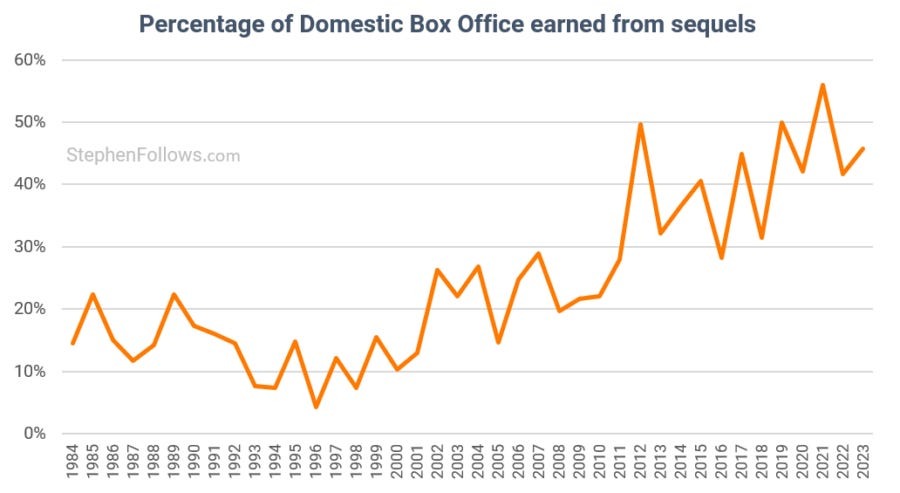
This absence of source material creates a paradox: as Malicarn becomes more physically real—more expansive and tangible—it becomes increasingly hollow, disconnected from the original creative intent. It is a reflection of a real-world trend. Data from industry analysts like Stephen Follows and The-Numbers confirms that sequels and franchise-driven content are occupying an unprecedented share of the film market.
As of 2023, the sheer volume of films released in the US that rely on pre-existing intellectual property has reached a saturation point. When a series like Marvel’s Thunderbolts arrives on the heels of thirty-five films and fourteen television shows, it ceases to be a story and becomes a self-referential knot. The original Star Wars films were syntheses of Seven Samurai, Flash Gordon, and classic literature; today’s IP is increasingly inspired only by other IP. The Franchise takes this phenomenon to its ultimate end: a world where the participants are trapped in a self-referential loop with no exit strategy.
Official Responses and Ethical Implications
The ethics of the neuro-scanning process are a point of contention within the novel. Lilly Kaminsky’s internal monologue reveals a scientist who is weary of the "silly requests" from the writers’ room. In one harrowing sequence, she uploads a memory from her father’s experience in the Iraq War—specifically, the trauma of finding a child in a storage closet who shot his captain—into an extra.
This act of "character building" creates a profound ethical breach. The extra, Frank (whose pre-Malicarn identity was a broke, aimless fan named Terry), is forced to live with the genuine psychological scars of a war he never fought. The chapter written from Frank’s perspective is a masterclass in psychological horror, capturing the childlike despair of realizing that your inner life has been stolen and replaced with someone else’s trauma.
The implications are clear: when we treat human identity as a narrative asset, we strip away the capacity for autonomy. The characters in The Franchise aren’t just "not reading the books"; they are incapable of understanding their own lives because their lives are designed to be consumed, not lived.
The Future of Storytelling?
What is the rich inner life of a character who was never written to have one? How does a mind develop when its foundational memories are reduced to a single sentence of background?
Elrod’s book forces the reader to confront these questions. By stripping away the artifice of the "hero’s journey," he highlights the cruelty of the "extra." The transition of Terry into Frank is not a transformation; it is an erasure. The tragedy of The Franchise is that the viewers—the fans outside the simulation—don’t care about the difference. They are satisfied as long as the story hits the right emotional beats.
The Franchise is an intricate, clever, and deeply unsettling pastiche of the modern "doorstopper" fantasy. It is a vessel for a much larger conversation about memory, identity, and the danger of living in a world built on sequels. As we watch the lines between reality and simulation blur in our own time, Elrod’s warning feels increasingly prophetic.
The novel is a must-read, though it comes with a warning: after finishing it, you might find yourself looking at your own memories with a suspicious eye. If you find the book wanting, don’t worry. We’ve got a neuroscanner in the back that might be able to adjust your opinion. Just don’t ask to read the original text—it’s far too long, anyway.
The Franchise by Thomas Elrod is currently available from Tor Books. For those interested in the underlying mechanics of the story, an excerpt is available on the Reactor Magazine website.

 Layla Zulfa
 Ali Ikhwan