

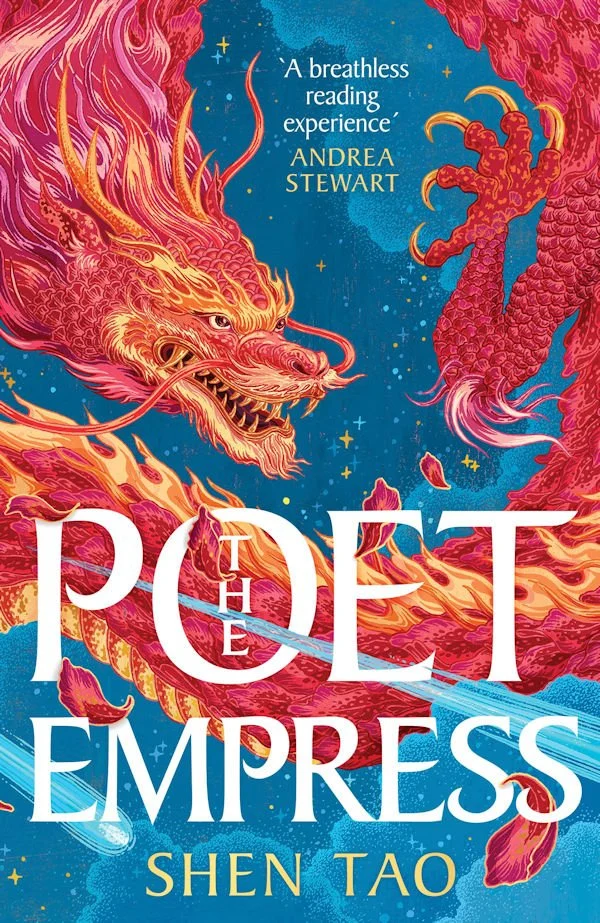
Content Warning: The following article discusses themes present in Shen Tao’s "The Poet Empress," which contains depictions of torture and sexual violence.
In the crowded landscape of contemporary fantasy, where series often stretch into bloated, multi-volume sagas, the arrival of a standalone novel that commands absolute attention is a rare occurrence. Shen Tao’s debut, The Poet Empress, has not only disrupted the status quo but has left even seasoned authors questioning the ceiling of their own craft. Combining the visceral stakes of historical court dramas with a world-building depth that rivals the genre’s titans, Tao has delivered a masterpiece that is as unsettling as it is essential.
The Genesis of a Modern Classic: Main Facts
The Poet Empress is a high-stakes, dark fantasy novel that centers on an outsider thrust into the suffocating, perilous environment of an imperial court. In this world, the very act of reading is a capital offense punishable by death, and power is inextricably linked to "Literomancy"—a magic system fueled by written poetry.
The narrative is framed as a puzzle of partial recollections, a deliberate structural choice by Tao that forces the reader to constantly re-evaluate the motivations of the characters. At its heart, the book poses uncomfortable philosophical questions: Can a protagonist find sympathy for a psychopath? Can true evil be redeemed through the conduit of love? And, perhaps most chillingly, what happens when a character—and the reader—is finally forced to confront the full, unvarnished truth of a situation?
A Chronology of Anticipation and Impact
The trajectory of The Poet Empress since its release has been marked by a rare phenomenon: a consensus of critical awe that transcends typical genre divides.
- Pre-Release: Buzz within literary circles began as early-access ARCs (Advance Reader Copies) reached reviewers. The initial feedback noted the book’s intense, often harrowing, emotional landscape.
- The Audiobook Launch: Katharine Chin’s narration has been cited as a pivotal component of the book’s success. Chin’s ability to capture the protagonist’s voice—simple, direct, yet emotionally evocative—has provided a gateway for readers who might otherwise be daunted by the book’s darker themes.
- Post-Publication: Within days of the release, the novel began appearing on "Best of the Year" longlists. Critics have noted that the book is nearly impossible to review without spoilers, leading to a "no-spoiler" movement among the reading public, who are protecting the integrity of the novel’s intricate twists.
- The Five-Day Review Process: For many literary critics, the standard 48-hour turnaround for a review proved impossible for The Poet Empress. The density of the plot and the complexity of the villain’s arc forced many to engage in multiple re-reads, as the narrative demands that the reader navigate generational trauma and sibling rivalries that only become clear in the final chapters.
Supporting Data: Comparisons and Context
To understand the weight of Shen Tao’s debut, one must look at the benchmarks she has chosen to challenge. Critics have frequently compared the political maneuvering within the text to the Japanese drama Ooku and the sprawling Chinese epic Empress of China. However, it is the comparison to Brandon Sanderson’s Mistborn series that has generated the most intense debate in fantasy circles.
World-Building and Magic Systems
While Mistborn is lauded for the rigid, logical structure of its Allomancy, Ferochemy, and Hemalurgy, The Poet Empress introduces a system of "hereditary Seals and Literomancy." Tao manages to achieve a level of vibrancy and "lived-in" realism in a single volume that most authors struggle to develop across a trilogy.
The prose style is a deliberate counterpoint to the "flowery" language often associated with high fantasy. By utilizing a stripped-back, minimalist style, Tao mirrors the psychological state of the protagonist—a woman living in a world where language is a weapon and literacy is a death sentence.
The "Twist-Proof" Narrative
The novel’s structure is specifically designed to bypass the modern reader’s tendency to predict plot beats. Readers who successfully deciphered the twists of The Sixth Sense or the "L+R=J" reveal in A Song of Ice and Fire have reported being blindsided by the conclusion of The Poet Empress. Tao utilizes the unreliable narrator trope not as a gimmick, but as a reflection of a culture that actively discourages communication, making the truth both elusive and devastating when it is finally unveiled.
Official Perspectives and Critical Reception
While Shen Tao has remained relatively private regarding the specific inspirations behind the more graphic elements of the book, the literary community has responded with unanimous, if occasionally stunned, praise.
"I think I speak for most of my fellow authors when I say we sometimes read a book that makes us question whether or not we have any business writing," noted one prominent genre reviewer. This sentiment has been echoed across major platforms, where the book has been awarded a metaphorical "eleven stars out of ten."
The focus of the critical discourse has shifted from "Is this a good book?" to "How did a debut author maintain this level of tension for 500 pages?" The consensus is that the character work is the primary engine. The villain, in particular, has been lauded as one of the most complex antagonists in modern fiction—a figure who forces the reader to confront their own moral boundaries.
The Implications: Why It Matters
The Poet Empress represents a shift in what readers expect from "standalone" fantasy. It proves that a book does not need to be a thousand pages or part of a ten-book cycle to leave a lasting impact on the genre.
The Cost of Power
Beyond the technical achievements, the book serves as a sociological study of power. By placing an outsider in a cutthroat court, Tao strips away the romanticism often associated with imperial settings. The "terrible death" awaiting those caught reading is more than a plot device; it is a commentary on the suppression of knowledge and the fragility of intellectual freedom.
Future Influence
As the industry moves forward, The Poet Empress will likely serve as a case study for editors and authors alike. It highlights a growing appetite for "challenging" fantasy—works that do not shy away from the darker aspects of human nature, sexual violence, and trauma, provided those elements are handled with narrative purpose rather than gratuitous exploitation.
For the reader, the implication is clear: if you are looking for a story that is easy to consume, look elsewhere. But if you are looking for a story that will linger in your thoughts long after the final page is turned, Shen Tao’s debut is not merely recommended; it is required reading.
In a world of predictable plots and recycled tropes, The Poet Empress stands as a reminder that the genre still has the power to surprise, to terrify, and—most importantly—to move us in ways we never expected. As the dust settles on this initial release, one thing remains certain: the bar for fantasy fiction has been permanently raised.











No comments yet. Be the first to join the conversation!