Dwi Wanna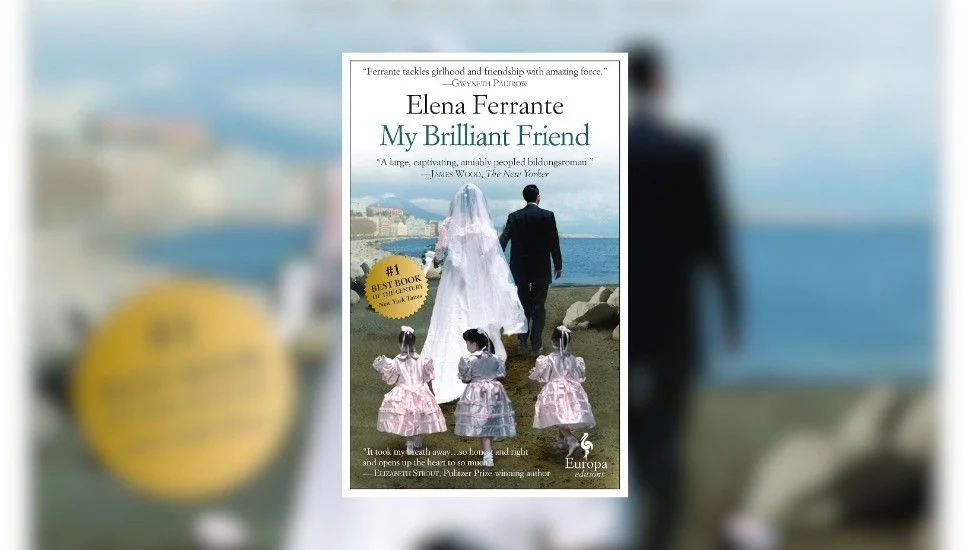
When the New York Times published its definitive list of the best books of the 21st century in 2024, one title stood taller than the rest, claiming the prestigious top spot: Elena Ferrante’s My Brilliant Friend. The novel, which serves as the opening movement of the sprawling Neapolitan Quartet, has transitioned from a word-of-mouth sensation to an undisputed cultural touchstone.
To understand why this specific story of two girls growing up in a rough neighborhood of post-war Naples has captivated the modern imagination, one must look beyond the plot. It is a story of class, violence, intellectual ambition, and the jagged, complex geography of female friendship. This week, the podcast Zero to Well-Read—hosted by Jeff and Rebecca—dedicates its latest episode to dissecting the "Ferrante Fever" that has gripped global readership.
The Genesis: A Portrait of Girlhood
The Neapolitan Quartet—comprising My Brilliant Friend, The Story of a New Name, Those Who Leave and Those Who Stay, and The Story of the Lost Child—is arguably the most significant work of fiction published in the last twenty-five years.
Elena Ferrante, a pseudonym for an author whose true identity remains one of literature’s most guarded secrets, managed to achieve what few authors ever do: she articulated the internal life of childhood with such terrifying clarity that it feels less like reading and more like remembering. The story follows Elena "Lenù" Greco and Raffaella "Lila" Cerullo, two girls whose lives are inextricably linked in a poor, violent neighborhood on the outskirts of Naples. As they navigate their adolescence, their paths diverge—one through education, the other through marriage and labor—yet their bond remains a constant, volatile force that defines their entire lives.
Chronology of a Phenomenon
The ascent of My Brilliant Friend was not an overnight success story, but rather a slow-burning wildfire.
- 2011: The original Italian edition, L’amica geniale, is released to critical acclaim, signaling the start of a new, intense literary movement.
- 2012: Europa Editions publishes the English translation by Ann Goldstein. The literary world begins to take notice of the visceral prose and the "Ferrante style."
- 2014-2015: As the remaining books in the quartet are released, "Ferrante Fever" reaches a fever pitch. The books become a staple of book clubs and "best of" lists worldwide.
- 2016: The literary community grapples with a high-profile investigative report attempting to "unmask" the author, which only serves to solidify the public’s protective stance over her anonymity.
- 2018: HBO and RAI premiere the television adaptation of My Brilliant Friend, introducing the story to a massive, non-literary audience.
- 2024: The New York Times officially crowns the series—with the first volume as its figurehead—the best book of the century thus far.
Supporting Data: Why It Matters
What does it take for a book to be named "the best of the century"? The selection of My Brilliant Friend is not merely a reflection of its sales numbers, but a reflection of the values of the modern reader.
Data from contemporary reading habits suggest a shift toward "autofiction" and "domestic epics"—stories that treat the minutiae of personal life with the weight of history. Ferrante’s work is a masterclass in this genre. Her writing manages to bridge the gap between "high art" and "page-turner." The narrative is intensely emotional, often dealing with domestic instability and the threat of violence, yet it is written with the rigorous intellectual framing of a classic social novel.
Furthermore, the "Ferrante effect" has had a tangible impact on the publishing industry. It opened the door for international translations to gain mainstream success in English-speaking markets, proving that readers are increasingly hungry for stories that feel culturally specific yet universally resonant.
Official Responses and The Mystery of Identity
The most unique aspect of this phenomenon remains the author’s anonymity. In an era of the "personal brand" and the "author-as-influencer," Elena Ferrante has remained entirely silent, refusing to attend book tours or engage in the promotional cycle.
In her rare writings on the subject, such as those collected in Frantumaglia, Ferrante argues that once a book is finished, it no longer needs the author. She believes the text should stand entirely on its own. This refusal to participate has only deepened the allure of her work. Readers aren’t just reading a book; they are participating in a global conversation about the nature of authorship and the integrity of art.
Critics have lauded this approach. By removing the ego of the author from the equation, the focus remains entirely on the relationship between Lenù and Lila. The "official" consensus, if one can exist, is that Ferrante has redefined the modern novel by showing that a woman’s internal, domestic struggle is as worthy of epic treatment as any war or political revolution.
Implications for Modern Reading Habits
The success of My Brilliant Friend reveals a profound change in what we value in fiction. Readers today are less interested in traditional, linear "hero’s journeys" and more interested in the complicated, often contradictory realities of human relationships.
As Jeff and Rebecca discuss in their Zero to Well-Read episode, the book’s power lies in its honesty. It does not shy away from the darker, more "bullshit-filled" parts of life. Whether it is the obsession with social status, the jealousy between friends, or the rigid expectations placed on women, Ferrante captures the "un-prettified" version of reality.
As the hosts note in their teaser: "This is what she is seeking: to make the thing, be in the world, but not be subject to everyone’s bullshit all the time." This sentiment strikes a chord with modern readers who feel increasingly overwhelmed by the demands of the digital age. Ferrante’s characters, despite living in mid-century Naples, are grappling with the same fundamental question: How do I maintain my identity in a world that is constantly trying to define me?
Conclusion: Looking Ahead
The New York Times designation of My Brilliant Friend as the best book of the century is more than just a list entry; it is a mandate. It challenges future writers to look closer at the "small" stories of their lives and recognize them as the "big" stories of our time.
For those who have yet to dive into the Neapolitan streets of Lila and Lenù, there is no better time to start. But be warned: as many readers have discovered, once you enter the world of Elena Ferrante, it is difficult to leave. The obsession, the "fever," and the profound emotional resonance are not just signs of a good book—they are the hallmarks of a classic that will continue to be read, studied, and debated for the next hundred years.
To hear more about the nuances of the series, the specific "Italian-ness" of its social dynamics, and why the book is so intensely compelling, tune into the latest episode of Zero to Well-Read. You’ll hear firsthand why some of the most controversial, funny, and insightful takes on modern literature start and end with the brilliance of Ferrante.
Disclaimer: This article contains affiliate links. When you purchase books or other items through these links, we may earn a small affiliate commission at no extra cost to you, supporting the continued production of high-quality literary journalism.

 Layla Zulfa
 Ali Ikhwan