Rifan Muazin
In the sprawling, complex tapestry of the Star Trek franchise, the concept of "First Contact" is more than a plot point; it is a foundational pillar of the mythos. Fans often debate the granular details of when humanity first brushed against the extraterrestrial. While history books—both fictional and real—point to the historic April 5, 2063, flight of Zefram Cochrane’s Phoenix as the moment Vulcans introduced themselves to Earth, the Star Trek canon is riddled with temporal anomalies that complicate this timeline.
Perhaps the most delightful and overlooked historical footnote involves one of America’s greatest literary titans. Through the narrative mechanics of Star Trek: The Next Generation, Samuel Clemens—better known by his pen name, Mark Twain—holds the distinction of being the first human in chronological history to come face-to-face with a Klingon. This article explores the intersection of 19th-century literature and 24th-century diplomacy, unpacking how a satirical novelist became an unwitting ambassador to the stars.
The Temporal Paradox of "Time’s Arrow"
The catalyst for this encounter is the celebrated two-part The Next Generation episode, "Time’s Arrow." The narrative begins with a discovery in a San Francisco cave: the severed, subterranean head of the android Lieutenant Commander Data, dating back roughly 500 years. This discovery triggers a causal loop. Data, realizing his future involves being transported to 19th-century Earth to die, eventually finds himself pulled through an interdimensional portal into the year 1893.
The era was fraught with tragedy, as interdimensional parasites were using a cholera epidemic as cover to harvest the life force—or "souls"—of unsuspecting humans. Data, ever the analytical observer, begins to construct primitive but effective technology to combat these entities. It is here that he crosses paths with Guinan, the long-lived El-Aurian who had established a presence on Earth as a socialite. Through Guinan’s social circles, Data is introduced to the legendary Mark Twain.
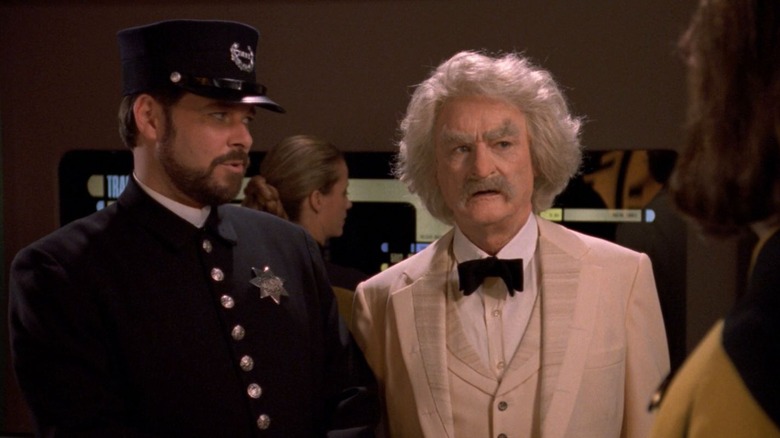
Twain, possessing a sharp wit and a suspicious nature, quickly identifies Data as an anomaly. His curiosity, which fueled some of the greatest novels in the English language, drives him to investigate this strange, pale-skinned man. When the crew of the Enterprise-D eventually tracks Data to 1893, they reopen the portal. In a moment of impulsive bravery, Twain leaps through the breach, finding himself transported to the bridge of a 24th-century starship.
Chronological First Contact: A Breakdown
To understand the weight of this encounter, we must contrast it with the official, "mainstream" timeline of the Star Trek universe.
- The Vulcan Standard (2063): The generally accepted "First Contact" between Earth and any alien species occurred following the launch of the Phoenix. This event is the cornerstone of the Federation’s ideology.
- The "Carbon Creek" Anomaly (1957): Fans of Star Trek: Enterprise are quick to point out the events of "Carbon Creek," where a Vulcan scout ship crashed on Earth, leading to secret interactions between the survivors and local humans.
- The 1930s Incursion: In the classic original series episode "The City on the Edge of Forever," Captain James T. Kirk and Spock travel back to 1930s New York, predating both the 1957 crash and the 2063 flight.
- The Klingon Official Debut (2151): For the Klingon Empire specifically, history records their first meeting with humans in the pilot episode of Enterprise, "Broken Bow," when the warrior Klaang crash-lands on Earth.
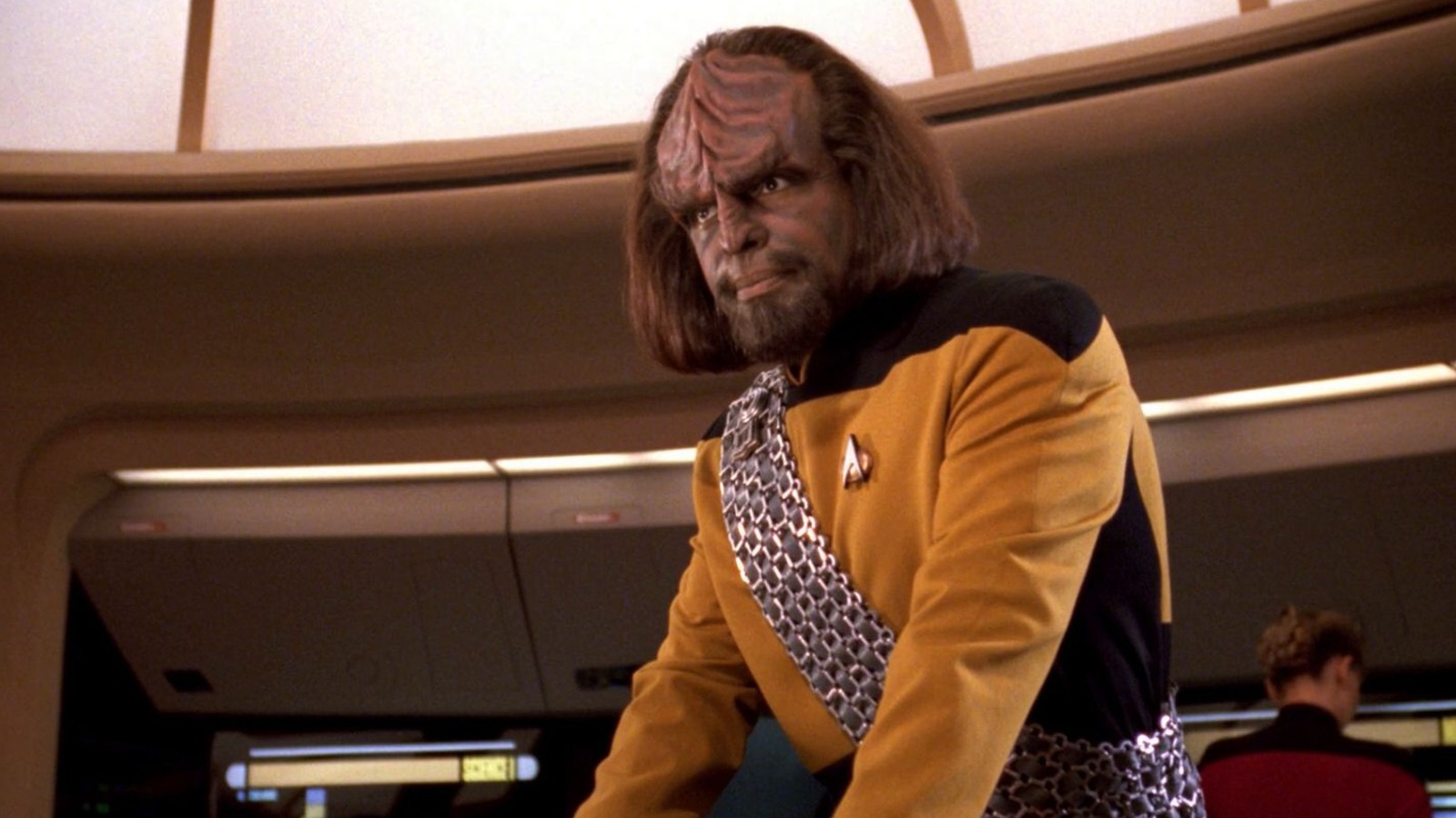
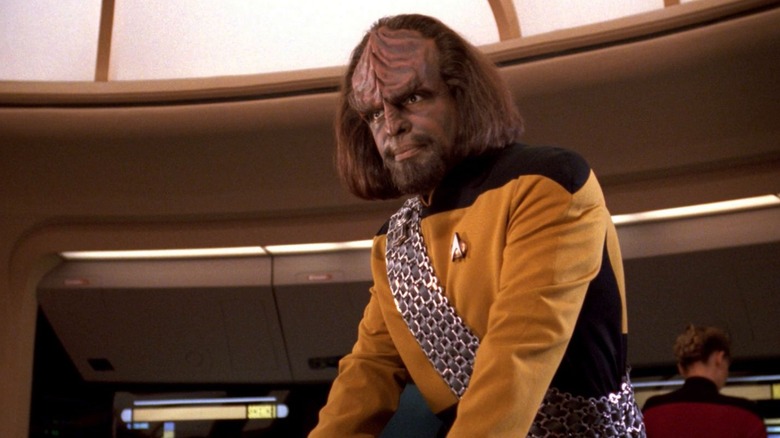
However, because Mark Twain was physically transported from 1893 to 2368, he effectively bypassed the standard flow of linear history. When he arrived on the Enterprise-D, he was confronted by the imposing figure of Lieutenant Worf. At that moment, despite the fact that 2151 was the "official" date for Klingon-human relations, Twain became the first human to ever converse with a member of the Klingon species.
The Clash of Two Eras: Twain Meets the 24th Century
The interaction between Mark Twain and Worf serves as a masterclass in character juxtaposition. When Twain, the cynical observer of Gilded Age politics, finds himself on the bridge of a vessel that represents the pinnacle of post-scarcity technology, his reaction is one of profound skepticism.
Worf, ever the stoic warrior, simply stares at the author. When Twain expresses his confusion and mounting alarm, Worf provides the iconic, succinct clarification: "I am Klingon."
This moment is historically significant within the narrative because it highlights the fundamental cultural differences between the two. Twain represented the peak of human industrial expansion, a time defined by ruthless competition and the exploitation of the working class. Worf, conversely, represented a warrior culture that had integrated into a utopian Federation. The shock on Twain’s face was not just the result of seeing an alien; it was the result of seeing the future of humanity and realizing how far removed it was from his own reality.
The Economic and Moral Lesson
Following his introduction to Worf, Twain’s interaction with Counselor Deanna Troi serves as the intellectual heart of the episode. Twain, ever the inquisitive journalist, attempts to apply the logic of his time to the Enterprise. He assumes the ship is a tool of military conquest and that the crew lives in luxury while others suffer—a critique that mirrors the critiques of imperialism and capitalism he famously leveled in his own writings.
Troi’s response is a defining moment for the Star Trek ethos. She explains that the ship is one of exploration, not conquest, and that humanity has moved past the necessity of wealth accumulation. "I come from a time when men achieve power and wealth by standing on the backs of the poor," Twain counters, highlighting the chasm between the 19th and 24th centuries.
This dialogue is essential for viewers to understand the "implication" of the encounter. Twain is presented as the bridge between the old, flawed world and the new, enlightened one. By having Twain—a man synonymous with the American experience—witness the end of poverty and prejudice, the show validates its own optimistic worldview.
Official Canon and the Nature of Time Travel
Critics of this "first contact" theory often point to the fact that Twain was returned to 1893, effectively erasing the encounter from the public record. Because his return to his own time was orchestrated to preserve the timeline, the "official" history of Earth remains unchanged. Klaang remains the first Klingon to meet a human in the context of known history.
However, in the world of science fiction, the distinction between "official record" and "subjective experience" is vital. While the history books may not credit Mark Twain as the first human to meet a Klingon, the continuity of the show confirms it as a factual event. The implications of this are significant: it suggests that the Star Trek universe is far more porous than the characters within it realize.
Conclusion: Why Twain Matters
The inclusion of Mark Twain in The Next Generation was more than a clever historical cameo; it was a narrative tool used to examine the progress of the human species. By placing a man who was arguably the greatest critic of human nature into a setting where humanity had finally "gotten it right," the writers provided a mirror for the audience.
Twain’s skepticism, his wit, and his eventual acceptance of the utopian vision offered by Troi and the Enterprise crew serve as an invitation for the viewer to do the same. Even if his name is not inscribed on a plaque celebrating the first Klingon-Human treaty, Samuel Clemens remains a pivotal figure in the secret history of the Federation. He was the man who looked at a Klingon warrior, looked at a starship bridge, and realized that perhaps, just perhaps, the future could be better than the past.
As we continue to navigate the expansive lore of Star Trek, it is worth remembering that the most profound moments of "First Contact" aren’t always about treaties signed or warp drives tested. Sometimes, they are simply about a novelist from the 19th century standing in awe on the deck of a 24th-century starship, learning that the future is worth the struggle.


 Nana
Nana
 Jia Lissa