

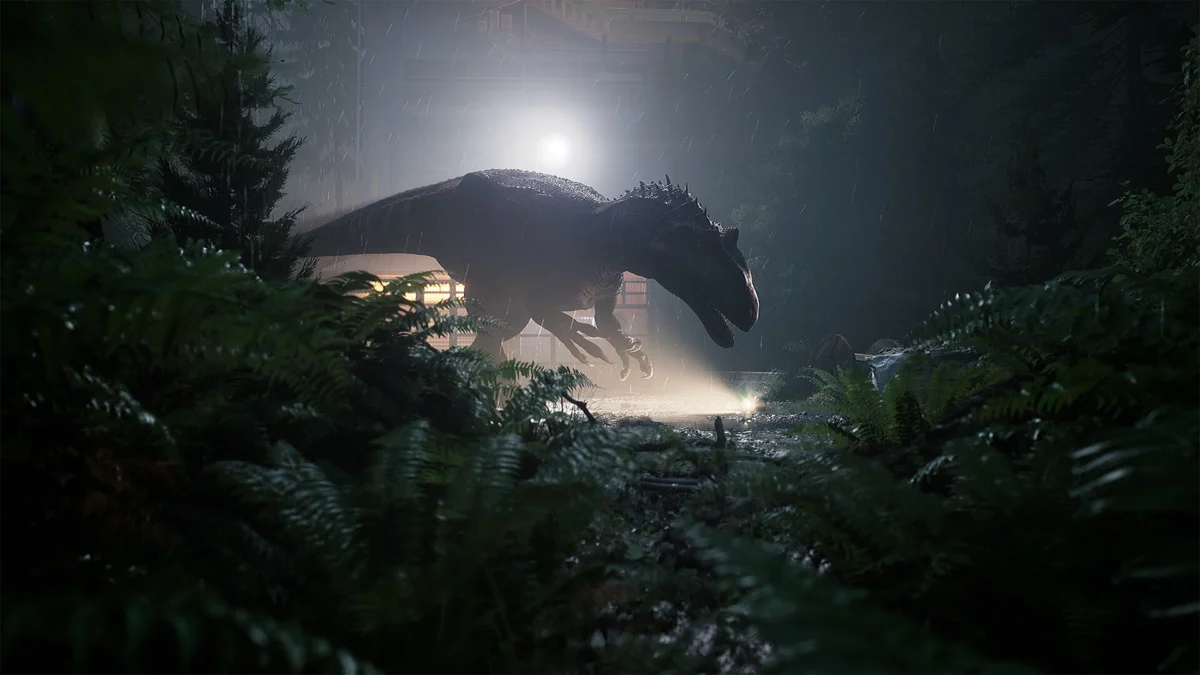
In the landscape of modern survival horror, the genre has long been defined by the "power fantasy"—the ability to acquire bigger guns, craft stronger armor, and eventually turn the hunter into the hunted. However, a new project from Annapurna Interactive and developer Great Ape Games, The Lost Wild, is set to challenge this paradigm. By shifting the focus from combat to coexistence, the studio is attempting to craft a survival experience that treats its prehistoric inhabitants not as mindless monsters, but as complex, systemic, and ultimately, living animals.
The Core Concept: Survival Without Conquest
The Lost Wild transports players to a remote, overgrown archipelago littered with the decaying remnants of advanced scientific facilities. As the protagonist, Saskia, players find themselves stranded in a wilderness where evolution took a sharp, unexpected turn, allowing dinosaurs to survive into the modern era.
Unlike the high-octane action often associated with dinosaur-themed media, The Lost Wild draws its inspiration from the tension-filled corridors of Alien: Isolation. However, Creative Director Gary Napper—a veteran of the industry who joined the project in 2025 following high-profile roles at studios like Rare, The Chinese Room, and Supermassive—is quick to point out a fundamental distinction. In Alien: Isolation, the Xenomorph was a relentless, phallic manifestation of terror that needed to be outmaneuvered. In The Lost Wild, the objective is to avoid conflict entirely, not because the player is incapable, but because the dinosaurs are recognized as fellow inhabitants of a fragile ecosystem.
A Chronology of Development: From Concept to Reality
The journey of The Lost Wild began in 2022, when it was first unveiled to the public. Even then, the title sparked comparisons to classic dinosaur horror, such as Capcom’s Dino Crisis. Yet, as the development cycle matured, the team at Great Ape Games began to refine its specific "no-combat" philosophy.
- 2022: The game is officially announced, positioning itself as a narrative-driven survival horror experience.
- 2023–2024: The team focuses on building the "systemic" nature of the dinosaur AI, ensuring that each creature reacts to environmental stimuli rather than scripted pathfinding.
- 2025: Gary Napper joins the studio as Creative Director. His appointment marks a shift in the game’s public messaging, emphasizing the "restraint" learned from his time at Creative Assembly.
- 2026/2027: Annapurna Interactive confirms a major marketing push, including a new trailer showcased during a PlayStation event, cementing the game’s status as a high-profile release for the PS5 and PC.
The Design Philosophy: Restraint and Anticipation
The genius of Alien: Isolation lay in its pacing—the moments where the player was safe, but knew they were being watched. Napper is applying this same logic to The Lost Wild. By limiting the frequency of direct encounters, the developers force the player to rely on their imagination. When a player hears the rustle of leaves or the distant, guttural call of a predator, the brain fills in the gaps.
"The creature was terrifying not just because of what it could do, but because of what players imagined it was going to do," Napper noted in a recent PlayStation blog post. By treating dinosaurs as unpredictable entities with their own instincts and drives, the game creates a form of horror that is personal and dynamic. Players are not meant to feel like a "conqueror." Instead, they are the "outsider," an exposed, vulnerable entity attempting to navigate a food chain where they are decidedly not at the top.
Biodiversity as a Horror Mechanic
The archipelago is home to a diverse cast of prehistoric life, each designed to occupy specific ecological niches. This isn’t just window dressing; it is a mechanical layer that dictates how the player moves through the world.
The roster of threats ranges from smaller, pack-hunting creatures capable of stalking the player through dense foliage to massive apex predators that can collapse structures. Perhaps most chilling is the inclusion of the Quetzalcoatlus. In the latest trailer, this massive pterosaur is shown hunting on all fours—a behavior that defies the common perception of it as purely an aerial threat. By forcing players to contend with creatures that move in ways they don’t expect, the game subverts the "dinosaur expert" trope, ensuring that even players who know their paleontology feel constantly off-balance.
The Ethical Dilemma: To Kill or Not to Kill?
The refusal to allow combat has become a polarizing, yet essential, topic in the gaming industry. It echoes the recent discourse surrounding Subnautica 2, where developers have stood firm on their decision to limit the player’s ability to violently deter sea life.
For Napper, this ethos is a carry-over from his time at Rare working on the now-cancelled Everwild. That title was once touted as a "nature sim" where players functioned as caretakers rather than soldiers. While The Lost Wild is significantly more aggressive in its atmosphere—you are very much in danger—the core sentiment remains: the natural world is not a collection of enemies to be defeated, but a system to be respected.
"The difference here is not just that you can’t fight back, it’s that you feel like you shouldn’t," Napper explains. This moral friction—the tension between the player’s natural instinct to defend themselves and the game’s insistence on ecological empathy—is where the real horror of the title lives.
Implications for the Survival Horror Genre
The success of The Lost Wild will likely serve as a litmus test for the industry’s appetite for "non-combat" horror. As the market becomes saturated with titles that emphasize progression through violence, there is a growing segment of the player base craving experiences that prioritize atmosphere, vulnerability, and environmental intelligence.
If The Lost Wild succeeds in delivering a compelling, frightening experience without resorting to a traditional combat loop, it could provide a roadmap for future titles. It suggests that horror does not need to be about "winning." Instead, it can be about endurance, observation, and the humility of realizing that we are, in the grand scheme of nature, merely guests—and occasionally, prey.
Looking Ahead: The Competitive Landscape
While The Lost Wild carves out its own niche, it enters a crowded market. Gamers interested in the prehistoric survival genre are also keeping a close watch on Jurassic Park: Survival. While that game will likely lean into the blockbuster spectacle of the Jurassic Park franchise, The Lost Wild is positioning itself as the "art-house" alternative—a title that values the mystery of the prehistoric world over the action-movie thrills of a park gone wrong.
Ultimately, whether you are trying to hide under a desk from a raptor or keeping your distance from a hunting Quetzalcoatlus, The Lost Wild asks for something rare in modern gaming: patience. It asks us to look at the animals not as obstacles, but as the primary characters of this island, and to realize that the most terrifying thing in the world is not a monster, but an animal that simply wants to survive.











No comments yet. Be the first to join the conversation!