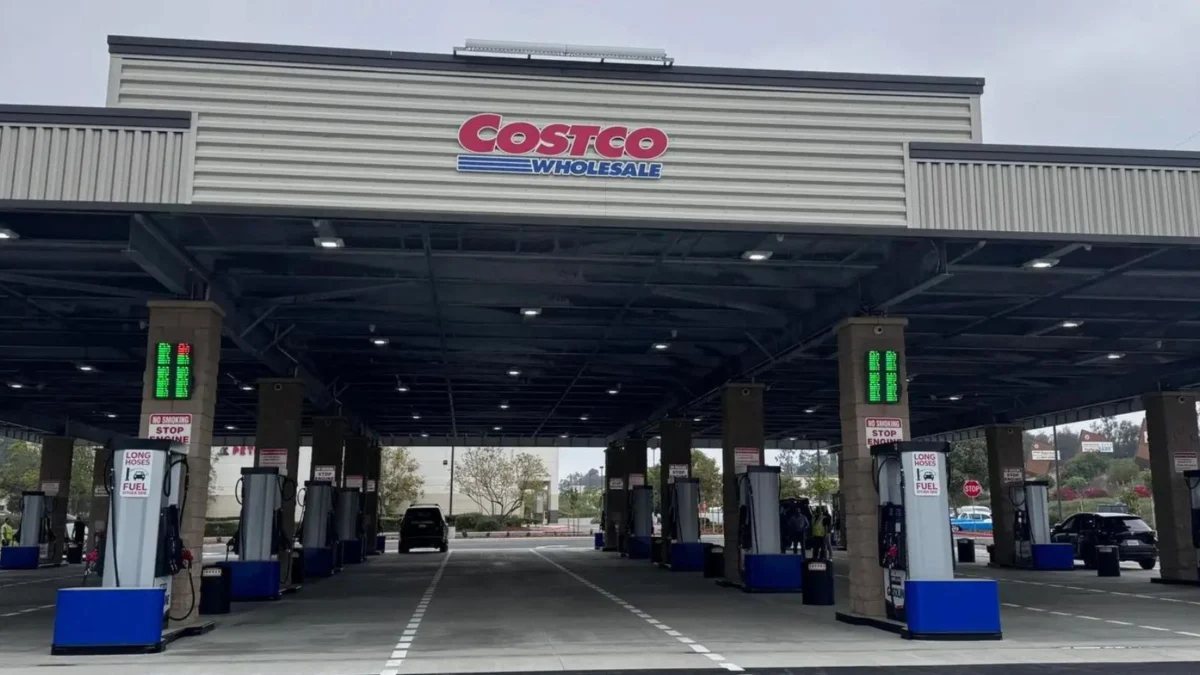
For decades, the Costco membership experience has been defined by a symbiotic relationship between bulk retail and high-volume fuel services. A trip to the "warehouse" almost invariably concludes with a stop at the gas pumps, where members tolerate long queues in exchange for fuel prices that consistently undercut local market averages. However, in a strategic pivot that signals a major evolution in the company’s infrastructure, Costco has officially unveiled its first-ever "standalone" gas station—a 40-pump facility in Mission Viejo, California. While the company intended this massive expansion to alleviate the notorious congestion associated with its warehouse-attached stations, the reception from the member base has been decidedly mixed, highlighting a friction point between corporate efficiency and consumer expectations.
The Genesis of the Standalone Model
The launch of the Mission Viejo site, which opened its gates in late June 2026, represents a radical departure from the retailer’s long-standing operational model. Historically, Costco’s fuel strategy has been anchored to its brick-and-mortar retail footprint. The synergy was simple: provide an incentive for members to visit the warehouse, and once they are there, encourage them to shop for groceries, electronics, and household staples.
By decoupling the fuel station from the retail warehouse, Costco is testing a high-volume, "fuel-only" business model. The objective appears to be two-fold: to capture market share in fuel-only transactions and to relieve the massive traffic pressure that plagues warehouse-adjacent stations. As urban density increases and retail space becomes more expensive, the standalone station offers a way for Costco to expand its brand presence and membership utility without the astronomical overhead costs associated with building a full-scale warehouse.
Chronology of the Mission Viejo Launch
The development of the Mission Viejo facility was met with significant anticipation within the local community. After months of construction and logistical planning, the station finally welcomed its first customers at the end of June.
- Pre-Launch Hype: Rumors of a "massive" Costco fuel site without a warehouse began circulating earlier this year, creating curiosity among local members who were accustomed to the grueling wait times at the nearby Laguna Niguel or Irvine locations.
- Late June 2026: The station officially opens, featuring 40 high-speed pumps. The infrastructure was designed to handle a significantly higher throughput than traditional stations, utilizing a one-way traffic flow intended to minimize bottlenecks.
- Early July 2026: Reports from early adopters begin to surface on social media platforms, most notably Reddit, where the initial excitement quickly transitioned into a litany of complaints regarding the site’s limited scope.
The Consumer Backlash: Why Members Are Unimpressed
While the primary goal of the Mission Viejo station is to offer lower prices—a goal the station has largely achieved—the feedback from members suggests that the "savings" are being offset by a perceived lack of convenience and amenity.
The "Missing Essentials" Critique
The primary point of contention is the absence of auxiliary services. Members who pay for a premium Costco membership have grown accustomed to a comprehensive suite of services. The omission of diesel fuel and propane has been a major frustration for truck owners and RV enthusiasts, who often rely on Costco for these specific needs.
"No diesel, no propane, no car wash—as people always ask," noted a prominent Reddit user, goodvibezone. This sentiment was echoed by a chorus of other members who argued that if a location is not tied to a retail warehouse, it should at least offer a more robust set of services to justify the travel time. Many users expressed that without the ability to shop or use a car wash, the standalone station feels "hollow" or "stripped down."
Infrastructure and Traffic Flow Concerns
Beyond the services, the physical design of the site has come under scrutiny. Despite the large number of pumps, the layout relies on a single-entry and single-exit point. Urban planners and long-time Costco shoppers have pointed out that this bottleneck design is a recipe for disaster during peak hours. "That location will be a hot mess," wrote one observer. "Only one way in and one way out. Good luck!"
The concern is that while the 40 pumps can technically serve more cars, the flow of traffic onto the property will be throttled by the limited ingress/egress, potentially creating a "parking lot" effect that mirrors the very congestion Costco was trying to solve.
Supporting Data: The Economics of Fuel-Only Retail
To understand why Costco would pursue this strategy, one must look at the economics of the fuel industry. Gas stations typically operate on thin profit margins, often relying on convenience store sales (snacks, drinks, cigarettes) to generate the bulk of their revenue. Costco, conversely, views fuel as a "membership magnet."
By keeping fuel prices low, Costco ensures high renewal rates for its memberships. If the standalone station can achieve a higher volume of transactions than a standard station, the aggregate profit from membership fees—even without the retail spend—could be significant. However, the data suggests that customers are less loyal to the "brand" of a gas station than they are to the "experience" of a store.
If members find the standalone station difficult to navigate or lacking the features they need (like EV charging, which is notably absent at the new site), they may gravitate back to competitors who offer a more comprehensive "one-stop" experience. The lack of electric vehicle (EV) charging infrastructure is particularly telling, as it indicates that this current iteration of the standalone station is still heavily focused on the internal combustion engine era, potentially ignoring the long-term shift toward electrification.
Official Responses and Corporate Strategy
As of early July, Costco has maintained a reserved stance regarding the specific criticisms of the Mission Viejo site. Historically, the retail giant is slow to react to anecdotal consumer feedback, preferring to look at longitudinal data—such as pump utilization rates, average transaction times, and membership sign-up/renewal rates in the surrounding zip codes.
Industry analysts suggest that the Mission Viejo location should be viewed as a "beta test." The company has already earmarked plans for at least two other mega-stations in Hawaii and Michigan. These sites will likely serve as the testing ground for adjustments. If the complaints regarding the lack of amenities persist, it is entirely possible that future iterations will incorporate car washes, expanded fuel types (including diesel), or even micro-food kiosks to replicate the "Costco experience" on a smaller scale.
Implications for the Future of Retail
The implications of the standalone fuel model are far-reaching. If successful, this model could allow Costco to colonize suburban areas where there is no space for a 150,000-square-foot warehouse but plenty of demand for lower-cost fuel.
However, there is a clear risk to the brand’s prestige. Costco’s brand equity is built on the idea of the "treasure hunt"—the feeling that you are getting a deal on everything you need. By stripping away the warehouse, the food court, and the car wash, the station risks becoming just another gas pump with a long line.
The EV Dilemma
Perhaps the most significant long-term challenge for this model is the transition to electric vehicles. As states like California push for aggressive EV adoption, the "gas-only" model faces an expiration date. If these standalone stations do not integrate high-speed charging, they may find themselves obsolete within the next decade. Members have already begun calling for the inclusion of chargers, suggesting that the consumer base is more forward-thinking than the current infrastructure suggests.
Conclusion: A Work in Progress
The Mission Viejo experiment is a high-stakes gamble. Costco is attempting to scale its most successful membership incentive—cheap gas—without the heavy baggage of its massive warehouses. While the company has successfully increased the number of pumps, it has yet to prove that it can maintain the "Costco magic" in a purely industrial, fuel-focused environment.
As the company moves forward with its plans in Hawaii and Michigan, the retail world will be watching closely. Will these stations evolve to become the "Costco of fuel," or will they serve as a cautionary tale about the limits of brand dilution? For now, the members have spoken: they want more than just a cheaper gallon of gas—they want the full, efficient, and comprehensive experience that the Costco name has come to represent. The ball is now firmly in the court of Costco’s corporate leadership to iterate, adapt, and address the growing chorus of member dissatisfaction.