

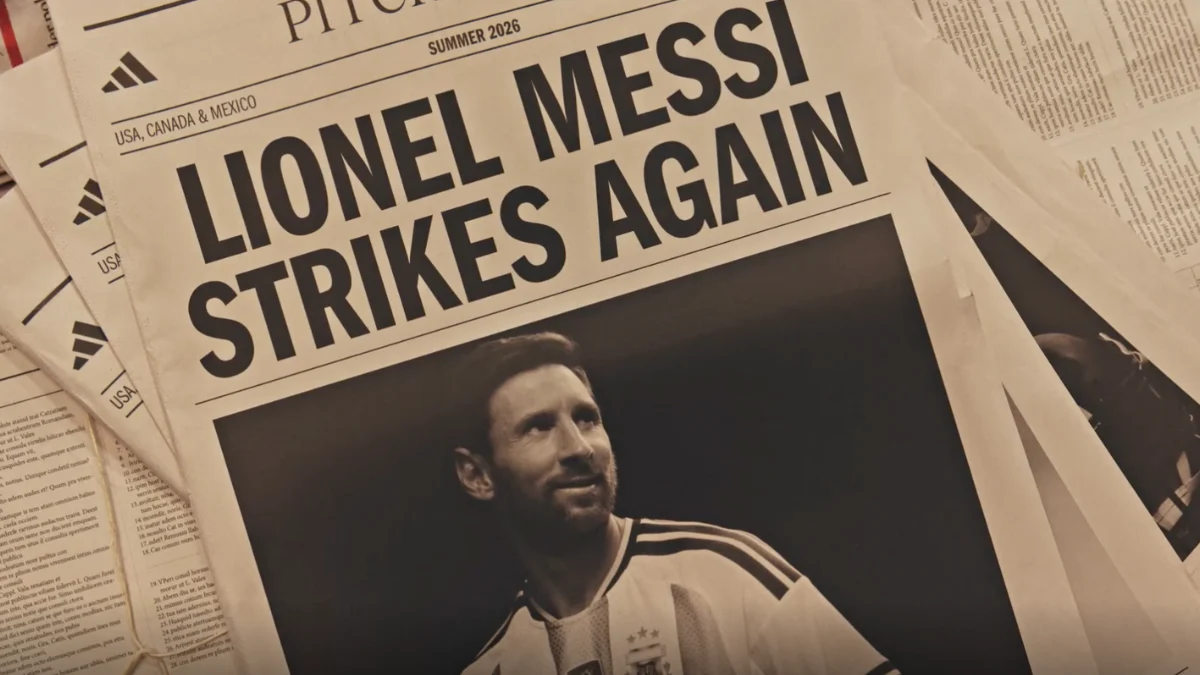
Lionel Messi’s influence on the global stage has never been confined to the white lines of a football pitch. As the Argentine icon prepares to lead his national team into the upcoming FIFA World Cup, his presence is extending far beyond the stadium and into the living rooms of millions. According to data provided by the audience measurement platform System1, Messi is currently the undisputed king of brand association, appearing in a staggering 22% of major World Cup campaigns across the United States, the United Kingdom, and Argentina.
In an era where brand partnerships often feel transactional, Messi’s ubiquity serves as a case study in the power of human capital. From the refreshment aisles of major retailers to the high-performance labs of athletic apparel giants, the footballer is not merely a face—he is the anchor of a multi-billion-dollar marketing ecosystem.
The Main Facts: A Global Marketing Phenomenon
The scale of Messi’s current advertising footprint is unprecedented for an active athlete. Out of 80 major World Cup-related campaigns currently being tested globally, 18 feature the Inter Miami star. This represents a concentration of star power that effectively turns the World Cup’s commercial break into a "Messi showcase."
Key brands currently leveraging his image include:
- Adidas: Deepening their decades-long partnership with the star.
- Michelob Ultra: Capitalizing on the "lifestyle of the champion" narrative.
- Lay’s: Utilizing his global mass appeal to drive cross-continental engagement.
These campaigns are not merely background noise. They are high-budget, high-concept productions that rely on Messi’s unique ability to bridge the gap between "niche sports hero" and "global cultural icon." Unlike many celebrities who suffer from overexposure, Messi’s brand equity has remained remarkably resilient, buoyed by his continued success at Inter Miami and his role as the face of the defending world champions.
Chronology: From Qatar to the World Stage
To understand the current saturation of Messi in advertising, one must look at the trajectory of his commercial appeal over the last four years.
The 2022 Inflection Point
The Qatar 2022 World Cup served as the ultimate proof-of-concept for the "Messi Effect." Prior to the tournament, brands were wary of the volatile nature of tournament outcomes. However, Messi’s fairy-tale run to the trophy shifted the paradigm. His campaigns during that period did not just perform well; they consistently ranked as the highest-performing content on social media channels, outperforming traditional entertainment celebrities and rival athletes by double digits.
The Inter Miami Transition
When Messi moved to Major League Soccer (MLS) in 2023, the landscape of his commercial viability shifted. By playing in the United States, he became more accessible to American marketing budgets. The domestic exposure in the U.S. market, combined with his existing dominance in South American and European markets, created a perfect storm for global brands looking to unify their messaging across different hemispheres.
The Pre-World Cup Blitz
In the months leading up to the current tournament, brands began securing talent contracts with an unprecedented sense of urgency. The strategy has shifted from "using an athlete for a spot" to "building a campaign around a legacy." Brands are now positioning their products not just alongside Messi, but as part of his ongoing journey toward a final crowning achievement in his international career.
Supporting Data: Why Messi Wins
System1’s analytics platform, which utilizes standardized testing to measure emotional response and brand impact, reveals why marketers are so eager to bet on Messi.
Emotional Connectivity
Data shows that advertisements featuring Messi score significantly higher on the "Happiness" and "Fame" indices. Consumers viewing these ads are not just seeing a product; they are experiencing a positive emotional resonance associated with Messi’s perceived humility and athletic excellence.
The "Halo" Effect
When a brand partners with Messi, they benefit from what researchers call the "Halo Effect." In 22% of major campaigns, the brand is effectively "borrowing" the trust that the public has placed in Messi. System1 data indicates that campaigns featuring the Argentine star see a 15% increase in purchase intent compared to those using generic influencers or less-recognized athletes.
Regional Versatility
While many athletes are hyper-localized, Messi’s appeal is truly universal. In the U.K., he is viewed as a master of the craft. In Argentina, he is a national deity. In the U.S., he is the catalyst for the growth of soccer. This regional versatility allows multinational corporations to run a single, unified creative campaign that resonates equally well in Tokyo, London, and Miami—a rare feat in modern advertising.
Official Responses and Industry Sentiment
While most brands remain tight-lipped about the specific financial terms of their contracts, industry analysts have been vocal about the implications of the "Messi Blitz."
"We are seeing a trend where the athlete is becoming the brand," says a lead analyst at a global media agency. "Usually, a brand tells a story and uses an athlete as a messenger. With Messi, the story is Messi. Brands are just paying for the privilege of standing in his light."
Representatives from organizations involved in these campaigns highlight that the selection process is rigorous. "We don’t just look at his goals," says a marketing executive for one of the aforementioned sponsors. "We look at his social sentiment, his cultural relevance, and his ability to transcend the game. Messi is the only athlete today who can occupy that much mental space in a consumer’s mind without feeling like an intrusion."
The consensus among industry experts is that while Messi’s playing days may eventually wind down, his "commercial longevity" is only just beginning, as he transitions from a high-performance athlete to a permanent fixture of global brand culture.
Implications: The Future of Athlete-Led Marketing
The dominance of Lionel Messi in World Cup advertising signals a significant shift in how companies allocate their sponsorship budgets.
The Concentration of Wealth
The fact that nearly a quarter of all top-tier ads feature one person suggests that marketing departments are becoming more risk-averse. Instead of spreading budgets across a roster of athletes, they are choosing to double down on "guaranteed wins." This creates a "winner-take-all" market where the top 1% of athletes capture the vast majority of commercial opportunities, leaving smaller, emerging stars with limited exposure.
The Role of Technology
As platforms like System1 become more sophisticated, brands are using real-time data to justify the massive fees required to sign a talent like Messi. The days of "gut-feeling" endorsements are over; every campaign is now backed by granular data on how an athlete impacts brand perception in real-time.
The Sustainability of the Model
Is the market reaching a saturation point? While consumers are currently embracing Messi, there is a legitimate concern regarding "brand fatigue." If every ad break is dominated by the same face, the uniqueness of the association may dilute. However, as long as Messi continues to perform at an elite level, the data suggests that audiences are willing to overlook the ubiquity in favor of the emotional payoff.
A Legacy Beyond the Pitch
Ultimately, the implications of this advertising blitz extend to how we define sports stars in the 21st century. Messi is no longer just a football player; he is a corporate institution. As he navigates this tournament, he is doing so with the weight of global brands on his shoulders, proving that in the modern economy, the most valuable currency is not the ball—it is the influence of the man who controls it.
As the World Cup kicks off, the real competition won’t just be happening on the grass. It will be happening in the advertising blocks, where the "Messi Effect" continues to redefine what it means to be a global icon in the digital age. Whether he lifts the trophy or not, Messi has already won the campaign.










No comments yet. Be the first to join the conversation!