Dwi Wanna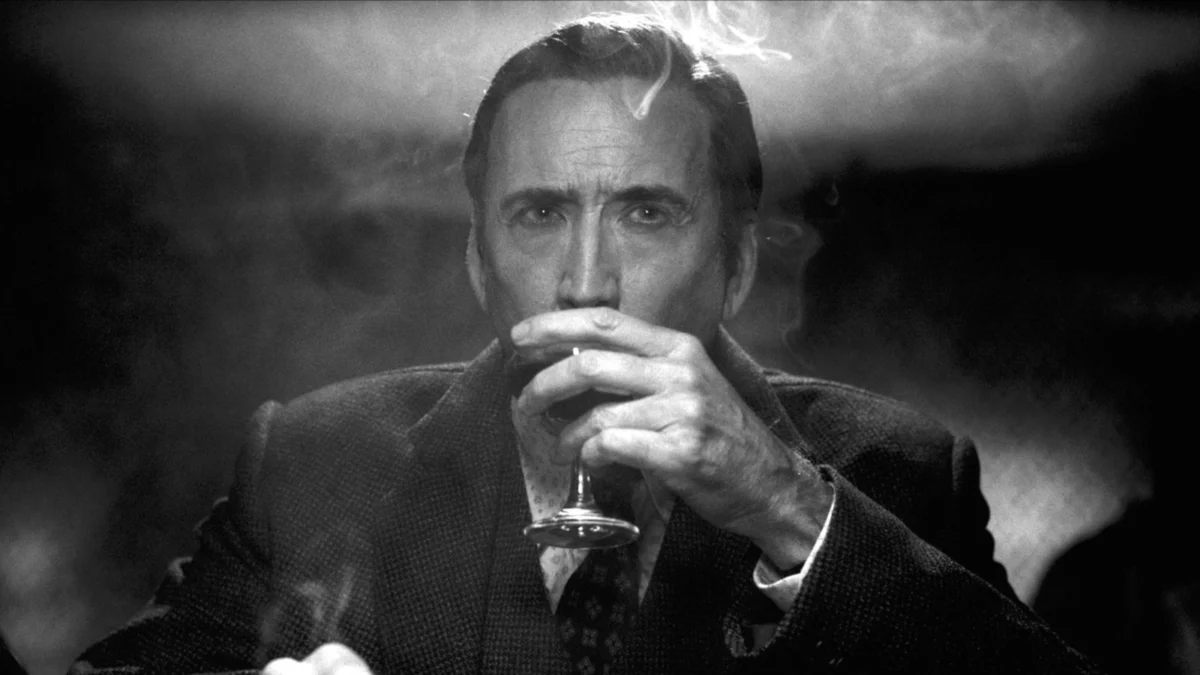
In the landscape of modern superhero television, few creative swings have been as idiosyncratic as the performance delivered by Nicolas Cage in Amazon Studios’ Spider-Noir. As the series concludes its eight-episode inaugural run, audiences have been left debating a central stylistic enigma: Why does Ben Reilly, the hard-boiled private investigator and titular "Spider," cycle through an erratic array of mid-century vocal affectations? From the clipped, staccato delivery of James Cagney to the gravelly, noir-soaked drawl of Humphrey Bogart, Cage’s voice is a moving target.
For many viewers, this auditory shapeshifting proved a persistent distraction, creating a barrier to immersion. However, as showrunner Oren Uziel recently revealed, this stylistic gamble was not a performance error—it was a deliberate, narrative-driven choice designed to reflect the protagonist’s fundamental struggle to retain his humanity.
The Narrative Foundation: A Spider Struggling to Be Human
To understand the vocal choices, one must first understand the creature behind the mask. As the Season 1 finale clarifies, Ben Reilly is not a traditional Spider-Man. His origin is rooted in the dark, experimental history of World War I, where he was bitten by a man-spider hybrid during a botched German military operation. This biological trauma forces him to grapple with the encroaching instincts of an arachnid—a descent into primal, non-human behavior that threatens his identity.
In the series, Reilly explicitly mentions his frequent visits to the cinema. Far from a leisure activity, these trips to the local theater serve as a grueling, academic endeavor. By watching the legends of 1930s cinema—Bogart, Cagney, and Peter Lorre—Reilly is essentially attending a crash course in human interaction. He is attempting to "re-learn" how to be a person by mirroring the archetypes he sees on the silver screen.
"It’s all about his character," showrunner Oren Uziel explained in an exclusive interview. "He becomes ‘The Spider’ and he becomes more spider than man, and has to learn how to be human. So this is him educating himself. That’s him going to the gym, almost."
Chronology of the Craft: From "Great Guy" to The Spider
The show’s creative team meticulously curated the films Reilly consumes, landing on the 1936 crime drama Great Guy as a pivotal touchstone. In a specific scene, viewers witness Reilly in a darkened theater, mouthing the lines of James Cagney’s character in perfect synchronization.
![Spider-Noir Creator Explains Why Nicolas Cage's Accent Changes Throughout The Show [Exclusive]](https://www.slashfilm.com/img/gallery/spider-noir-creator-explains-why-nicolas-cages-accent-changes-throughout-the-show-exclusive/l-intro-1778795950.jpg)
Uziel notes that the team scanned dozens of films to find the right clips for Cage to mimic. The goal was to find performances that felt iconic yet slightly disjointed, reflecting the fact that Reilly is observing these actors not as art, but as data. When Cage delivers lines with a sudden, sharp "Red hot" or adopts a nervous twitch reminiscent of Peter Lorre, he is not merely doing an impression; he is "downloading" human behavioral patterns in real-time.
This chronology of influence—moving from the stoic toughness of Bogart to the frenetic energy of Cagney—marks the stages of Reilly’s internal evolution. As the pressure of his dual nature mounts, his reliance on these external personas becomes more pronounced, resulting in the erratic fluctuations that viewers observed throughout the season.
Critical Analysis: A Risky Gamble in Storytelling
While the in-universe justification provides a clear, logical framework for the vocal changes, the execution has sparked significant debate regarding the efficacy of such a high-concept performance. The central question remains: Does a sound narrative justification excuse a choice that hinders audience engagement?
The challenge with this approach is the "uncanny valley" of acting. By intentionally making the performance sound artificial, the creative team succeeded in depicting a character who is "bad" at being human. However, from a narrative perspective, this creates a significant friction point. For the first four episodes, viewers were left to wonder if the accent changes were simply an oversight, a lack of directorial cohesion, or a bizarre stylistic choice.
Because the revelation of why Reilly sounds this way is withheld until the latter half of the season, the audience is effectively kept at arm’s length. A character who is constantly shifting vocal gears is a character who is difficult to anchor. By the time the payoff arrives, the viewer has spent hours trying to decode the performance rather than connecting with the character’s emotional arc. It is a classic narrative gamble: the showtellers opted for a slow-burn reveal that, for many, sacrificed immediate relatability for long-term thematic consistency.
The Implications of "Spider-Noir’s" Auditory Experiment
The polarizing nature of Cage’s performance in Spider-Noir raises broader questions about how television series handle avant-garde character choices. In the era of "prestige TV," there is a growing trend toward experimental performances that prioritize thematic depth over conventional naturalism.
![Spider-Noir Creator Explains Why Nicolas Cage's Accent Changes Throughout The Show [Exclusive]](https://www.slashfilm.com/img/gallery/spider-noir-creator-explains-why-nicolas-cages-accent-changes-throughout-the-show-exclusive/intro-1778795950.jpg)
1. The Burden of the Reveal
The primary takeaway from the Spider-Noir experience is the importance of "narrative transparency." Had the show provided a subtle clue—perhaps a brief glimpse of Reilly studying a film earlier in the first act—the audience might have been more willing to go along with the ride. By waiting until the season’s conclusion to explain the behavior, the show inadvertently turned a character-defining trait into a persistent mystery that distracted from the plot.
2. The Limits of Performance
Nicolas Cage is a performer known for his "Nouveau Shamanic" approach to acting, often pushing the boundaries of what is considered "realistic." In Spider-Noir, he remains a compelling screen presence, yet the series serves as a case study in how even the most talented performers require a clear narrative context to ensure their eccentricities land with the intended effect. When a performance is this stylized, the audience needs to be "in on the joke" or the thematic intent from the outset.
3. The Future of the "Noir" Archetype
The show’s commitment to the noir aesthetic—shadows, moral ambiguity, and existential dread—is undeniable. However, by layering a "performance within a performance" on top of the already complex noir tropes, the show attempted to juggle too many stylistic balls. The intention was to show a hero who is an imposter in his own skin, but the result was a character who often felt like a collection of movie clips rather than a cohesive protagonist.
Final Thoughts: A Bold Failure or a Misunderstood Success?
Ultimately, Spider-Noir stands as a testament to the risks of bold creative decision-making. Oren Uziel and his team clearly had a distinct, intellectualized vision for Ben Reilly—a creature trying to piece together a soul using the remnants of mid-century cinema. It is a fascinating concept on paper, one that perfectly aligns with the character’s tragic, monster-like origins.
However, in the medium of episodic television, where emotional connection is the lifeblood of viewer retention, the execution proved to be a double-edged sword. Nicolas Cage delivered exactly what was asked of him: a man struggling to perform humanity. Yet, by making the struggle so transparent, the show created a wall between the protagonist and the audience that was difficult to climb.
As the series looks toward a potential second season, the creative team now faces a pivotal decision: do they lean further into the high-concept, experimental nature of the performance, or do they adjust the dial to favor clarity and connection? Regardless of where the show goes from here, the "accent mystery" of Spider-Noir will undoubtedly be remembered as one of the most audacious, albeit divisive, character choices in the history of the Spider-Man franchise. It was a gamble that prioritized the "why" of the character, even if it cost the "how" of the viewing experience.

 Sagoh
Sagoh
 Nana Wu