

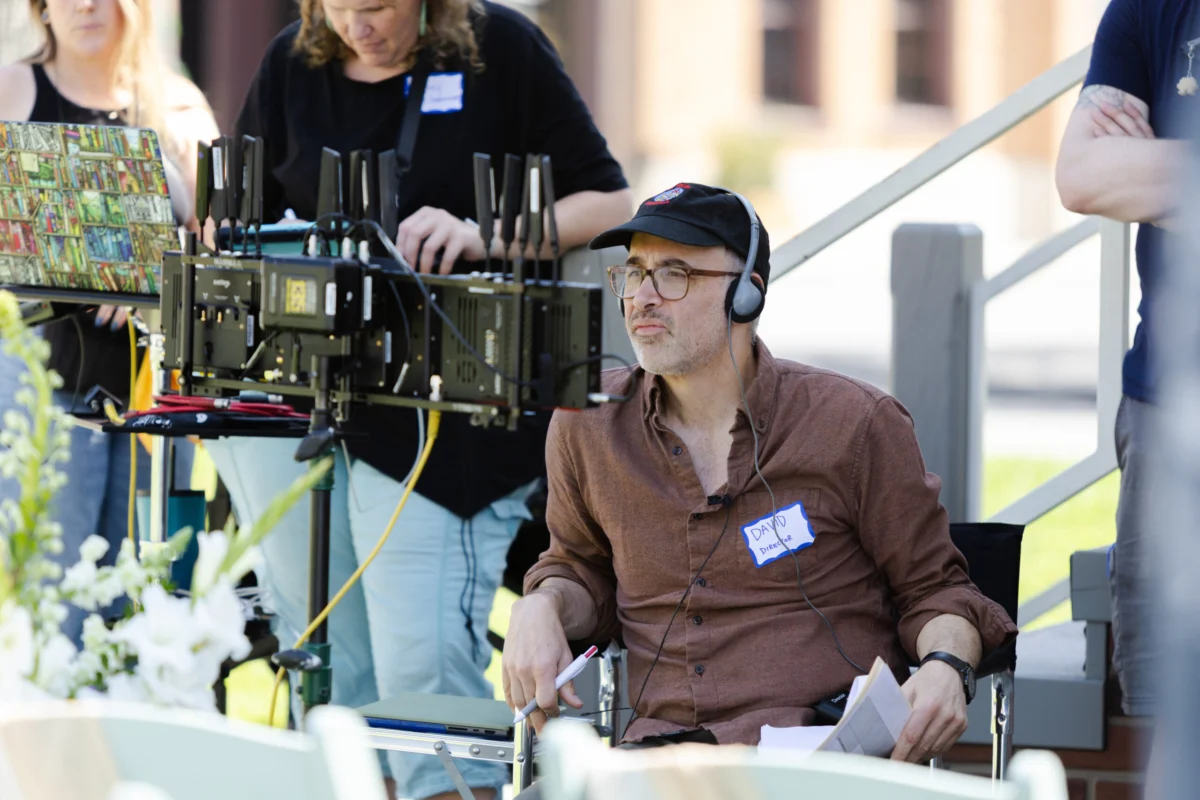
For decades, the name David Wain has been synonymous with a specific brand of absurdist, high-energy comedy. From the seminal 1990s sketch troupe The State to cult classics like Wet Hot American Summer, Wain has cultivated a reputation for films that feel loose, chaotic, and gloriously unhinged. However, in a recent appearance on IndieWire’s Filmmaker Toolkit podcast, Wain and his longtime collaborator Ken Marino pulled back the curtain on their latest project, Gail Daughtry and the Celebrity Sex Pass, revealing that their "slapdash" aesthetic is, in fact, the result of rigorous, clinical precision.
The Myth of the "Loose" Set
To the casual observer, a David Wain film appears to be a playground for improvisation—a collection of skits held together by pure comedic momentum. But as Wain explained to IndieWire, the reality is far more structured. "The goal is that it feels sort of breezy and off the cuff," Wain noted. "But if you look at it just one more layer, you see that we’ve really put in a lot of effort and thought. It’s not nearly as much improv as one might think based on the feel of the material. We’ve figured it out in the script."
This distinction is crucial to understanding the duo’s longevity. While they lean heavily on a roster of actors who intuitively "get the music of the comedy," the improvisational elements are secondary to a screenplay that has been refined through exhaustive drafts and table reads. In an era where many comedies rely on actors "finding the scene" on set, Wain and Marino maintain a strict adherence to their structural blueprints.
A Chronology of a Comedy Odyssey: From Kansas to Hollywood
The narrative spine of Gail Daughtry and the Celebrity Sex Pass serves as a subversive homage to the 1939 classic The Wizard of Oz. The protagonist, Gail Daughtry (played by Zoey Deutch), is a clear nod to Dorothy Gale, though her journey is transposed from the magical land of Oz to the cynical, neon-soaked landscape of Los Angeles.

The Developmental Path
The development of the film began with a simple, high-concept premise: What kind of people would be desperate enough to track down actor Jon Hamm? By mapping this central quest onto the archetypes of the Scarecrow, the Tin Man, and the Cowardly Lion, Wain and Marino created a "ragtag crew" of Hollywood rejects.
"We thought, ‘Who needs a brain? Who needs a heart? Who needs courage?’" Marino explained. "It started with Ben [Wong’s] character—we realized he thinks he needs a brain to be a big agent, but he already has the tools. My character, Vincent, is a paparazzi photographer. Everyone assumes he’s heartless, but he has the biggest heart of anyone in the story."
Production Realities
The production was marked by an aggressive 21-day shooting schedule. This constraint left little room for on-set experimentation. The duo insisted on filming in Los Angeles to capture the authentic, gritty evolution of the city—transitioning from the idyllic, backlot-staged "Willowbrook, Kansas" to the grim, bloodier reality of the Hollywood industry. This visual transformation mirrors Gail’s own disillusionment as she navigates the celebrity-obsessed culture she initially set out to conquer.
Supporting Data: The "Brutal" Editing Process
Perhaps the most telling aspect of Wain and Marino’s process is their ruthless approach to post-production. The duo operates on a philosophy that "nothing is sacred." During the editing phase, which took place largely in Wain’s home, they utilized a system of frequent living room screenings with collaborators to test the efficacy of their humor.

The initial cut of Gail Daughtry clocked in at a staggering 140 minutes—a length that would have likely hampered the film’s pacing. Through a process of "chopping," the duo brought the runtime down to a tight 90 minutes. "We just kept chopping it down and finding new ways to make it move, making it faster and funnier, and saying goodbye to some of the babies," Marino said.
Wain’s litmus test for comedy is remarkably simple yet demanding: "If it’s still making me laugh the 10,000th time, then we’ve got something. Those jokes that we thought were good but don’t consistently land? We just take them out." This cold-eyed assessment ensures that the final product maintains the "breezy" feel they strive for, despite the grueling hours spent pruning the narrative.
Official Perspectives: The Role of the "Comedy Nerd"
The inclusion of Jon Hamm and John Slattery—playing satirical, heightened versions of themselves—was a prerequisite for the story’s success. Both actors share a deep history with the writing team, particularly Hamm, whom Wain lived with briefly before the actor’s breakout role on Mad Men.
"Hamm was always a comedy nerd from day one," Wain shared. This history allowed for a level of trust that is rare in Hollywood productions. By casting people who were already well-versed in their "comedy universe," the directors bypassed the need for lengthy character workshops, allowing the ensemble to hit the ground running. As Marino noted, while they are now "old farts" in the industry, their ability to spot new talent—like Zoey Deutch and Ben Wong—who intuitively understand their tone remains their most valuable asset.

Implications for the Future of Independent Comedy
The success of Gail Daughtry and the Celebrity Sex Pass highlights a shifting landscape in film production. As budgets tighten and schedules become more compressed, the reliance on a "tight script" is making a comeback. The "slapdash" aesthetic is not a result of low effort; it is a sophisticated technique of misdirection. By making the audience think the film is unfolding spontaneously, Wain and Marino preserve the magic of surprise while ensuring the narrative logic remains sound.
The "Left Turn" Technique
Wain’s signature "absurdist detours"—such as the infamous drug den sequence in Wet Hot American Summer—are not, as critics once suggested, just random skits thrown into a blender. They are purposeful interruptions of rhythm. In Gail Daughtry, these departures serve to keep the audience off balance, preventing the predictability that plagues so many modern comedies.
"People looked at Wet Hot like it was just a strung-together series of skits," Wain reflected. "But I think people who appreciate it see that it’s really not. It’s put together in a certain way."
Conclusion
The collaboration between David Wain and Ken Marino serves as a masterclass in modern comedic filmmaking. By bridging the gap between the chaotic energy of their roots in The State and the technical demands of a professional feature film, they have proven that even the most "off the cuff" comedy requires an iron-clad foundation.

Gail Daughtry and the Celebrity Sex Pass is not merely a collection of jokes or a parody of The Wizard of Oz; it is a testament to the idea that the best comedy is the result of thousands of small decisions, brutal cuts, and an unwavering commitment to the "music" of a scene. For fans of the duo, this latest release is a reminder that while the chaos may look effortless, the masterminds behind it are working harder than ever to keep us laughing.
A Sony Pictures Classic release, "Gail Daughtry and the Celebrity Sex Pass" is now in theaters. To hear the full interview with David Wain and Ken Marino, subscribe to the Filmmaker Toolkit podcast on Apple, Spotify, or your preferred podcast platform.










